
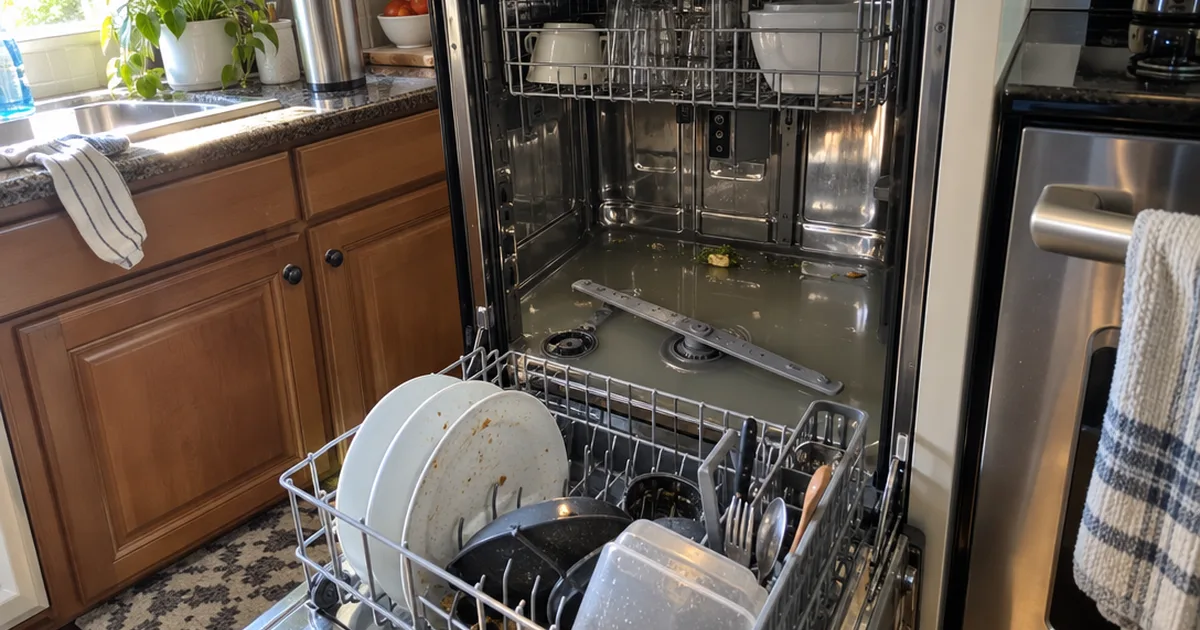
Up to 2 cups of water in a GE dishwasher can be perfectly normal.
That’s straight from GE Appliances, and it surprises a lot of owners who are halfway to booking a repair.
But if water covers the tub floor after a cycle, you have a GE dishwasher not draining, and the cause is usually a blockage you can clear yourself.
Below are 8 steps, in the order I’d do them: the tub first, where most clogs start, then the jobs under the sink.
Best for: any GE built-in dishwasher that leaves standing water after a cycle. Skip it if you have a portable model hooked to the faucet, which goes straight to service.
Cost: Free for every check here.
Time: Same day.
First step: Turn off the dishwasher circuit breaker and grab a cup and a towel.
How Much Water in a GE Dishwasher Is Normal?
A GE dishwasher without an Ultra Fine filter can normally hold 1 to 2 cups of clean water covering the bottom of the tub, according to the GE Appliances not-draining support page. On models with an Ultra Fine filter, water in the sump (the filter area) is normal, but it shouldn’t cover the tub floor.
So which one do you have?
Pull out the bottom rack and look at the floor of the tub. An Ultra Fine filter is a round, cylinder-shaped piece you can twist, near the back of the floor.
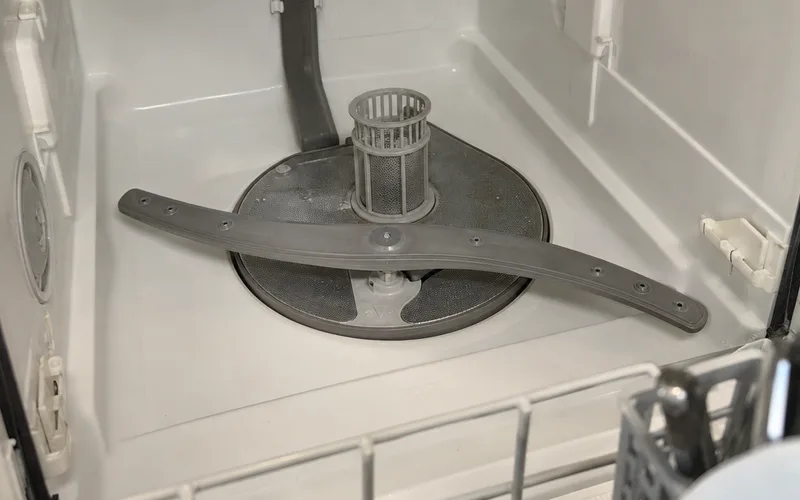
Here’s the simple rule for the two cases GE describes:
- No Ultra Fine filter: a thin layer of clean water across the bottom is fine.
- Ultra Fine filter: water should sit only in the filter area, not across the floor.
- Either model: a dirty or deep puddle means it isn’t draining.
Some online guides say 1 to 2 inches of it is normal. GE says cups, not inches, and that difference matters.
If a puddle spreads across the whole floor of an Ultra Fine filter model, you have a drain problem worth fixing.
Why Your GE Dishwasher Is Holding Water
A GE dishwasher holds water when a blockage in the filters, sump, drain hose, sink drain or air gap keeps water from leaving the tub, or when too many suds or a missing high loop get in the way. GE Appliances lists all of these before it sends owners to service.
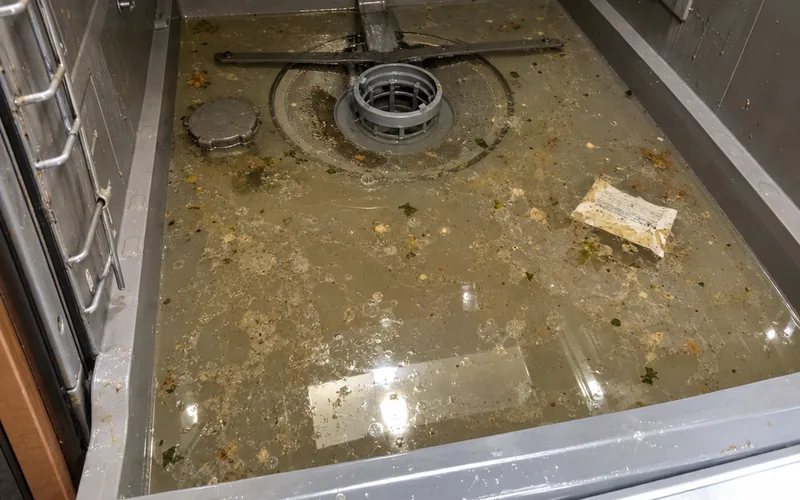
Here’s the path the water takes, and where it gets stuck:
- Water passes through the Fine and Ultra Fine filters on the tub floor.
- It collects in the sump, the low well under the filters.
- The drain pump pushes it out through the drain hose.
- The hose runs under the sink to the disposal, the sink drain or an air gap.
A clog at any of those points leaves water in the tub. Suds and a badly routed hose work differently: they stop the water from leaving even when nothing is clogged.
That’s why the checks below follow the water from the tub to the sink.
In other words, start where the dirt collects first.
What You Need to Fix It
You don’t need special tools for any of these checks. A cup, old towels, a sponge and a flashlight cover most of the job.
Clear out the cabinet under your sink before you start. You’ll need room to see the drain hose, the disposal and the spot where they meet.
A tape measure helps with the last check, where you compare your hose height with what your dishwasher’s installation instructions call for.
How to Fix a GE Dishwasher Not Draining, Step by Step
The fix for a GE dishwasher not draining is to clear each point where water can get stuck, from the filters in the tub to the hose under your sink. Test the dishwasher after each step, so you know which one solved it.
Step 1: Cut the Power and Bail Out the Water
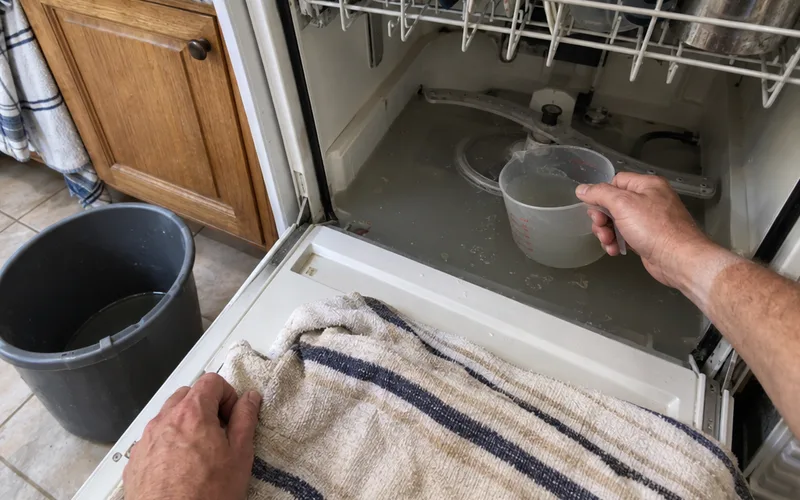
Turn off the dishwasher at the circuit breaker before you reach into the tub. You’ll have your hands in water near the bottom of the machine, so the power stays off until the last step.
Then scoop the standing water out with a cup and soak up the rest with towels. You can’t see the filters or the sump through that murky pool.
If your owner’s manual lists a cancel or drain button for your model, try it before bailing. It may pump some of the water out for you.
Step 2: Clean the Fine and Ultra Fine Filters
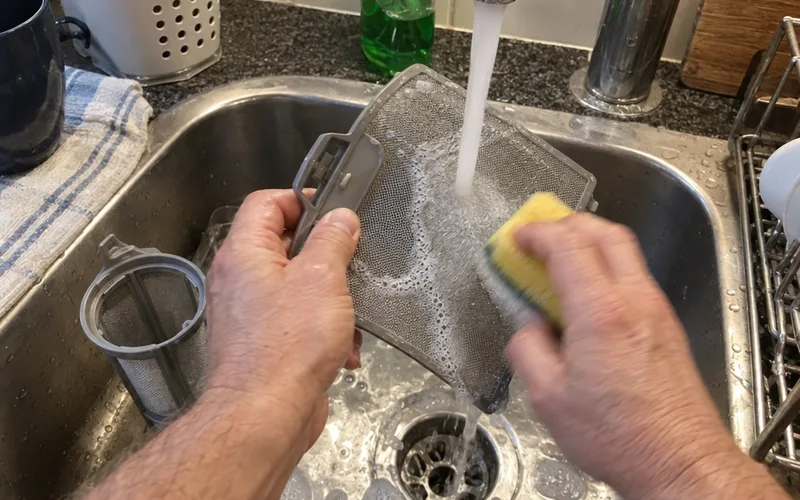
Remove the bottom rack, twist the Ultra Fine filter counterclockwise and lift it out, as the GE Appliances filter cleaning guide shows. Rinse it in warm water with a little dish soap and a sponge.
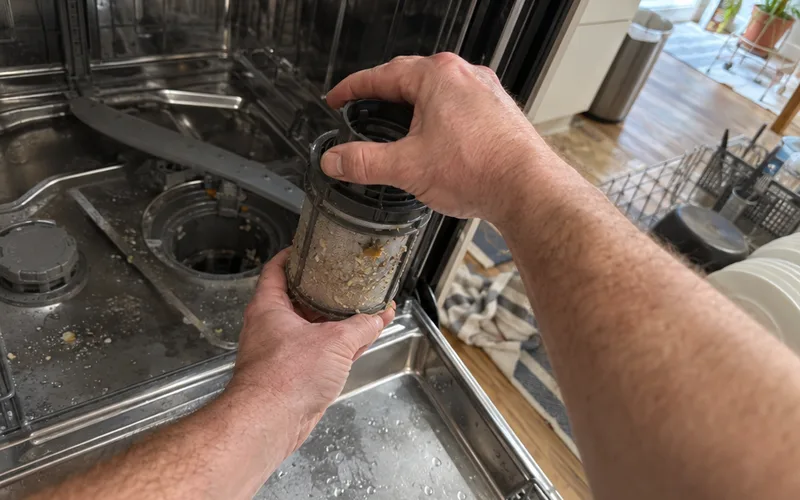
Then take out the Fine filter, the flat mesh plate under it. Twist the 2 retaining posts at the back of the tub counterclockwise, lift the plate out and rinse it the same way.
Go easy on the scrubbing.
Scouring pads or brushes can damage the Ultra Fine filter, the same page warns. A soft brush or sponge is fine on the mesh plate for stuck-on soil or calcium deposits from hard water.
To put them back, set the Fine filter in place and twist the posts clockwise. Then line the Ultra Fine filter up with the arrow embossed on the Fine filter and twist it clockwise to lock it.
How often should you do this? GE recommends cleaning both filters every other month, or more often depending on how much you run the dishwasher.
One repair blog says GE recommends monthly, but the GE filter page itself says every other month.
Got an old GE dishwasher with no removable filter? GE says older models, and some current ones, use self-cleaning filtration.
In that case, your owner’s manual shows what you can remove and clean yourself.
Step 3: Clear the Sump at the Back of the Tub
With the filters out, look at the sump area at the rear of the tub floor. GE Appliances says to make sure no paper or large object is covering or blocking it.
A soaked paper label counts, and so do noodles, lettuce and bones, the foods the company names for clearing out of the bottom.
Wear rubber gloves and pick out anything you can see, slowly, in case a sliver of glass, a plastic wrapper or a seed is down there.
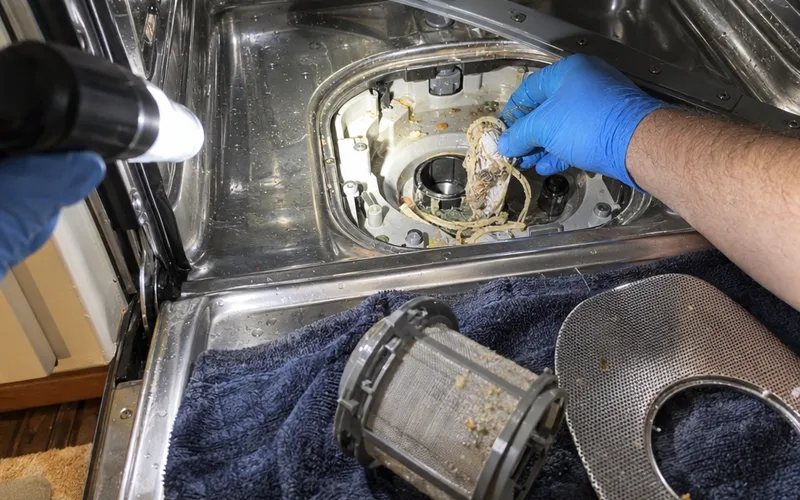
Debris that slips past the filters can also reach the pump impeller, the small spinning part that pushes water out. Clearing the sump now keeps more of it away from there.
Step 4: Run the Garbage Disposal and Check Its Drain Plug
If your dishwasher drains into a garbage disposal, run the disposal to clear the drain system. A disposal full of food leaves the dishwasher water nowhere to go.
Never put your hand into the disposal to check it. GE Appliances warns a serious injury could occur.
Was the disposal installed or replaced recently? Then make sure the drain plug inside it was removed, the company says.
That plug seals the spot where the dishwasher hose connects, and the disposal’s installation instructions show how to remove it.
If the disposal itself won’t run, sort that out first, because a garbage disposal not working blocks the dishwasher drain too.
Step 5: Clear the Sink Drain and Air Gap
Make sure the kitchen sink drains freely. If it’s backed up, clear that clog or call a plumber, since the dishwasher has nowhere to send its water.
Next, look for an air gap, a small metal or plastic cap that sits on top of the sink or counter near the faucet. Not every kitchen has one.
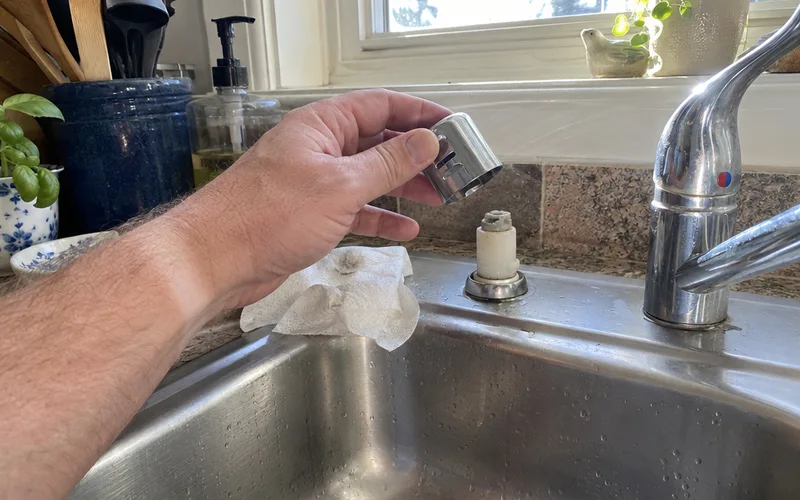
If you do, GE Appliances says to remove the cap and clean out any debris that has built up. Clearing it lets water flow better when the dishwasher drains.
Step 6: Straighten and Clear the Drain Hose
Find the drain hose under the sink and follow it from the dishwasher to where it connects. Check that connection point for a blockage or a kink, as GE Appliances advises.
Shine a flashlight along the hose and straighten any sharp bends. Things stored under the sink often push the hose into a fold.
Here’s a detail most guides skip: new GE dishwashers come with a white corrugated drain hose that should be used, the company says. Reusing an old, worn hose may promote kinking or a blockage.
For a clog you can’t see past, you can clean the drain hose without pulling the dishwasher out of the cabinet.
Step 7: Check for a High Loop Under the Counter
If your kitchen has no air gap, GE Appliances says the drain hose must have a high drain loop for the dishwasher to drain correctly. The loop must be attached to the underside of the countertop.
Measure from the floor to the highest point of the hose. That height should match the one in your dishwasher’s installation instructions.
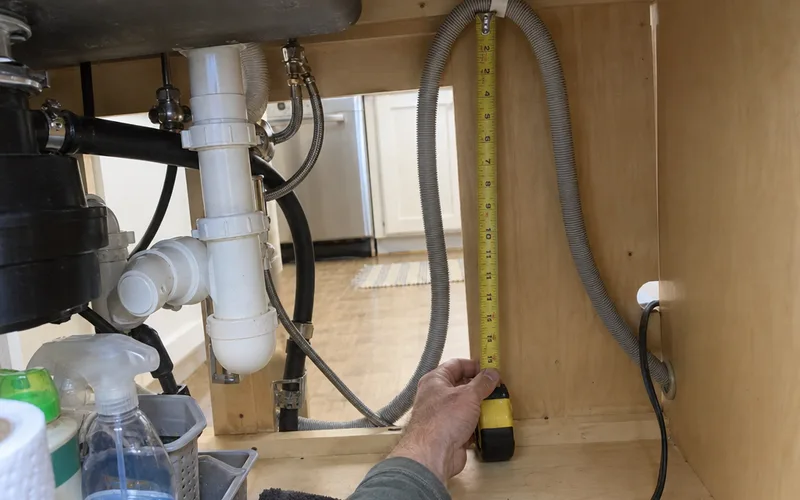
A hose that sags to the cabinet floor is a sign the loop came loose. Lift it back up and fasten it under the counter.
Step 8: Rule Out Too Many Suds
Using the wrong type or too much detergent can cause over-sudsing that stops a GE dishwasher from draining properly, according to GE Appliances. If you opened the door to foam, that’s your answer.
Let the suds settle, then run a cycle with no detergent. After that, use only detergent labeled for automatic dishwashing, not the hand soap you use at the sink, and measure it.
Not sure which detergent to buy? Even the safest dishwasher detergent still needs the right dose.
If your water is hard, a detergent made for hard water is the better match.
Then restore power and run a short cycle to test. If it drains, you’re done.
Why a New GE Dishwasher Won’t Drain
A new GE dishwasher that won’t drain usually has an installation problem: a disposal drain plug that was never removed, a kinked or reused drain hose, or a hose with no high loop or air gap. GE Appliances lists all three on its not-draining page.
So if the trouble started on day 1, skip ahead to Steps 4, 6 and 7 first.
Check whether the installer used the white corrugated hose that came in the box. If they reused your old one, that’s worth replacing.
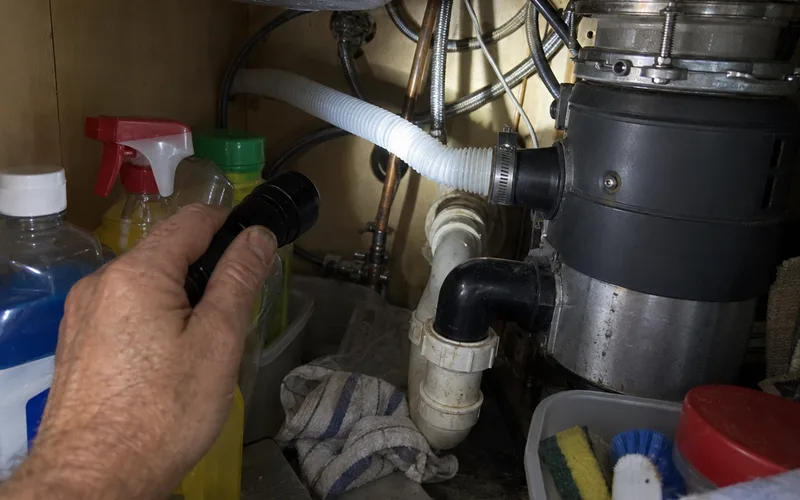
And if a new disposal went in at the same time, the drain plug is the first thing I’d check. Removing it is a normal part of garbage disposal installation, so it’s easy to forget.
Is It the Drain Pump?
A GE dishwasher drain pump is the likely suspect only after the filters, sump, disposal, sink, air gap, hose and loop all check out, and GE Appliances says service will be needed at that point. The pump sits inside the machine, out of reach of every check here.
That’s the honest answer.
A jammed impeller or a failed pump motor isn’t something a filter rinse or a straightened hose can fix. That part of the job isn’t DIY work.
So if all 8 checks pass and water still stands in the tub, stop and call an appliance technician.
Before you approve a big repair quote, compare it with the dishwasher replacement cost for a new machine.
When to Call for GE Dishwasher Repair
Call for GE dishwasher repair when the 8 basic drain checks don’t get the water moving, because GE Appliances says service will be needed once its own suggestions fail. GE points owners to Bodewell to schedule a repair appointment.
Two cases skip the checks entirely:
- Portable models on the faucet: a portable dishwasher connected to the sink with the unicouple (the faucet connector) needs service if it won’t drain. One with a regular drain hose can follow the steps above.
- Anything electrical: a breaker that trips or a control panel that won’t respond belongs with a technician.
Write down your model and serial number before you call, so the technician can bring the right parts.
Key Takeaway: Do every check you can reach, then let a technician handle what’s inside the machine.
How to Keep Your GE Dishwasher Draining
A GE dishwasher keeps draining when you clean its filters at least every 2 months, run the disposal before each load and use the right amount of detergent, the three habits GE Appliances guidance points to.
Always turn on your garbage disposal before running the dishwasher, the company advises, so food clears out of the drain system first.
Scrape plates before loading, too. Less food in the tub means less in the filters and sump.
If the tub smells after a long clog, cleaning the dishwasher with vinegar and baking soda is a separate job, and it doesn’t replace hand-cleaning the filters.
If you want the bigger picture on other faults, the dishwasher troubleshooting hub covers them, and dishwasher not draining explains the problem for every brand.
Frequently Asked Questions
Why does my dishwasher not drain all the way?
A GE dishwasher that doesn’t drain all the way usually has a partial blockage in the filters, the sump, the drain hose, the sink drain or the air gap. First check how much water is left: GE Appliances calls 1 to 2 cups normal on models without an Ultra Fine filter, so a small puddle may not be a problem at all.
What is the most common cause for a dishwasher not to drain?
A blockage is the first cause GE Appliances lists for a dishwasher that won’t drain, starting with food or paper caught in the Fine and Ultra Fine filters at the bottom of the tub. Clean those filters before you check anything under the sink, because it’s the quickest fix and needs no tools.
How often should you clean a GE dishwasher filter?
GE Appliances recommends inspecting and cleaning the Fine and Ultra Fine filters every other month, or more often if you run the dishwasher a lot. Gritty dishes or weaker cleaning are signs the filters need attention sooner.
Why is my GE dishwasher not draining but there's no blockage?
A GE dishwasher with clear filters, hose and drain can still hold water because of too many suds, a drain hose with no high loop or air gap, or a fault inside the machine. Rule out suds and the high loop first, since GE Appliances says service is needed once its basic checks don’t fix the problem.
Can I use drain cleaner in a GE dishwasher?
No, GE Appliances says not to use drain cleaner in the dishwasher. Clear the filters, sump, drain hose and air gap by hand instead, and call for service if water still won’t drain.
How do I inspect my drain pump?
A GE dishwasher drain pump sits inside the machine, below the tub, so GE Appliances sends owners to service once the filter, sump, hose, sink and air gap checks don’t solve the problem. Before you book, run through those checks once more, because a missed clog is an easier fix than anything inside the machine.
Final Thoughts
A GE dishwasher not draining is usually a blockage you can reach, not a dead pump. Start inside the tub with the filters and sump, then work under the sink: disposal, air gap, hose and high loop.
If all 8 checks come up clean and the water stays, stop there and book service. Pick a quiet hour this week, cut the power and start with the filters.