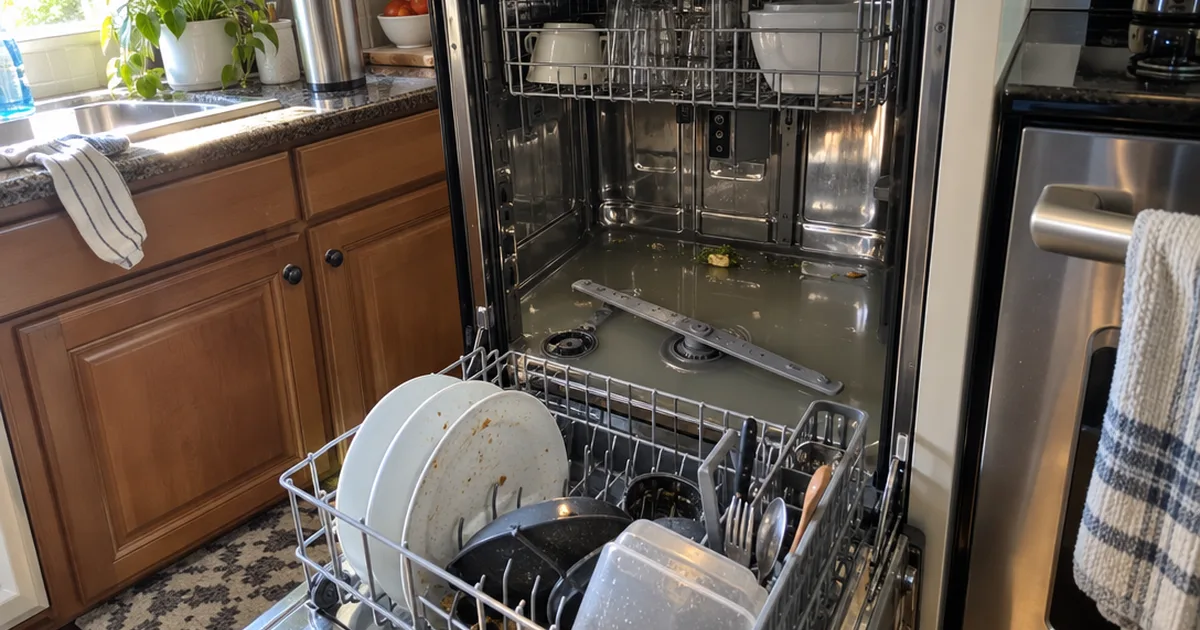

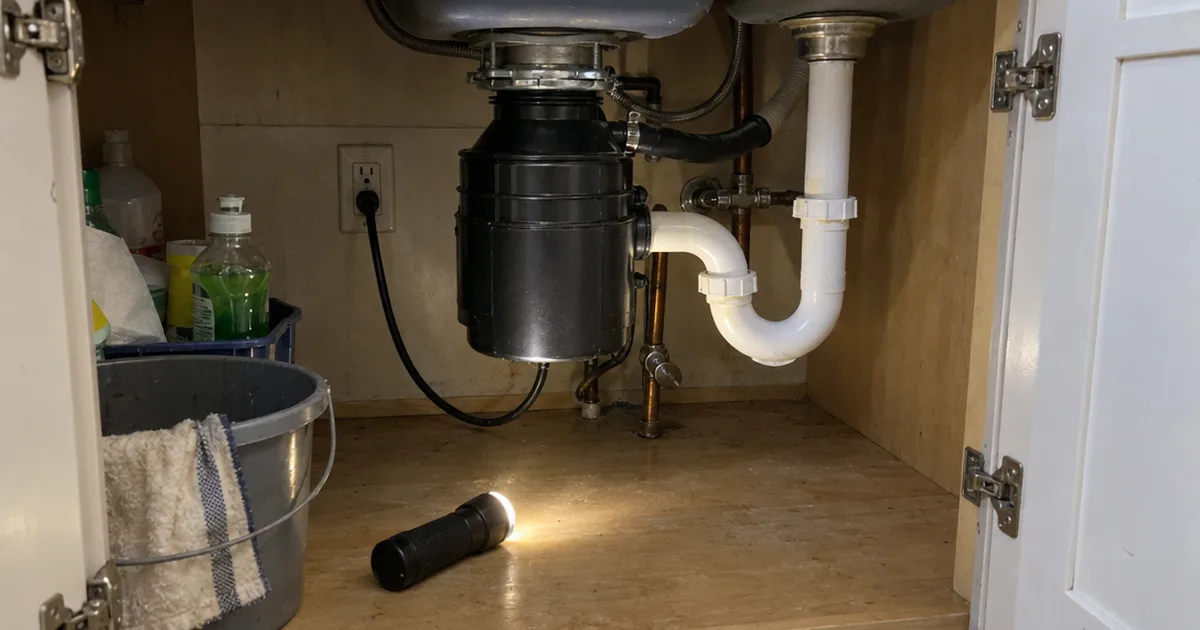
A garbage disposal that won’t drain often isn’t broken at all. Turn it on, watch the water, and the swirl tells you whether the trouble is the disposal or the pipe below it.
Garbage disposal not working at all, or only humming? Silence means lost power, a hum a jammed plate, which can spin once freed with power on, so keep hands out of the opening.
The 7 steps below match each fix to what yours is doing, and most need just a flashlight and the small wrench it came with. For how they work, see our garbage disposals guide.
How to Fix a Garbage Disposal That’s Not Working
A garbage disposal that’s not working almost always has one of 3 problems: no power if silent, a jammed plate if it hums, or a clogged drain line if it runs but won’t drain.
Each has its own fix, so listen before you reach for tools.
Step 1: Cut the Power and Keep Your Hands Out
Turn off the wall switch, then unplug the disposal under the sink or shut off its circuit breaker. A freed jam can spin the plate the moment power comes back.
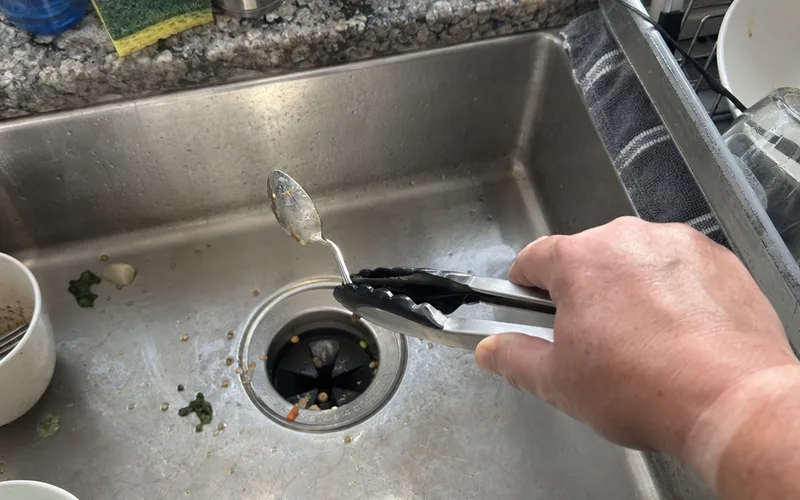
A support page from InSinkErator puts it bluntly: don’t stick your hand in the garbage disposal at any time. Use tongs, pliers and a flashlight instead.
The same tongs or needle-nose pliers come back in Step 5, when you lift out whatever was jamming the plate.
Step 2: Listen to What It Does
Restore power just long enough to flip the switch for a second, then turn it off. That one noise is your troubleshooting test:
| What you hear | Likely cause | Go to |
|---|---|---|
| Nothing at all | No power or tripped reset | Steps 3-4 |
| A hum, no spinning | Jammed plate | Step 5 |
| Clanking or grinding | Object in the chamber | Step 5 |
| Runs, sink won’t drain | Clogged drain line | Step 6 |
If the sound changed right after something slipped into the sink opening, start with the jam.
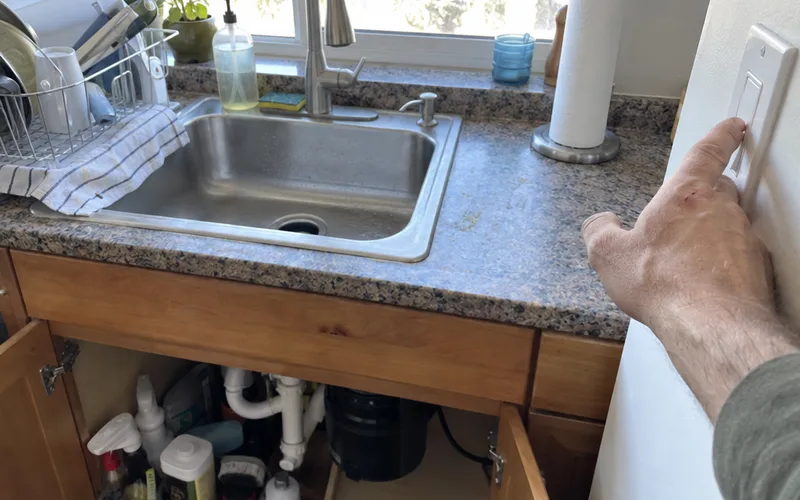
Keep your hands out of the sink opening during this test, even for one second of power. A freed jam can spin the plate the moment power comes back.
Once you’ve matched the sound to a row in the table, go straight to the step it names.
Step 3: Check the Plug, Switch and Breaker
A garbage disposal not turning on, with no sound at all, has lost power, so check the plug under the sink first.
Then reset the tripped switch in the circuit breaker panel, plus the GFCI outlet if your kitchen has one.
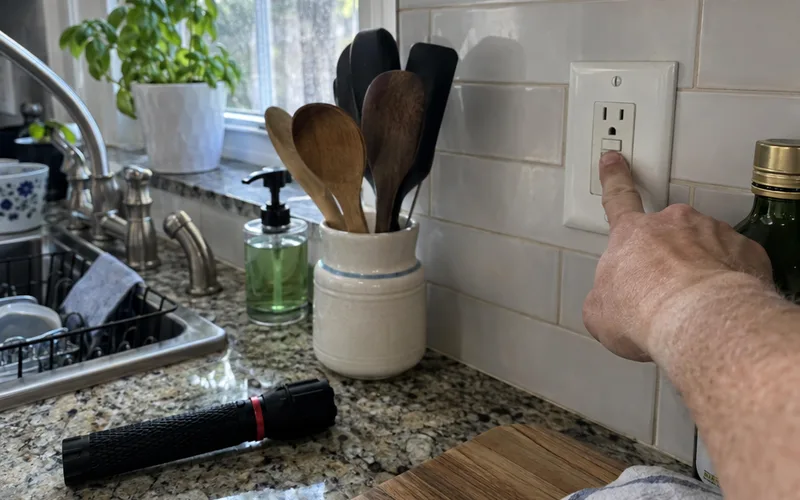
To check the outlet itself, plug in a lamp. After a power outage, a breaker or GFCI reset is usually the whole fix.
If the breaker trips every time you run it, stop and call an electrician or plumber. That’s a wiring or motor fault, not a jam.
Step 4: Press the Reset Button
The reset button is a small red or black button on the bottom of the disposal. It’s an overload protector that pops out when the motor overheats or strains against a jam.
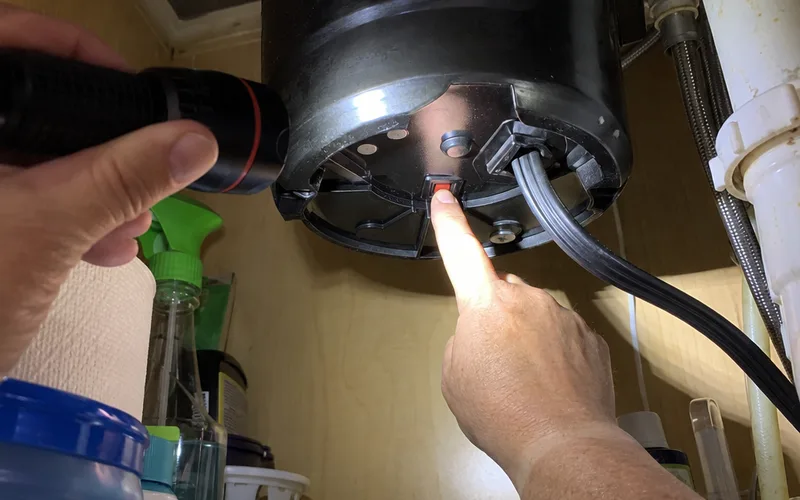
Let a hot motor cool, then press the button firmly until it stays in.
Shine a flashlight along the bottom and lower sides, because the garbage disposal reset button is easy to miss.
If it pops right back out, something is still stuck.
Step 5: Free a Jam With the Hex Key
A humming garbage disposal has power, but something is wedged against the impeller plate, the spinning disc (or flywheel) that throws food against the grinding ring.
Don’t leave it humming, because a stalled motor overheats.
With the power off, push the hex key, also called an Allen wrench, into the socket at the center of the bottom. Work it back and forth until the impeller makes a full rotation.
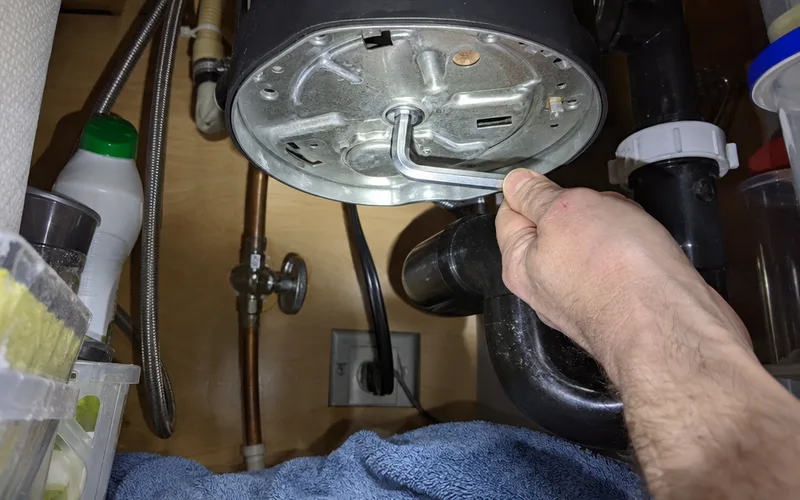
Then lift out the debris you freed with tongs or needle-nose pliers, such as a bone, a fruit pit or a spoon. A disposal humming but not working after this has a deeper fault.
Brands differ a little in the tool and socket, so check the steps for an InSinkErator that won’t run or a Moen disposal that quits if yours doesn’t match.
Step 6: Clear a Clog That Won’t Drain
Run the disposal with water in the sink and look for a whirlpool.
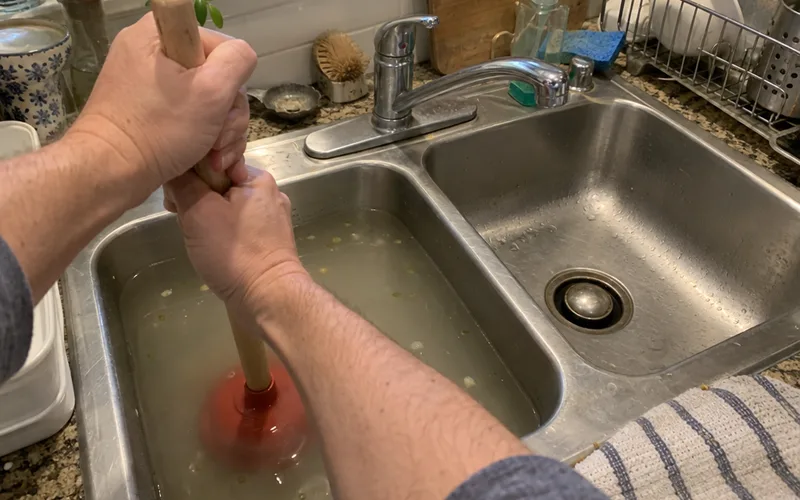
According to the InSinkErator directions, a whirlpool means you probably have a clogged drain line, not a broken disposal.
Here’s how the maker says to plunge it:
- Put a stopper in the other sink opening if you have a double sink.
- Fill the sink with four inches (10 cm) of water.
- Press the plunger down slowly and gently, then pull it up quickly.
- Repeat the pull several times.
If the water still won’t move, the clog sits in the trap or deeper in the plumbing. Your dishwasher drains through the same line, so it can also leave a dishwasher not draining.
Step 7: Test It With Cold Water
Restore power at the switch or panel, press the reset button once more and run a moderate flow of cold water to carry food waste away. Then flip the switch.
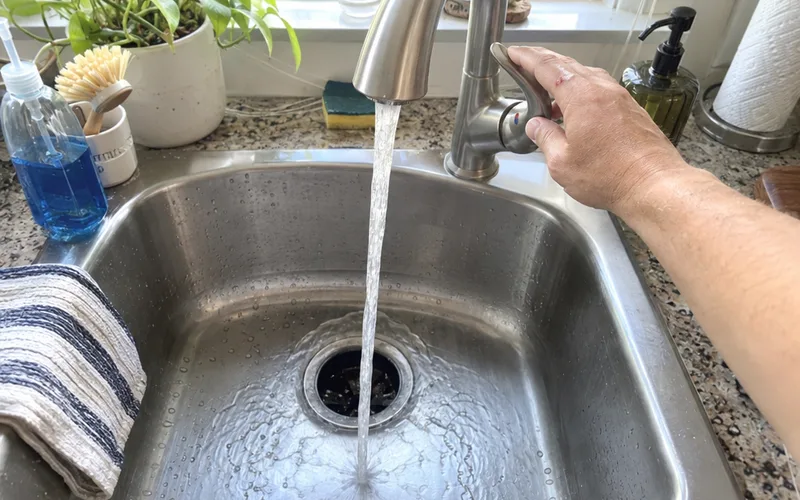
If it spins and drains, you’re done. If it hums, trips or stays silent again, the problem is inside the unit, which is a job for a plumber or a new disposal.
If it spins but the water still sits in the sink, the clog is in the trap or the pipe below, not the disposal.
When a Garbage Disposal Needs a Plumber or Replacement
A garbage disposal needs a plumber or replacement when it leaks from the bottom, keeps tripping the breaker, or stays dead with power after a reset and a cleared jam.
No reset fixes a failed seal, wiring or motor.
A disposal leaking from the bottom usually has a failed internal seal, and a burning smell means the motor is done.
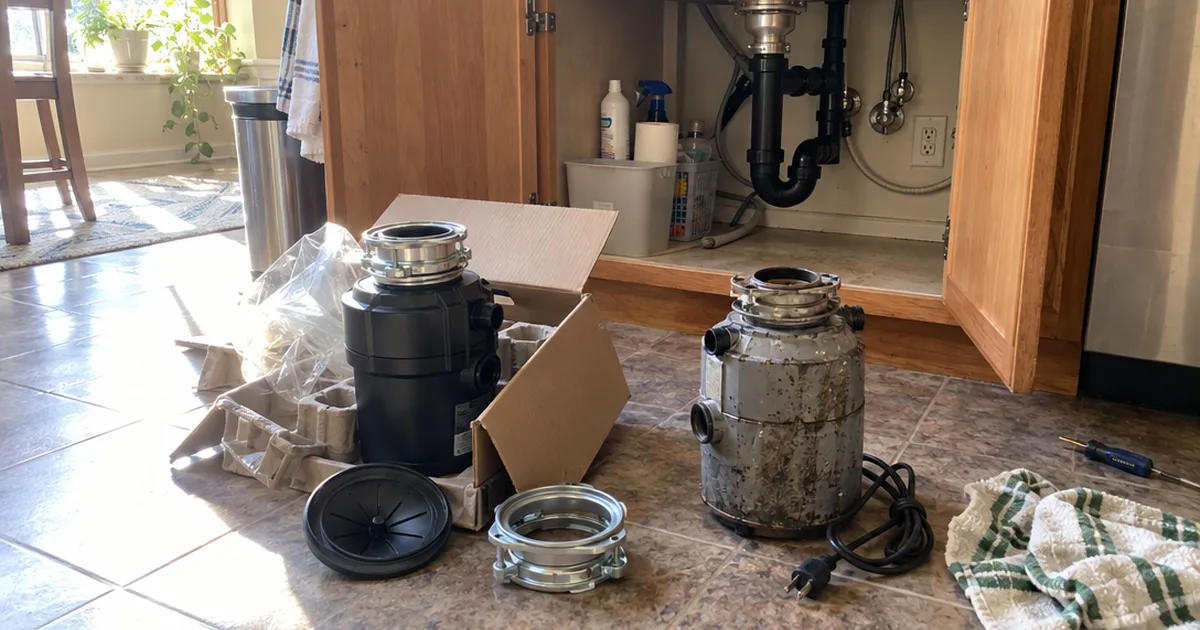
Compare any repair quote with what a new disposal installation costs, and see the best garbage disposal picks if you replace it.
How to Keep a Garbage Disposal From Failing Again
A garbage disposal stays clear longest when you grind with cold water and keep grease out.
InSinkErator says never to pour grease or fat into the disposal or drain, and to avoid hot water while grinding.
The same maker says to keep cold water running a few seconds after grinding.
Stringy vegetables like celery, potato peels, rice, pasta and coffee grounds can pack together in the pipe, so put that waste in the trash instead.
The same listen-first habit works on the other major kitchen appliances under your counters.
Frequently Asked Questions
Why is my garbage disposal still not working after I press the reset button?
A garbage disposal that stays dead after a reset has no power at the outlet or breaker, or a jam is tripping it again.
Test the outlet with a lamp, then free the plate with the hex key.
How do you unclog a garbage disposal with standing water?
To unclog a garbage disposal with standing water, cut the power, bail the sink down to about four inches of water and plunge the opening.
If it still won’t drain, the clog is in the trap or drain line.
My garbage disposal won't turn on after a power outage. What can I do?
A garbage disposal that won’t start after a power outage usually needs its breaker or GFCI outlet reset. Check both, then press the reset button on the bottom of the unit.
Final Thoughts
A garbage disposal that’s not working usually tells you what’s wrong by its sound.
This week, tape the hex key that came with yours inside the sink cabinet, so the next jam is a quick fix.