
There’s no official dishwasher safe symbol.
Every maker of plates, cups, kitchenware and food containers draws its own, and nobody is required to put one on at all. That’s why the same little picture can look slightly different on every dish in your cabinet.
The good news?
Almost all of them follow the same pattern. Learn it once, and any version tells you in seconds whether an item goes in, which rack it needs or whether to hand wash it.
What Does the Dishwasher Safe Symbol Look Like?
The dishwasher safe symbol usually shows one or two plates, or a plate and a glass, inside a small square, with water drops or slanted lines falling on them. The water stands for the spray inside your dishwasher, so the drawing is saying “this item can take a wash cycle.”
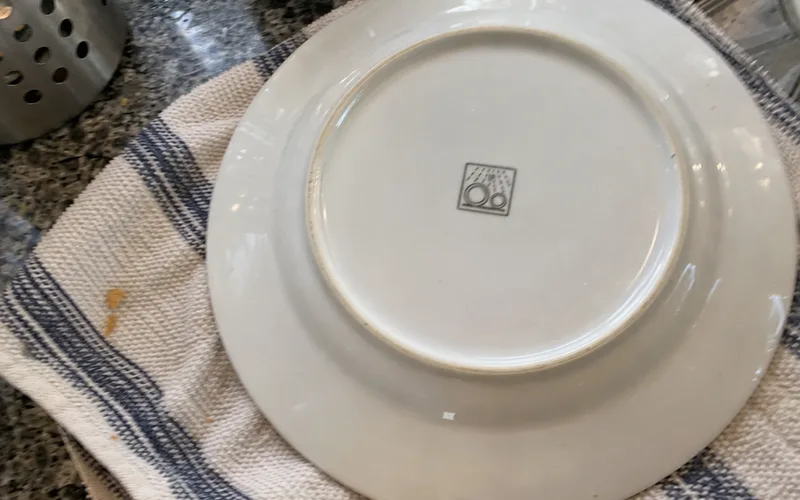
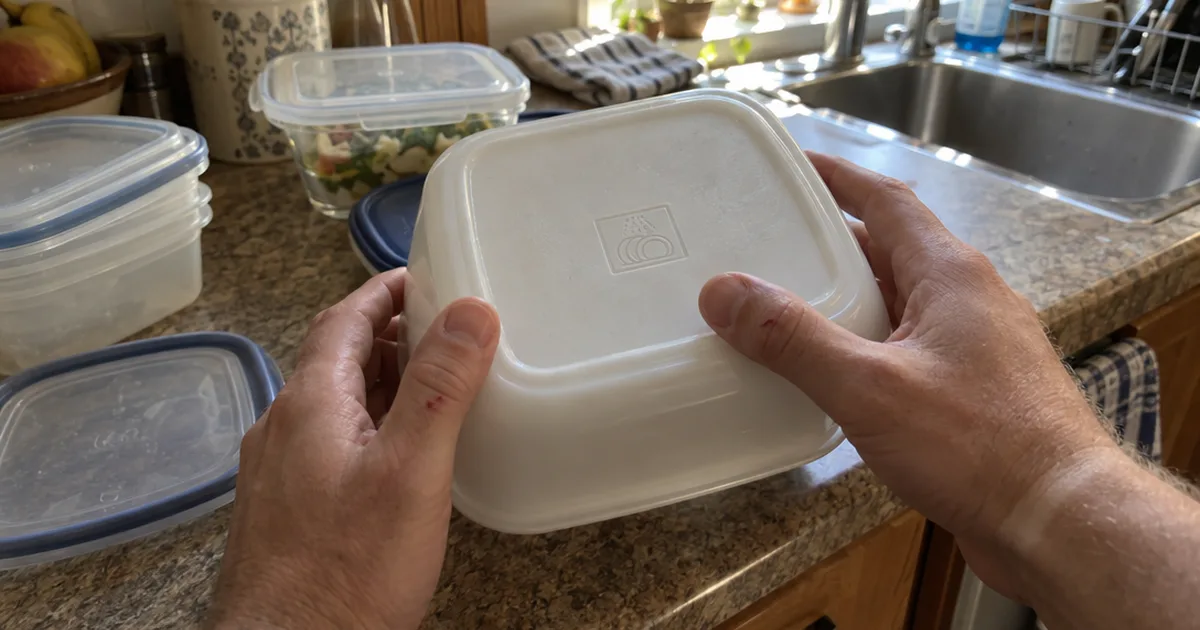
You’ll most often find it stamped, molded or printed on the bottom of the item. On cups, mugs and food containers, check the base first, then the side of the lid.
Some makers add words under the drawing, such as “dishwasher safe” or “top rack.”
When words appear next to the drawing, follow the words, because they leave less room for guessing than the picture does.
Plates Under Water Lines or Drops
The plate version is the one you’ll see most. The plates are usually drawn as circles, one large and one small, standing up on their edges like they would in a rack.
The spray can show up as round water droplets, short dashes or long diagonal lines. All three styles mean the same thing.
Here’s the key detail to check:
Look at where the spray lands. If the drops or lines cover the whole square, above and below the plates, the item can usually go on either rack.
A Wine Glass With Water Drops
Glassware often gets its own version: a wine glass, upright or upside down, with water droplets falling on it or next to it. You’ll see this most on stemware and tumblers.
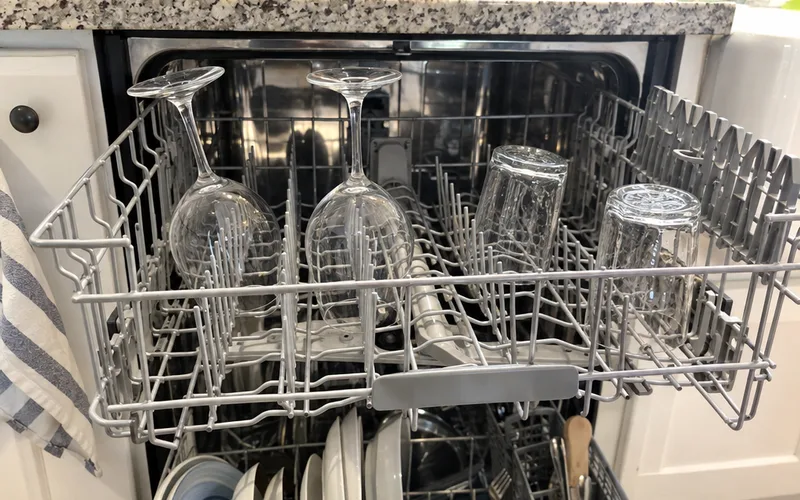
That mark tells you the maker thinks the piece can survive a wash cycle. It doesn’t promise it will never chip if it knocks against a plate, so give stemware its own space in the rack.
The Top Rack Only Symbol
The top rack only symbol looks like the regular dishwasher safe symbol, except the water drops or lines hit only the top part of the dishes. Some versions show a small rack with the item sitting on the upper level, and many simply print “top rack only.”
Why does the rack matter?
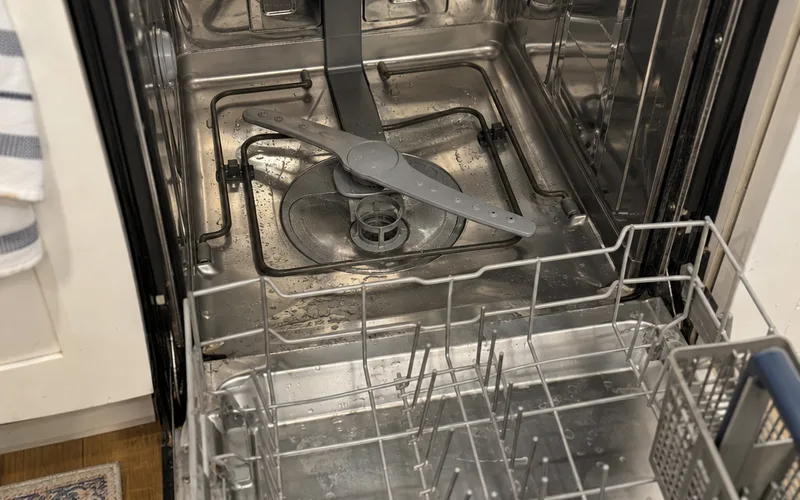
In most dishwashers, the heating element sits at the bottom of the tub. That puts the bottom rack closest to the element, so it runs hotter than the top rack during washing and drying.
That extra heat is what ruins soft items. A plastic lid that looks fine on the top rack can come out of the bottom rack bent, cloudy or melted at the edges.
If you want the bigger picture, it helps to know how dishwashers heat water during a cycle.
So if an item carries that mark, put it up top every time. The top rack mark is a placement rule, not a suggestion.
The Not Dishwasher Safe Symbol
The not dishwasher safe symbol is usually the regular dishwasher drawing with a line or an X through it. That cross-out means the maker doesn’t want the item in a dishwasher at all.
A second version shows a hand dipping into a bowl or basin. On dishes and cutlery, that drawing means “hand wash only.”
You’ll find these marks on things like fine china, hand-painted mugs, wooden boards and some insulated cups. Plenty of hand-wash items carry no warning mark, though, so a missing cross-out doesn’t mean an item is safe.
In other words, read a crossed-out drawing as a firm no.
Does a Glass and Fork Symbol Mean Dishwasher Safe?
No, a glass and fork symbol does not mean dishwasher safe. The wine glass sitting next to a fork means the item is food safe, which tells you the material is meant to touch food and drinks.
It’s an easy mix-up to make. Both marks use a wine glass, and both sit on the bottom of the same plates and containers.
But the food safe mark says nothing about high temperatures, spray or dishwasher detergent. A container can be perfectly fine to eat from and still warp in a hot cycle.
So what do you look for instead?
Look for the spray. If there are no droplets, dashes or spray lines anywhere in the drawing, it isn’t the right icon.
Other Kitchen Symbols People Mistake for Dishwasher Safe
Several symbols on the bottom of a dish look a lot like the dishwasher safe symbol, but only the drawing with water drops or spray lines is about your dishwasher. Knowing the others keeps you from loading something based on the wrong picture.
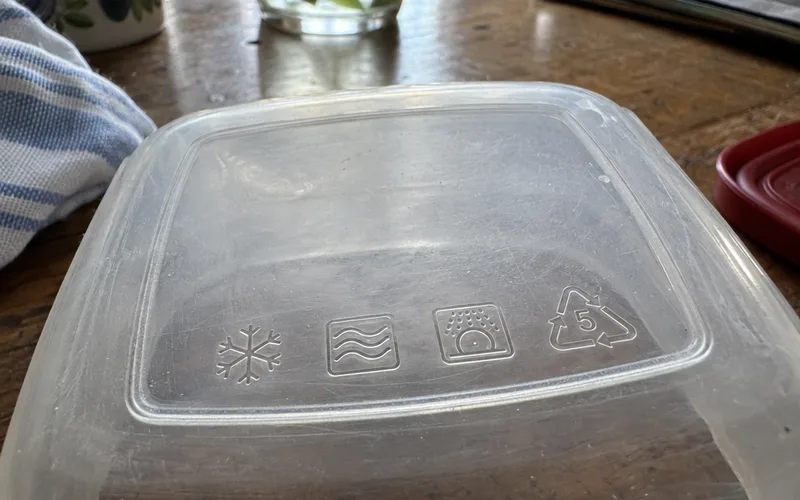
These are the look-alikes you’ll run into most:
- Wavy lines: microwave safe, often shown in a square or a small microwave.
- A snowflake: freezer safe.
- A small oven drawing: oven safe.
- Two numbers with degree signs: the lowest and highest temperatures the item can handle.
- A triangle of arrows with a number: the recycling code for the plastic, such as PET, polypropylene or polystyrene.
The microwave mark trips people up the most, because it sits right beside the wash mark on many containers. If you need to read that one too, the microwave safe symbol has its own set of variations.
The same goes for baking dishes.
A casserole dish might show both an oven drawing and a wash drawing. Each answers a separate question, so check the oven safe symbol before it goes in a hot oven.
Pro Tip: If a temperature range is printed near the wash drawing, treat the top number as a limit. Skip any extra-hot or sanitize setting that could go past it.
The Dishwasher Safe Symbol on Plastic
The dishwasher safe symbol on plastic is usually molded into the container’s bottom: one or two plates, or a cup, under water drops or lines. On plastic, the top rack version is very common.
Plastic is the material where that mark matters most. Some plastics have a low melting point, and a hot wash or a heated-dry cycle is enough to warp them.
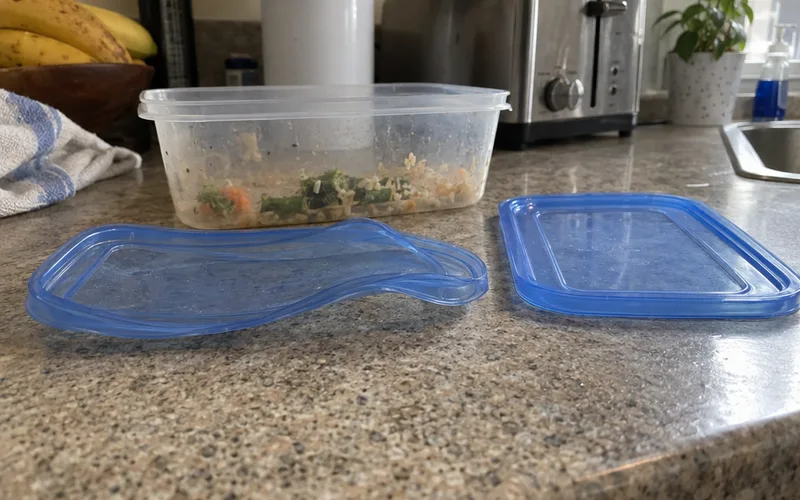
That’s why most plastic containers that can go in still belong on the top rack, away from the heating elements. Even a container marked for either rack tends to last longer up top.
Brand marks vary a bit. Rubbermaid, for example, often pairs its drawing with printed text, so check how Rubbermaid containers handle the dishwasher before you load a set.
How to Tell If Your Plastic Container Is Dishwasher Safe
The fastest way to tell if a plastic container is dishwasher safe is to turn it over and look for a drawing with spray lines or droplets, or the words “dishwasher safe.” Check the lid separately, because lids and bases are often made differently.
Here’s the order I’d follow:
- Check the bottom of the base for a spray drawing or printed words.
- Check the lid on its own, inside and out.
- Check where the spray lands in the drawing, then pick the rack.
- If you find no mark, look up the product or packaging online.
- Still nothing? Hand wash it.
Don’t use recycling symbols as your answer. That number only names the plastic, so it can’t tell you how a particular container was made or tested.
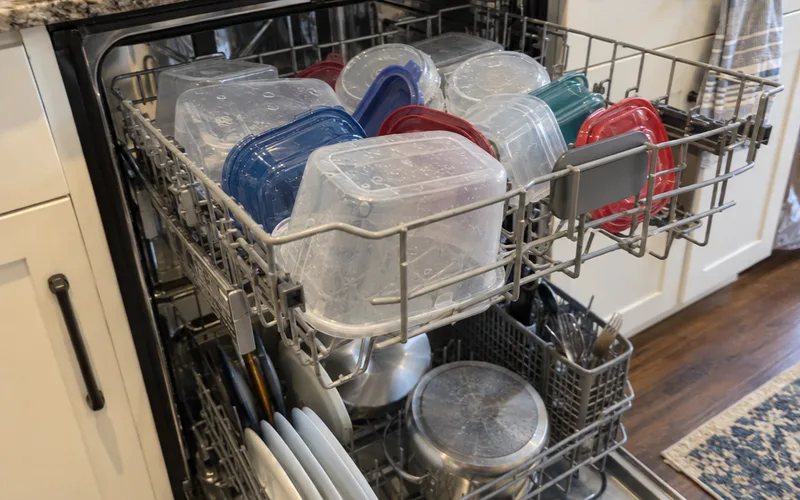
Storage brands follow the same rules. If you own a cabinet full of one brand, it’s worth reading how Tupperware handles the dishwasher, since older pieces and newer ones can differ.
Is All Ceramic Dishwasher Safe?
No, not all ceramic is dishwasher safe. Plain, glazed everyday plates and mugs often are, but hand-painted pieces, metallic trim, old or crackled glazes and unglazed pottery are usually better washed by hand.
What makes the difference is how a piece was finished. Plain everyday stoneware is the kind most likely to carry a dishwasher safe mark.
The mark on the bottom is your best clue, and the material tells you how careful to be when there isn’t one.
Ceramics and Their Glaze
Ceramics are fired and then slowly cooled so the material settles with as few flaws as possible. Most get a ceramic glaze, a glassy coating that protects the surface.
The type of coating has a big effect on how well a piece holds up.
A tough, fully glazed dinner plate is built for repeated washing. A hand-painted design or gold rim can fade or wear off under hot dishwasher detergent and steam.

So if a ceramic piece has decoration on top of its finish, keep it out of the machine unless the bottom clearly says otherwise.
Glass: Annealed, Heat-Strengthened or Tempered
Almost all glass is annealed glass, which means it was cooled slowly after it was made to relieve the stress inside it. That basic step keeps weak spots from forming in the finished piece.
Some glass goes further. Heat-strengthened and tempered glass go through extra heating and cooling that makes them tougher and better at handling quick temperature changes.
Most everyday kitchen glass, including a lot of Pyrex bakeware, handles a wash cycle well. Thin stemware, crystal and hand-blown pieces are the ones to watch, so look for the wine glass mark before you load them.
Cloudy glassware isn’t always damaged, either. Hard water can leave a limescale film that looks a lot like wear.
What Does Dishwasher Safe Actually Mean?
Dishwasher safe means the maker believes an item can handle the heat, water spray and detergent of a normal dishwasher cycle without being damaged. It isn’t a standard rule, because each company decides for itself what “dishwasher safe” means for its own products.
That has 2 practical effects for you.
First, two items with the same label may not be equally tough. One brand’s top rack plastic and another brand’s top rack plastic can behave very differently on the same cycle.
Second, the label is not a lifetime promise.
A mug with that label can still fade or dull after years of washes. The label just means that wear should take a long time, not a few cycles.
Note: Hot settings, heated dry and strong detergent all speed up wear, so use the gentlest cycle that gets your dishes clean.
What to Do When There’s No Dishwasher Safe Symbol
When a dish has no dishwasher safe symbol, hand wash it until you can confirm otherwise. A missing symbol doesn’t prove an item is unsafe, but it doesn’t prove it’s safe either.
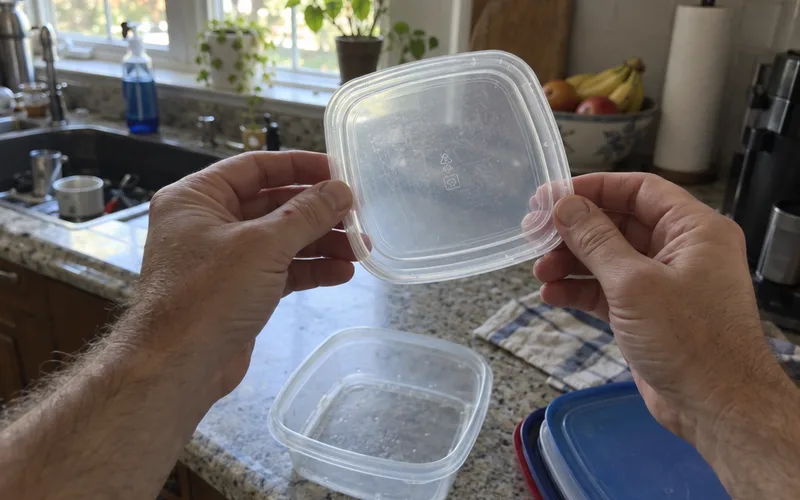
Here’s how to settle it:
- Look for words as well as pictures on the bottom, the lid and any label.
- Search the brand and product name with “care instructions.”
- Check the original box or the store listing if you still have it.
- Ask the maker directly if none of that works.
For that last step, a short message is enough. Here’s what to send:
“Hi, I have your [product name], bought around [year]. It has no care mark on the bottom. Is it dishwasher safe, and if so, which rack should it go on?”
A reply gives you a clear yes or no in writing. Until you have one, warm water and mild dish soap are the safe choice.
What Should Never Go in the Dishwasher
The items that should never go in the dishwasher are the ones that heat, water and detergent damage every time, even when they carry no warning symbol.
Keep these at the sink:
- Sharp knives: the blades dull and the handles can loosen.
- Wood: cutting boards, wooden utensils and bowls soak up moisture, then warp or crack.
- Cast iron: detergent strips the seasoning and the pan can rust.
- Nonstick pans: the coating wears down faster.
- Aluminum and copper: they dull, discolor or pit.
- Fine china, crystal and hand-painted pieces: decoration fades and thin pieces chip.
The same goes for anything with an electric part, insulated travel mugs and many small appliance parts, unless the maker says otherwise.
Nonstick coatings such as Teflon are the ones people push their luck with, since a few pans do say they can go in. Even then, hand washing keeps the coating working longer.
Stainless steel cutlery and silicone spatulas are usually the easy part of the load. Save your caution for the materials in that list.
For cast iron, a quick scrub at the sink is all it takes, and you can follow a simple cast iron skillet cleaning routine instead. Copper deserves the same care, and you can see what happens to copper pans in the dishwasher if you’re tempted.

If your question is really about the buttons and lights on the machine itself, those are a different set of icons. The dishwasher control panel symbols cover cycles, rinse aid and warning lights.
The machine itself is one of the major kitchen appliances worth knowing well.
The Bottom Line
The dishwasher safe symbol is a picture of dishes in a shower of water droplets, and where those droplets land tells you which rack to use.
Tonight, turn over your 3 most-used plastic containers and check each base and lid. Anything with no spray drawing gets hand washed until you’ve confirmed it.
Frequently Asked Questions
What is the dishwasher safe symbol on Tupperware?
The dishwasher safe symbol on Tupperware and similar storage brands is usually the same plates-under-water drawing, sometimes with the words “dishwasher safe” or “top rack” beside it. If the water only reaches the top of the drawing, wash the container on the top rack.
What does the IKEA dishwasher safe symbol look like?
The IKEA dishwasher safe symbol follows the common pattern of dishes under water drops or spray lines, printed on the item or its packaging. To confirm a piece, open its product page and check the care section before you load it.
What symbols mean microwave safe?
The microwave safe symbol is usually a set of wavy lines, either alone, above a dish or inside a small microwave drawing. The same picture with a line through it means keep the item out of the microwave.
Is the dishwasher safe symbol the same in the USA and Europe?
No, the dishwasher safe symbol is not one fixed design in the USA, Europe or anywhere else, because each maker draws its own version. Read the drawing the same way everywhere, and trust any words printed beside it over the picture.
Does dishwasher safe mean I can use any rack?
Dishwasher safe means any rack only when the water in the symbol covers the whole drawing. When the water hits just the top of the dishes, or the item says “top rack only,” keep it on the top rack.
Do the numbers in the triangle mean a plastic is dishwasher safe?
No, the number inside the recycling triangle only tells you which type of plastic an item is made from. Look for a separate dishwasher drawing or the words “dishwasher safe” before you put it in the machine.