
A $1,000 range can outcook a $5,000 one.
That’s what Consumer Reports found in lab tests of stoves and ovens, and it should change how you shop.
Price won’t pick your next range for you.
Fuel, fit and the way you cook will, so that’s the order this guide follows, with the real numbers wherever a test backs them up.
When your stove or oven is already acting up, skip ahead to the repair section.
Stove, Oven and Range: What Each Word Means
A range is one appliance that combines a cooktop and an oven, and Consumer Reports notes that ranges are more commonly called stoves. So in most American kitchens, “stove” and “range” mean the same machine.
An oven is only the enclosed box part.
That sounds picky until you start shopping, because stores sort these products by their exact names and a wrong search hides what you want.
Here’s what each word gets you on a store website:
- Range or stove: burners on top and an oven below, sold as one unit.
- Cooktop or stovetop: burners only, set into your counter.
- Wall oven: an oven only, built into a cabinet or wall.
- Pro-style range: a bigger, commercial-looking range, usually at a much higher price.
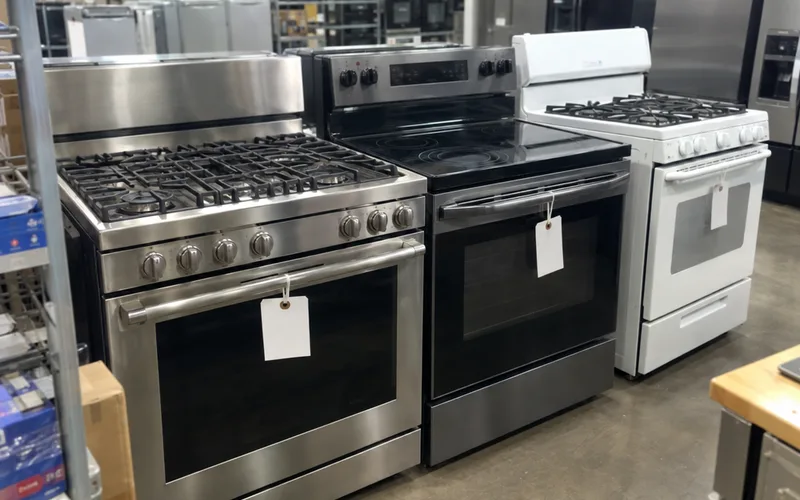
Most people searching for stoves and ovens want a range.
If that’s you, type “range” into the store search box, then filter by fuel. You’ll get cleaner results than you would with “stove”, which also pulls up camp stoves and wood stoves.
Now that the words are straight, the choice itself gets a lot simpler.
How to Choose a Stove and Oven in 4 Steps
Choosing a stove and oven takes 4 checks, and your current hookups come first, because the wrong fuel can add a wiring or gas job on top of the appliance.
Do them in this order:
- Look behind your current range. A gas line or a heavy electric outlet tells you which fuel is a simple swap and which one means hiring someone.
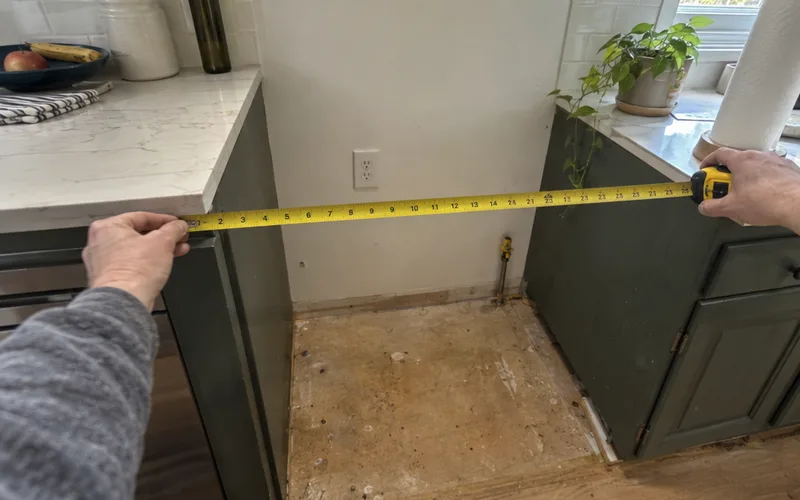
- Measure the opening. Take the width, depth and height, then measure the doors and halls it must pass through on delivery day.
- Think about last week’s dinners. Lots of boiling and searing points to the cooktop, while lots of cakes and sheet pans points to the oven.
- Set a budget last. Once you know the fuel and size, you can compare test results within that group instead of comparing price tags.
Why is budget last?
Because it’s the step that tells you the least about how a range will cook, as the cost section below shows.
Fuel is the choice you’ll live with longest, so give it the most thought.
Gas, Electric or Induction: Which Is Better?
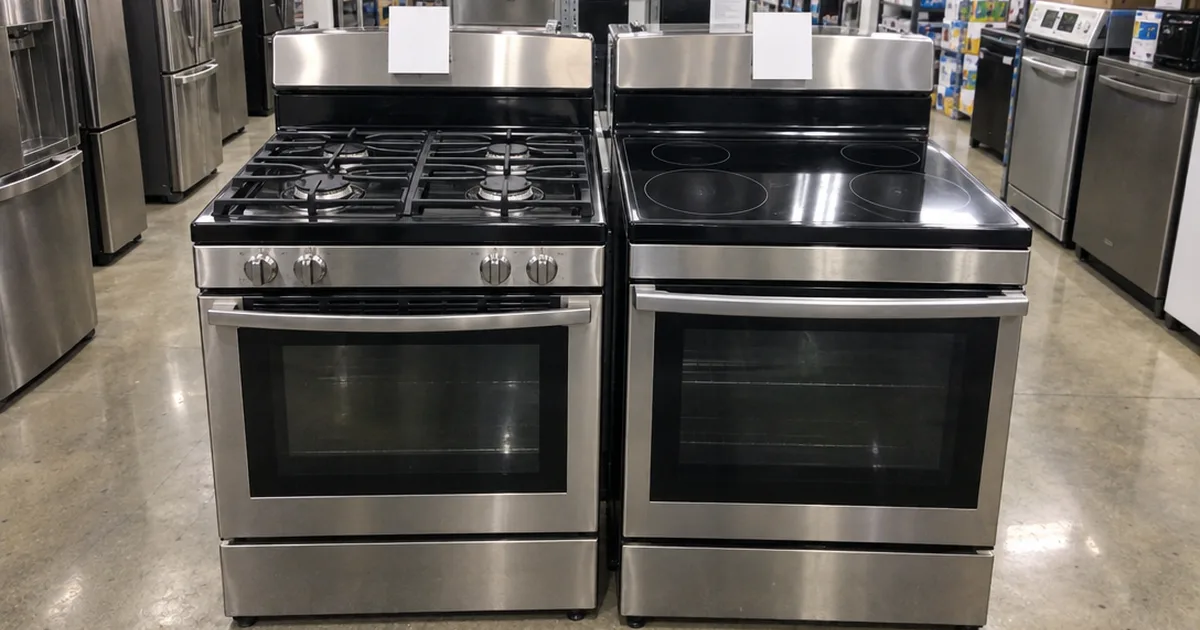
Induction is the cooktop I’d pick if you’re open to a new hookup, since Consumer Reports gives it high marks for fast heating, steady simmering and quick response. Gas wins on visible flame control, and electric smoothtop models boil faster and broil better than gas.
Each one has a job it does best, and none of them wins at everything.
So the better question is which job matters most in your kitchen.
This table lines up the choice by what you’d actually notice:
| Fuel | Best at | Drawback | Hookup |
|---|---|---|---|
| Gas | Visible flame | Harder to clean | Gas line |
| Smoothtop | Boiling, broiling | Slow to cool | Electric |
| Coil | Low price | Slow, uneven | Electric |
| Induction | Speed, simmering | Magnetic pans | Electric |
| Dual-fuel | Flame, even baking | Higher price | Both |
If you only read one row, read the one that matches the hookup you already have.
Staying with your current fuel is the cheapest move, and the sections below show when it pays to switch.
Gas Ranges
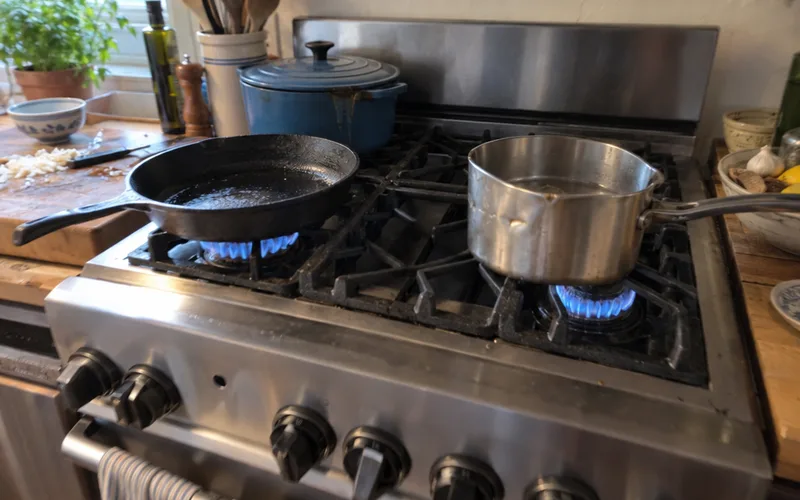
Gas ranges provide instant temperature response plus visual feedback, according to Consumer Reports.
In other words, you turn the knob and you can see the change right away.
That’s why cooks who sear, stir-fry and toast spices over a flame tend to stay with it.
The trade-offs show up at cleanup and in the oven.
Grates and burner caps take more scrubbing than a flat glass top, and gas ovens can have a harder time baking evenly than electric ones.
Gas also adds combustion fumes to your kitchen air, so plan on a good hood, which the ventilation section covers.
Cleanup and baking are where most gas vs electric stove arguments get settled, so weigh those 2 against the flame you’d give up.
Electric Smoothtop Ranges
Electric smoothtop ranges tend to offer faster boiling and better broiling than gas ranges, CR testers found.
That surprises a lot of people who assume flame is always faster.
The flat glass top also wipes clean with a sponge, which is a real perk if you hate pulling grates apart.
But glass holds its heat.
When you turn a burner down, the pan keeps cooking for a while, so you’ll learn to lift the pan off instead of relying on the knob.
The surface can scratch too, and canning on a glass stove takes extra care because a full canner is so heavy.
If you’re leaning this way, compare glass top electric models on boiling and broiling scores first.
Electric Coil Ranges
Electric coil ranges are the budget choice, and they do basic cooking at the lowest price of any type here.
The coils heat slowly and cool slowly, and they can sit slightly off level, so food may drift to one side of the pan.
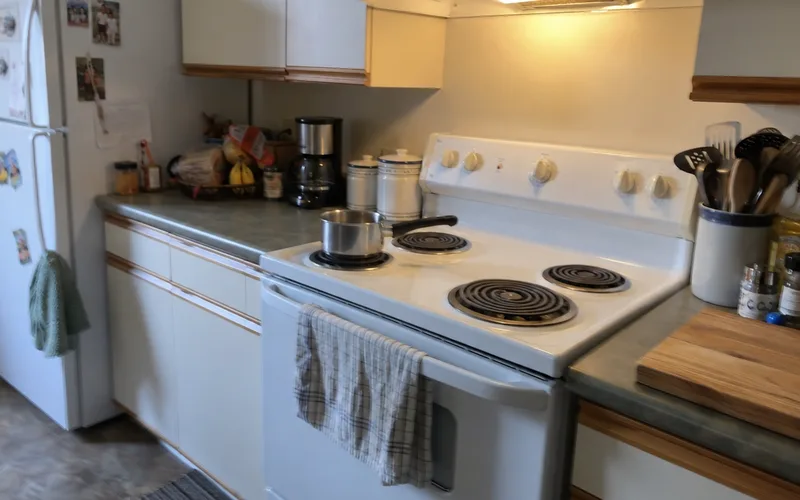
They suit a rental, a backup kitchen or anyone who cooks simple meals.
And because a coil is an exposed part you can often see, a dead burner is easier to spot than a fault under glass.
If you cook every night, though, I’d spend a bit more and move up to a smoothtop or induction.
Induction Ranges
Induction cooking uses a magnetic field to heat the pan itself instead of the surface under it.
That’s why the cooktop stays cooler than a radiant burner, and why spills don’t bake on as quickly.
Induction ranges earn high marks for fast heating and steady simmering, and they respond quickly when you adjust a burner, CR reports.
The catch?
Your pans must be magnetic.
Cast iron and magnetic stainless steel work, while plain aluminum and copper don’t.
Here’s a 10-second test: hold a fridge magnet to the bottom of your pan, and if it grabs firmly, the pan will work.
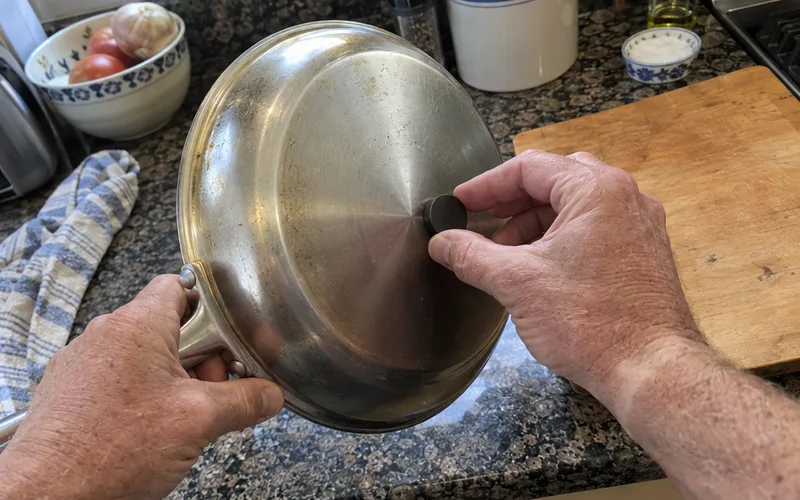
If your pans fail, you don’t need a whole new kitchen, since magnetic stainless steel cookware and other induction cookware picks can replace only the pieces you use most.
New cooks often worry about the learning curve, but induction cooking mostly asks you to trust a faster burner, and the induction vs gas choice usually comes down to flame versus cleanup.
Induction ranges usually cost more up front than similar electric models, so check the price gap on the exact models you like before you decide.
Dual-Fuel Ranges
Dual-fuel ranges pair gas burners with an electric oven, which gives you flame control on top and steadier baking below.
They cost more than single-fuel models, and they need both a gas line and a heavy electric circuit behind the range.
Skip it if your kitchen has only one of those.
For everyone else, the question is simple: do you cook on the burners and bake often enough to pay for both?
Key Takeaway: Pick the fuel your kitchen already supports unless you have a clear cooking reason to switch between induction, electric and gas.
Fuel is only half of the stove types you’ll see in a store, because each one also comes in several styles.
What Makes a Good Stove and Oven
A good stove and oven boils water fast, holds a low simmer, bakes and broils evenly, gives you usable space, cleans itself well and stays reliable, based on the 6 criteria Consumer Reports uses to recommend ranges. Looks and extra features aren’t on that list.
That list is worth borrowing when you shop.
The testers bake more than 2,400 cookies and 400 cakes a year to judge even baking, so you don’t have to guess from a showroom floor.
Here’s what each test means at home, and how to spot a problem on your own range.
Fast Boiling
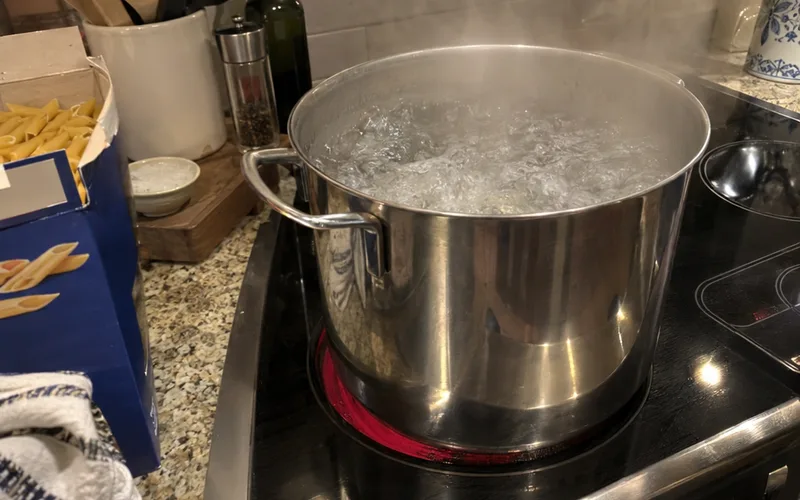
The best ranges in CR tests are quick to bring a large pot of water to a near-boil.
That matters every time you make pasta or blanch vegetables, since a slow burner stretches a weeknight dinner.
Look for it in test scores, not in the wattage or BTU number on a brochure, since the score measures the result you care about.
Steady Simmering
A strong range also has a low-heat burner that holds a steady temperature, so you don’t need to stir constantly to avoid scorching.
This is where cheap and expensive models can surprise you.
Try it on your own stove: put a thick tomato sauce on the lowest setting and watch it for 15 minutes.
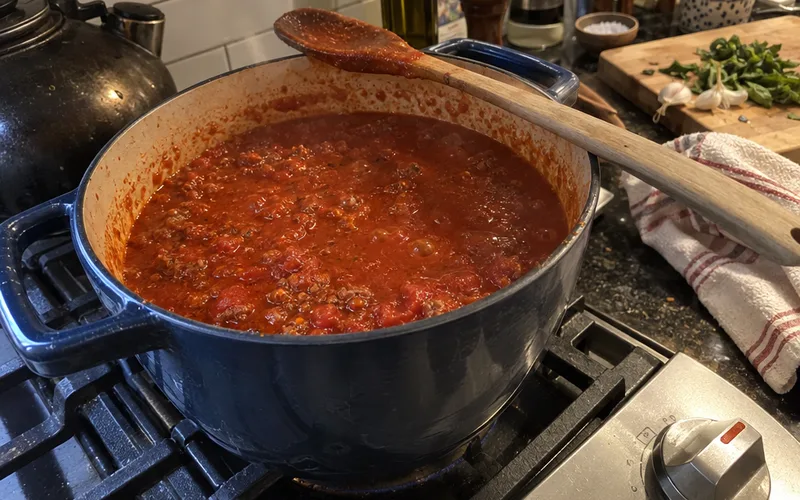
If it scorches on the bottom without stirring, your simmer is too hot, and a heat diffuser or a heavier pan can buy you some room.
Even Baking and Broiling
The test for an oven is simple: cakes and cookies should bake uniformly from multiple racks, and the broiler should heat evenly while still getting hot enough to sear.
You can check yours with a plain sheet of cookies or a tray of sliced white bread under the broiler.
Dark patches show you the hot spots, and rotating the pan halfway through can even things out.
Different oven types move heat in different ways, and the conventional vs convection choice matters most when you bake on 2 racks.
Usable Space
Oven capacity on a spec sheet can mislead you.
Many manufacturers inflate oven sizes by counting space you can’t cook in, like the bottom of the oven, which is why CR measures from the lowest rack position.
So bring your biggest roasting pan to the store, or at least its measurements.
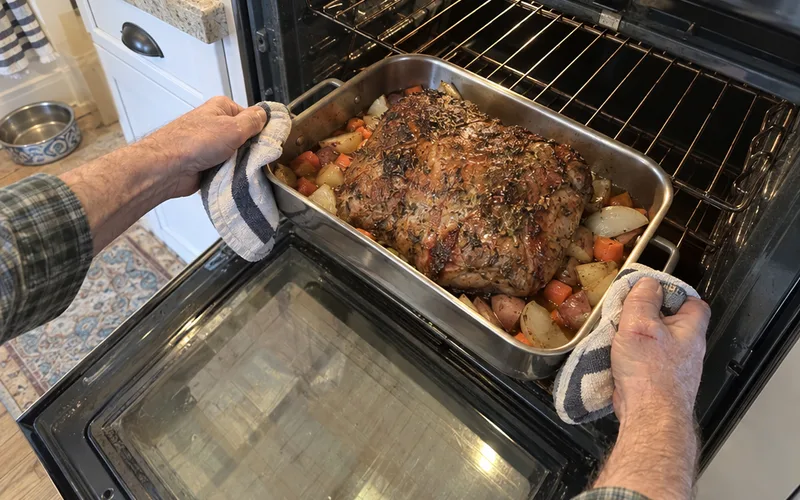
If it fits on the lowest rack with the door shut, the size is right for you, whatever the label says.
Self-Cleaning That Works
Self-clean cycles vary too, which is why CR bakes a mess of eggs, tapioca and pie filling onto oven walls to see what comes off.
If yours falls short, or you’d rather avoid running a long hot cycle, cleaning by hand still works.
One low-effort method is cleaning with a dishwasher tablet, which skips the long hot cycle.
Long-Term Reliability
The last test isn’t a lab test at all.
CR surveys thousands of its members each year about how their ranges hold up, then turns the answers into reliability scores.
A range that aces the lab and then needs repairs is no bargain, so check both numbers together.
How Much a New Stove and Oven Costs
A new stove and oven costs from $500 to around $7,000 among the ranges Consumer Reports tests, as of its August 23, 2026 update. Those are appliance prices only, so add delivery, removal and any wiring or gas work to get your real total.
That’s a huge spread.
Here’s the good news, in the words of Kenneth Sutton, who leads the range testing at CR:
“We often find that price is no indicator of performance. We have some in the mix for $1,000 that perform better than models costing $5,000.”
So what does more money buy you?
Mostly looks, features and size, such as a slide-in design, a touch screen, more burners or a second oven.
Those can be great things to want, as long as you know you’re paying for them and not for better cooking.
Say you’re choosing between 2 gas ranges with the same test scores, one at $1,000 and one at $5,000 (hypothetical prices that match the Sutton example).
That’s $4,000 for style and extras alone.
If you love the look, fine, that’s your call.
Just don’t pay it believing your cookies will come out better.
Before you pay, get the out-the-door price in writing, with delivery, hookup and haul-away listed on their own lines.
Here’s what to ask the store:
“What’s my total with delivery, installation and removal of my old range? Does that include the cord or the gas connector, or do I buy those separately?”
Those small lines are where a good deal goes soft.
Shoppers looking at used stoves and ovens or under-$300 clearance models should run the same test: a bargain only counts if you know its condition, its age and who can fix it.
Are Expensive Pro-Style Ranges Worth It?
Expensive pro-style ranges usually aren’t worth it for cooking results alone, since Consumer Reports testers found most of them, despite high prices, don’t perform as well as conventional models. Buy one for the look, the width or the burner count, and only if your kitchen can support it.
That finding runs against what the name suggests.
“Pro-style” describes how the range looks, with heavy knobs and steel, and not how a home test scores it.
CR did find 1 pro-style model that earned top-level performance grades, so a good one exists.
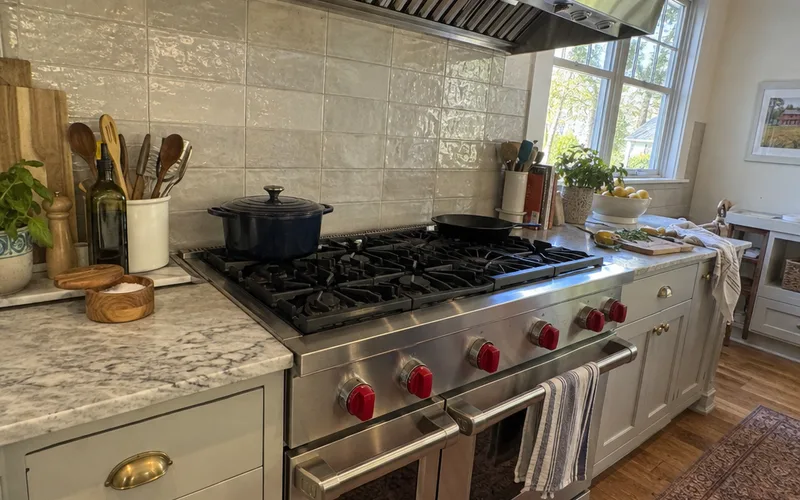
But most of the group fell short of cheaper ranges that look far plainer.
So who should buy one anyway?
- You cook for big groups and need the extra width and burners.
- You’re doing a full remodel and the range is part of the design.
- Your kitchen already has the gas supply, power and hood the range calls for.
If none of those fit, I’d put the money toward a well-scored conventional range and a stronger hood.
Before you commit, read the installation manual for the exact model, because a bigger range can need a bigger hood and more gas or power than your old one did.
Freestanding, Slide-In or Drop-In: Which Range Style Fits?
A freestanding range fits most replacements because it has finished sides and sits in a standard opening, while a slide-in costs more and gives a built-in look with front controls. A drop-in looks similar to a slide-in but sits on a strip of cabinet, so it mostly suits kitchens that already have one.
Both freestanding and slide-in models cook the same way.
The difference is about fit, looks and how far you reach over hot burners.
Here’s how the 3 styles compare:
| Style | Controls | Best fit | Price |
|---|---|---|---|
| Freestanding | Usually rear | Simple swap | Lowest |
| Slide-in | Front | Built-in look | Higher |
| Drop-in | Front | Existing drop-in | Varies |
Rear controls have one more drawback beyond looks.
You reach across the burners to use them, which is why some cooks, especially those with kids nearby, prefer front controls.
Freestanding Ranges
Freestanding ranges are the most common style, and they’re usually the easiest swap if your current range is also freestanding.
The raised back panel holds the controls and also stops splatter from reaching the wall.
Some freestanding models move the controls to the front, so you can get that safety perk without paying for a full slide-in.
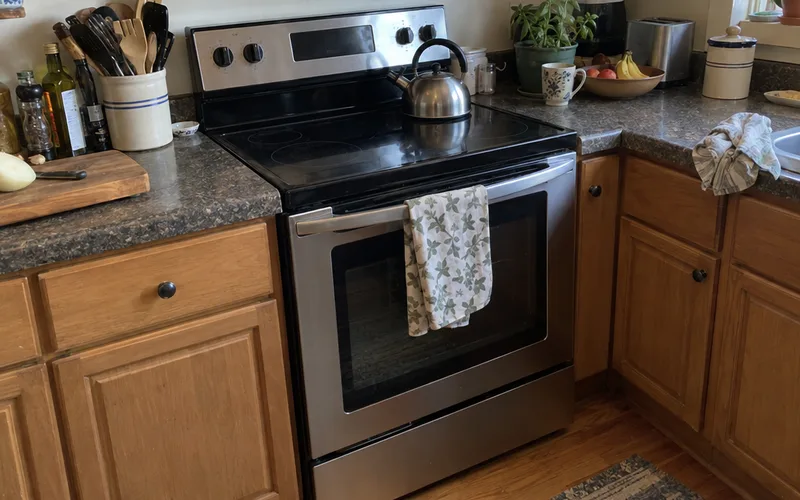
Choose this style if you’re replacing a range and not touching your counters.
Slide-In Ranges
Slide-in ranges sit flush with your counters, with no back panel to block a backsplash.
That’s the look people mean when they say a range feels built in.
But the fit needs to be precise, and a small gap can still catch crumbs between the range and the counter.
So measure twice, and check the cutout drawing for the exact model before you order.
Drop-In Ranges
Drop-in ranges look like slide-ins, with a strip of cabinet below them.
They’re the rarest of the 3, and you’ll see few models to pick from.
Most people only need one because the kitchen already has that cabinet cutout, and a matching replacement avoids carpentry.
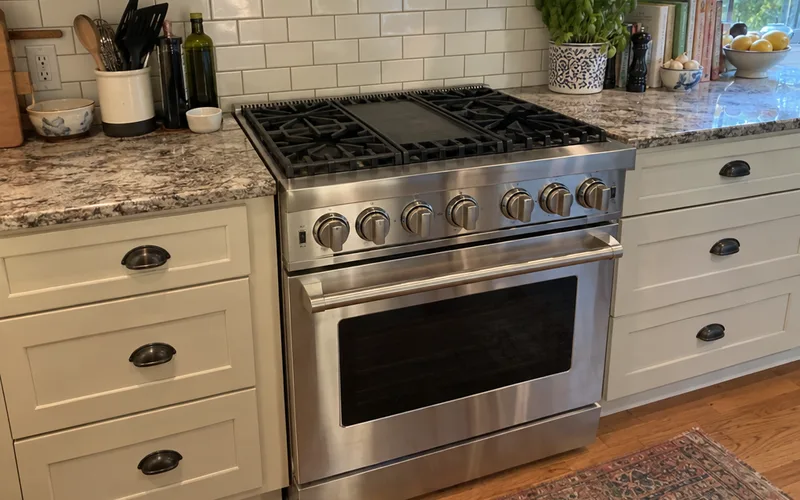
In other words, match your current style unless you’re changing your counters anyway.
Is a Wall Oven and Cooktop Better Than a Range?
A wall oven and cooktop are better than a range when you want the oven at a comfortable height, need 2 cooks in the kitchen or are remodeling anyway, and a range is better for almost every simple replacement. Separate units take more cabinet space and more installation work, so they usually cost more overall.
So this choice comes down to your back, your floor plan and your remodel budget.
A wall oven saves you from bending down for a heavy roast, which is a real benefit if lifting is hard for you.
Separate units also let 2 people work at once without one standing in front of the oven door.
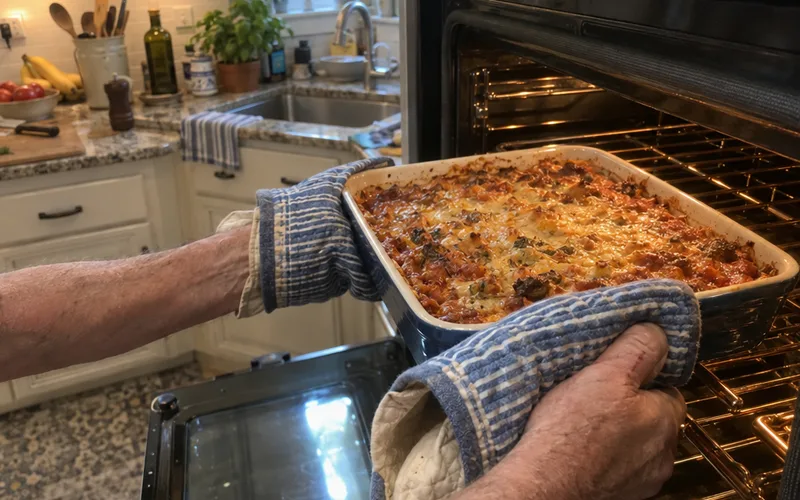
You can mix fuels freely too, such as a gas cooktop above the counter and an electric oven in a wall cabinet.
The downside?
You’ll give up cabinet and counter space for two appliances where a range needs one opening.
You’ll also pay for 2 installs instead of 1, and that’s before any cabinet work.
If you bake a lot, double wall ovens give you 2 separate cavities at a comfortable height.
But if your kitchen has a range opening and you aren’t remodeling, I’d stay with a range.
A double-oven range can give you much of the flexibility without moving a single cabinet.
What Size Stove and Oven You Need
The right size stove and oven is whatever fits your measured opening and holds your largest pan on its lowest rack. Consumer Reports warns that many manufacturers inflate oven capacity, so test the fit with your own pan instead of trusting the number on the label.
Start with the space, because the space isn’t negotiable.
Measure this way:
- Measure the opening’s width at the counter and again at the floor, since old cabinets often aren’t square.
- Measure from the back wall to the front edge of your counter.
- Measure the height from the floor to your counter, and note any uneven flooring.
- Measure every door, hallway and turn from the street to the kitchen.
Then match the range to your cooking.
Most home cooks do fine with a standard-width range, and most owners of small apartment kitchens need a narrower model.
If you regularly cook for a crowd, a wider range gives you more burners, but it also means new cabinets in most kitchens.
Also check how the oven door swings, because a door that hits an island can make a good range miserable to use.
Your oven is big enough if your biggest pan fits on the lowest rack with air around it.
Oven Features That Are Worth Paying For
Convection is the oven feature most worth paying for if you bake on more than 1 rack at a time, because a fan moves the hot air so food browns more evenly. Self-clean, a good broiler and a temperature probe come next, while smart features mostly add convenience.
A convection oven has a fan built into the back wall.
Some models add a heating element around that fan, which is often sold as true or European convection.
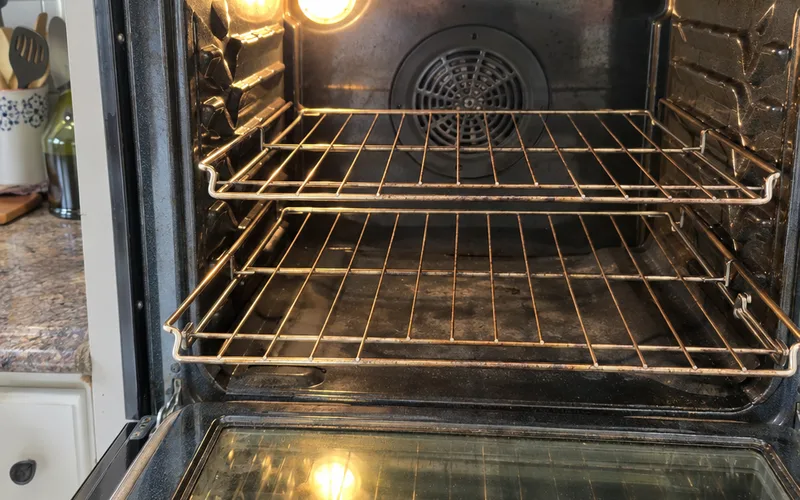
If you bake 2 trays of cookies at once, this is the upgrade you’ll notice most.
The main pros and cons of convection come down to browning versus drying, and a convection conversion is worth doing when a recipe was written for a regular oven.
Other features can earn their place too, depending on how you cook:
- Air fry mode: crisps food without a separate gadget, though convection vs an air fryer is a closer call than the label suggests.
- Temperature probe: shows a roast’s inside temperature without opening the door.
- Baking or warming drawer: handles a small side dish or keeps food warm, so check which one you’re getting.
- Double oven: cooks 2 dishes at 2 temperatures, within the width of a normal range.
- Wi-Fi control: lets you check or preheat from your phone, which is nice but rarely essential.
Not sure what a symbol on your current oven means?
The bake symbol on an oven is usually in your manual, so keep a copy on your phone.
Be careful with no-preheat modes, too.
They can work fine for some foods, but always compare the cook time against your recipe the first time you use one.
So pay first for what changes your food, and then for what changes your convenience.
Do You Need an Electrician to Install a Stove or Oven?
You need an electrician to install a stove or oven when the job adds a circuit, changes an outlet or hardwires the appliance, while plugging a new electric range into a matching existing outlet usually doesn’t need one. Gas line work belongs with a licensed gas professional, and your manual lists the requirements for your model.
The first thing to do is look at what’s there today.
Pull your old range out, or check the manual, and note the outlet type or gas connection behind it.
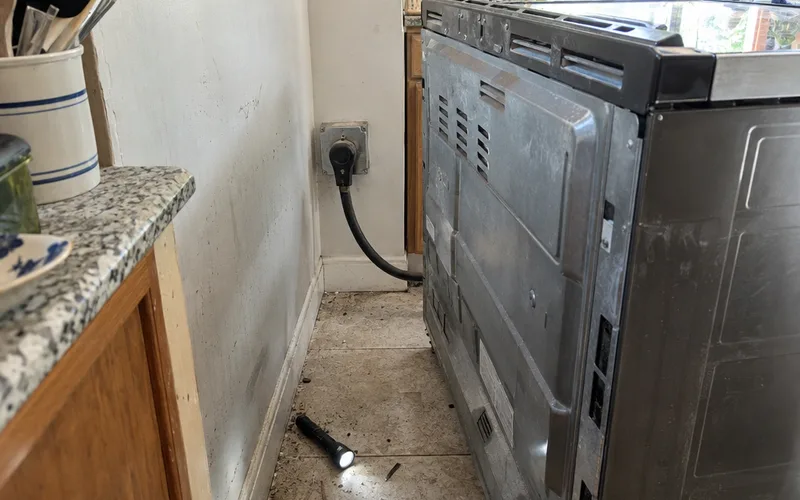
Then compare that with the installation manual for the new model, which you can usually download before you buy.
Switching fuels is where the cost jumps.
Going from gas to electric or induction often means running a new heavy circuit, and going the other way often means adding a gas line.
Here’s what to ask a licensed electrician or gas pro:
“I’m replacing my range with this exact model. Can my current circuit or gas line handle it, and what would you charge to bring it up to the manual if not?”
Get that answer before you order, and the install day won’t surprise you.
Note: If you smell gas at any point, stop, avoid switches and flames, leave the house and call your gas utility or 911 from outside.
Two more safety checks belong on the same list.
Make sure the installer fits any anti-tip bracket your manual requires, since a range can tip forward if a child climbs on an open door.
And never use a range or oven to heat your home.
Range Hoods, Ventilation and Gas Safety
A range hood ducted to the outdoors moves smoke, grease and cooking moisture out of your home, while a recirculating hood only filters that air and sends it back. Ventilation matters with every fuel, and it matters most with gas, because burners add combustion fumes to the room.
So give the hood the same care you give the range.
Run it every time you cook, and start it before the pan gets hot, since it can’t clear what has already spread through the room.
If you use the back burners when you can, the hood catches more of what rises from your pots.
And use a fan that actually vents outside whenever your home allows it.
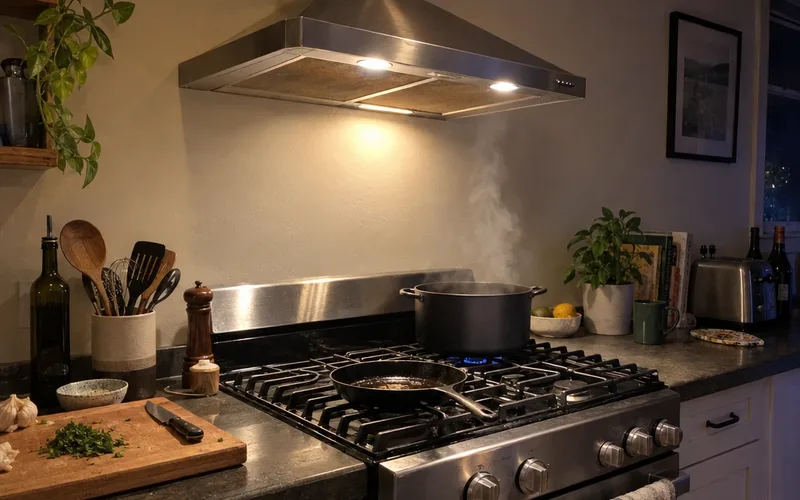
Your duct choices matter here.
Using a dryer vent for your hood is not a shortcut, so plan on a duct of its own.
Before you wire a new hood, check whether it needs a dedicated circuit, and match the kitchen exhaust fan type to the duct route you have.
A hood also cuts down on sticky film, which is the first step in stopping kitchen grease buildup.
Electric cooking isn’t free of fumes either, since food itself makes smoke.
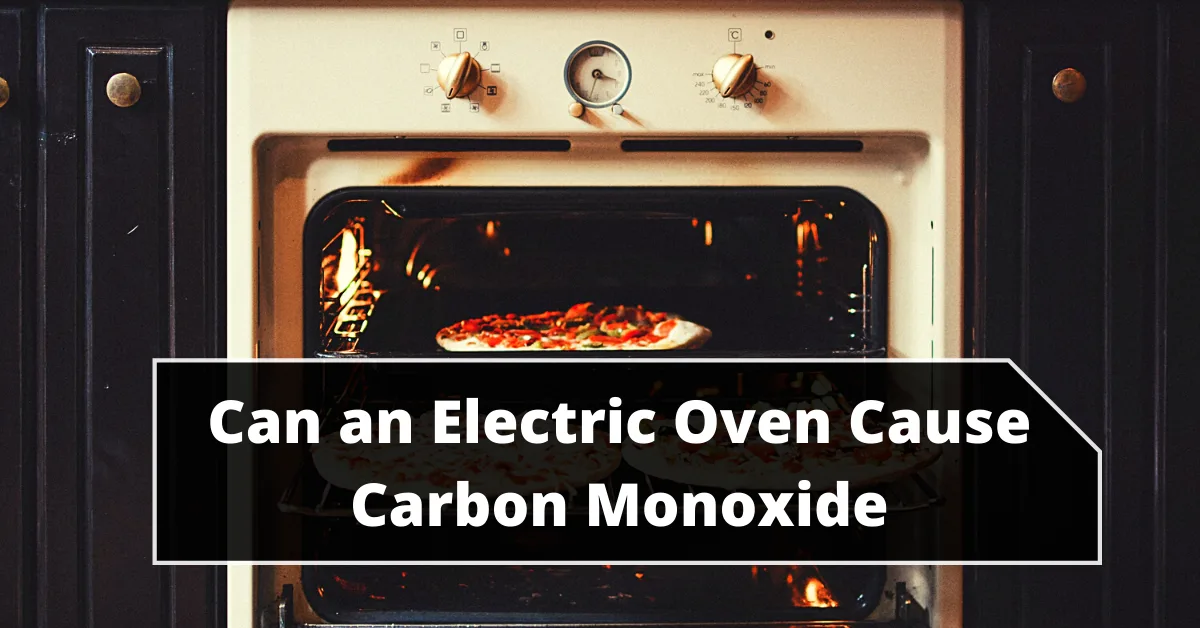
Food left on an element can smoke too, which is one reason people ask about electric ovens and carbon monoxide.
Whichever fuel you own, a working carbon monoxide alarm is a simple thing to check this week.
When Is the Best Time to Buy a Stove and Oven?
The best time to buy a stove and oven is September, October or November, according to the best-time-to-buy note Consumer Reports lists on its range page, updated August 23, 2026. If your old range dies outside that window, buy what you need, and use the holiday sale closest to you to compare prices.
So if your range still works and you can wait, wait for it.
Here’s how to use the time:
- Pick 2 or 3 models that fit your fuel and opening before the sales start.
- Watch their prices at more than 1 store, so you can recognize a real drop.
- Ask each store to match the lowest price, delivery included.
Having your list ready matters more than chasing the biggest banner.
A big discount on the wrong range still gets you the wrong range.
And if your range has already quit, take a look at the repair section first, because a small fix could carry you to the next sale.
How to Check Reliability Before You Buy
The way to check reliability before you buy is to look up the exact model and brand in member survey data, such as the reliability scores Consumer Reports builds each year from thousands of owners. Then call a local repair shop and ask which brands they can service and get parts for.
The CR ratings cover about 200 models, available to members, and they test mainstream brands such as Amana, Frigidaire, GE, LG, Maytag, Samsung and Whirlpool.
A brand name alone won’t settle it, since scores shift by fuel type and model line.
So I can’t hand you a fixed top 5, and you should be careful of anyone who does without showing their data.
Here’s a better test, and it takes one phone call:
“I’m about to buy this range. Do you service this brand, can you get parts quickly and what do you see break most often?”
A shop that fixes these machines every week will tell you a lot in 2 minutes.
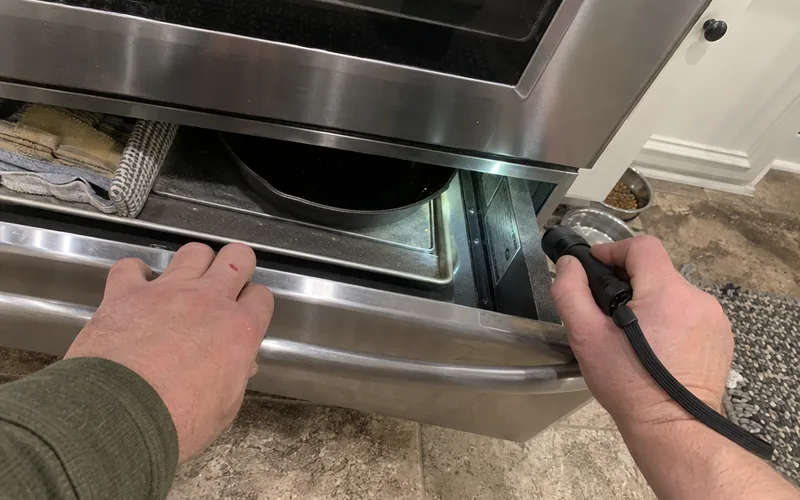
Local service matters as much as the badge, because even a great range is a headache when no nearby technician will work on it.
Check the warranty terms as well, and write down who actually performs the repairs.
Is It Worth Repairing an Old Stove or Oven?
Repairing an old stove or oven is usually worth it when one simple part has failed and the appliance is otherwise sound, and replacing makes more sense when the repair is major or keeps coming back. The Consumer Reports repair-or-replace tool weighs product costs, depreciation rates and survey data for your situation.
Start by getting the facts on paper.
Find the model number, work out the age, and get a written repair quote.
Then put that quote next to the full cost of a replacement, including delivery and any hookup work.
If your oven is not heating, check the breaker, the controls and any lock or timer before you assume a part has failed.
A gas oven not heating has its own checks, and a weak igniter is high on the list.
A heating element that broke in two is a good example of a simple failure, since the part is easy to see.
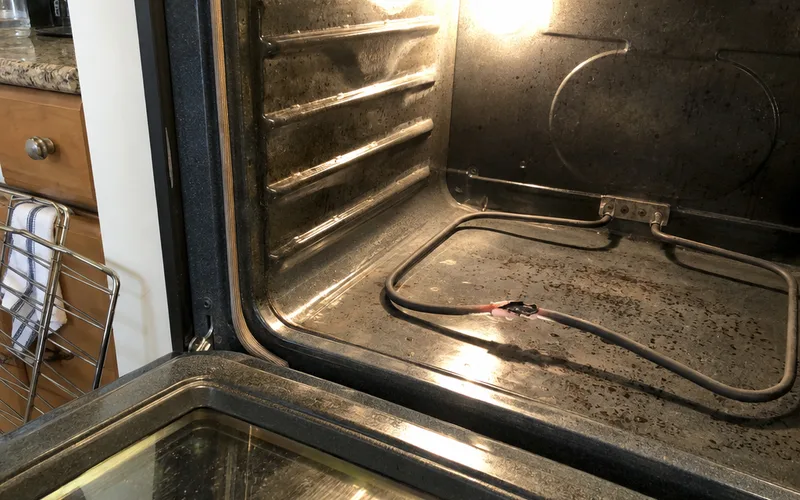
Before you use the oven anyway, treat that damage as a safety question and not only a cooking one.
A cracked cooktop is a bigger decision, so get the glass stove top replacement cost in writing before you say yes to a repair.
Always shut off the power at the breaker, or unplug the range, before you open anything.
And anything involving a gas line belongs with a licensed professional, however simple it looks.
Key Takeaway: A simple part on a well-kept range is usually a good bet, and a major repair on a tired one usually isn’t.
Microwaves: Types, Safety and Repair
A microwave is the third cooking appliance most homes rely on, and choosing one comes down to where it sits, what you heat in it and what to do when it stops heating. Three separate guides on this site cover those three questions, starting with the type that fits your space.
Countertop models are the simple plug-in choice, and they’re the easiest to replace.
Over-the-range and built-in models depend on exact measurements and proper installation, so treat them more like a small remodel.
Microwave Types
The main microwave types differ most in how they’re installed and whether they can brown food.
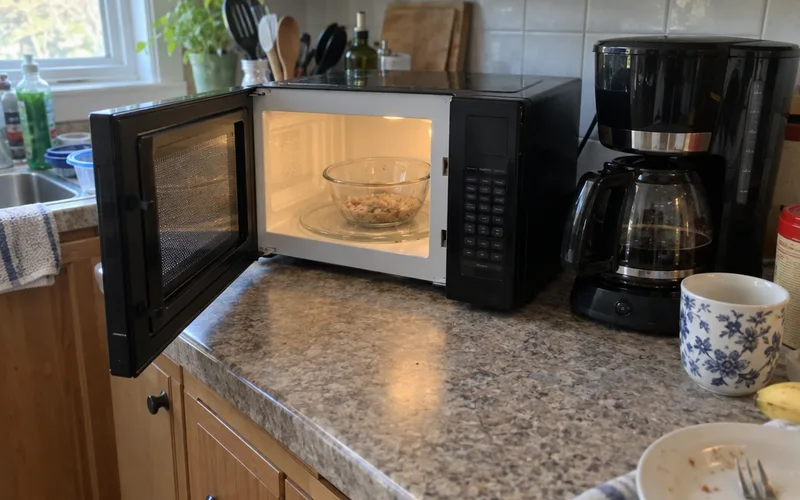
If you want a microwave that browns food too, the solo vs convection microwave choice is about the extra fan and element.
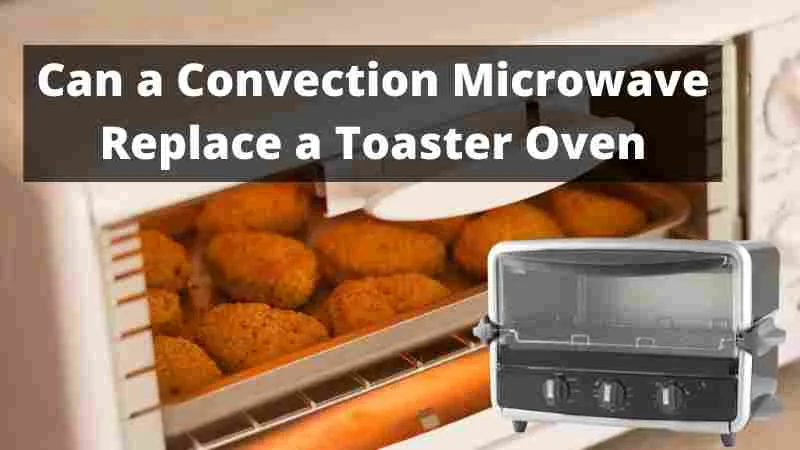
Some cooks also ask whether a convection model could replace a toaster oven and free up counter space.
Microwave Safety
Most microwave safety questions start with “Can I put this in there?”, and the answer depends on the material and its label.
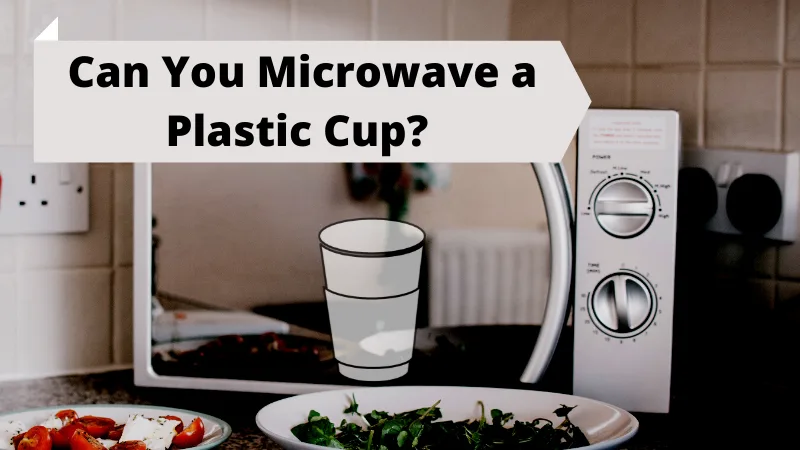
Plastic comes up often, so check the label before microwaving a plastic cup as a daily habit.
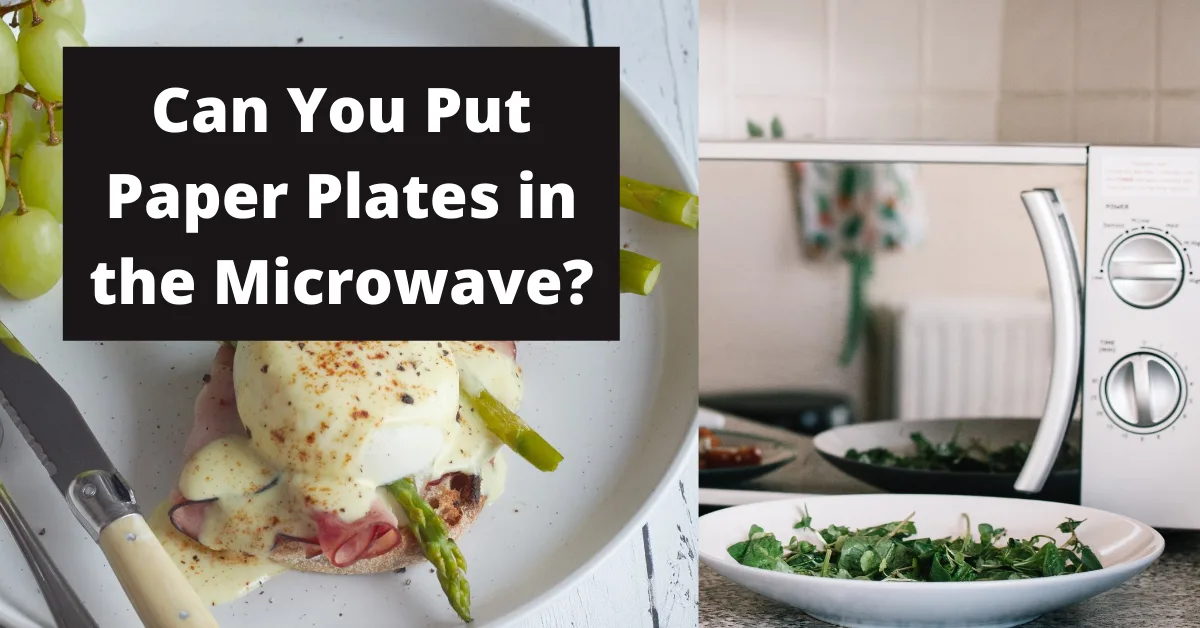
Paper has limits too, and paper plates in the microwave depend on what they’re coated with.
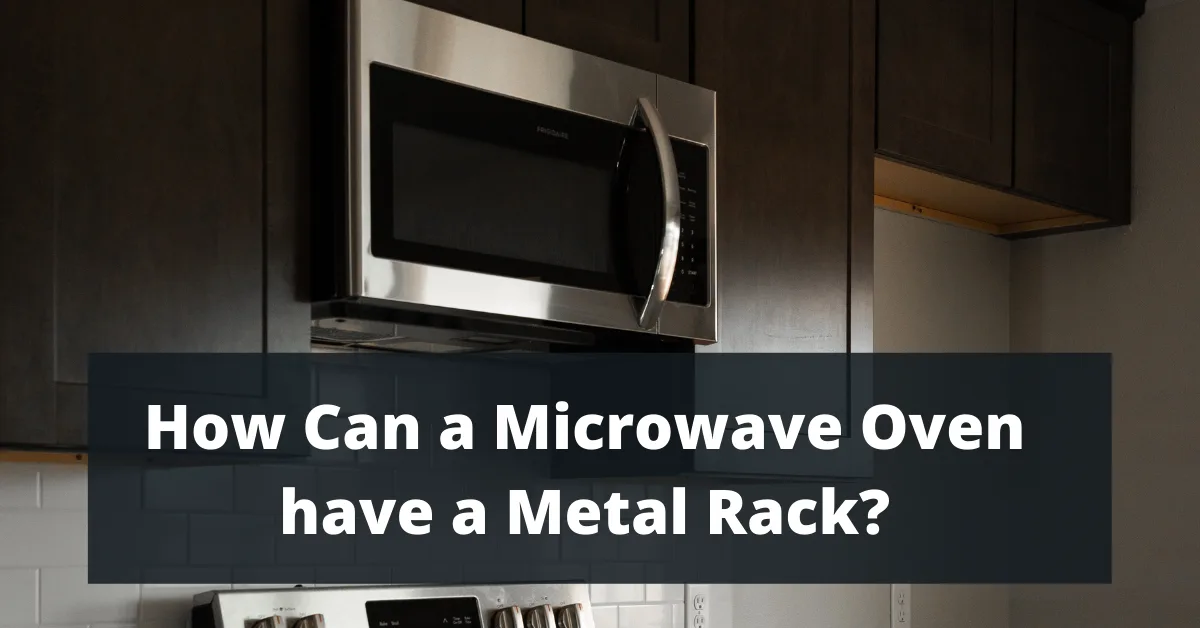
Metal is trickier, especially since some models come with their own metal rack, so use only the rack your manual names.
Food safety matters too, because heating has to be even to deal with bacteria in chicken and other leftovers.
Microwave Repair
When the turntable spins but the food stays cold, you’re looking at a microwave repair decision and not a settings problem.
A failed magnetron is one possible cause, so compare the magnetron replacement cost with the price of a new unit.
Note: A microwave capacitor can hold a dangerous charge even after you unplug the unit, so leave internal repairs to a qualified technician.
The Rest of Your Cooking Gear
The right cooking gear depends on your stove, because burner type decides which pans work, and an oven decides which dishes and tools you need beside it. Pots and pans come first, followed by knives, canners, coffee makers and blenders.
Cookware is the piece that ties back to your fuel choice. For the oven, check which oven-safe dishes can take its heat before you bake.
Pots and Pans
Good pots and pans differ by material and care, so buy for the burner you own.
Copper raises a lot of questions, so confirm copper pans are oven safe before you put one under the broiler.
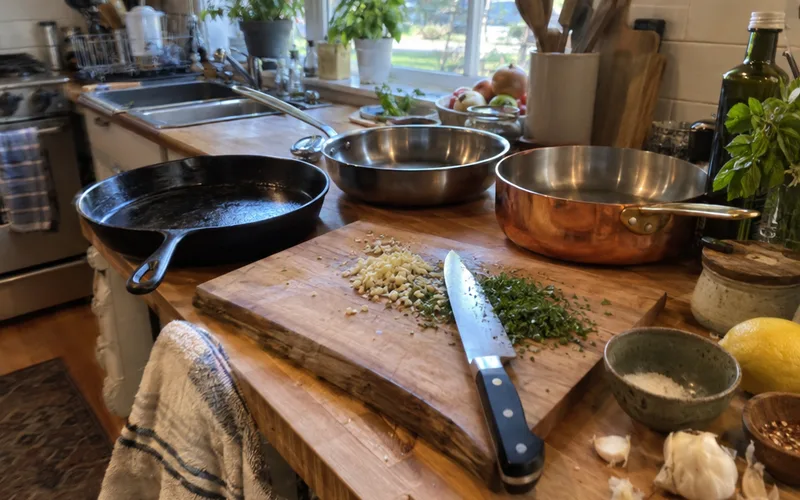
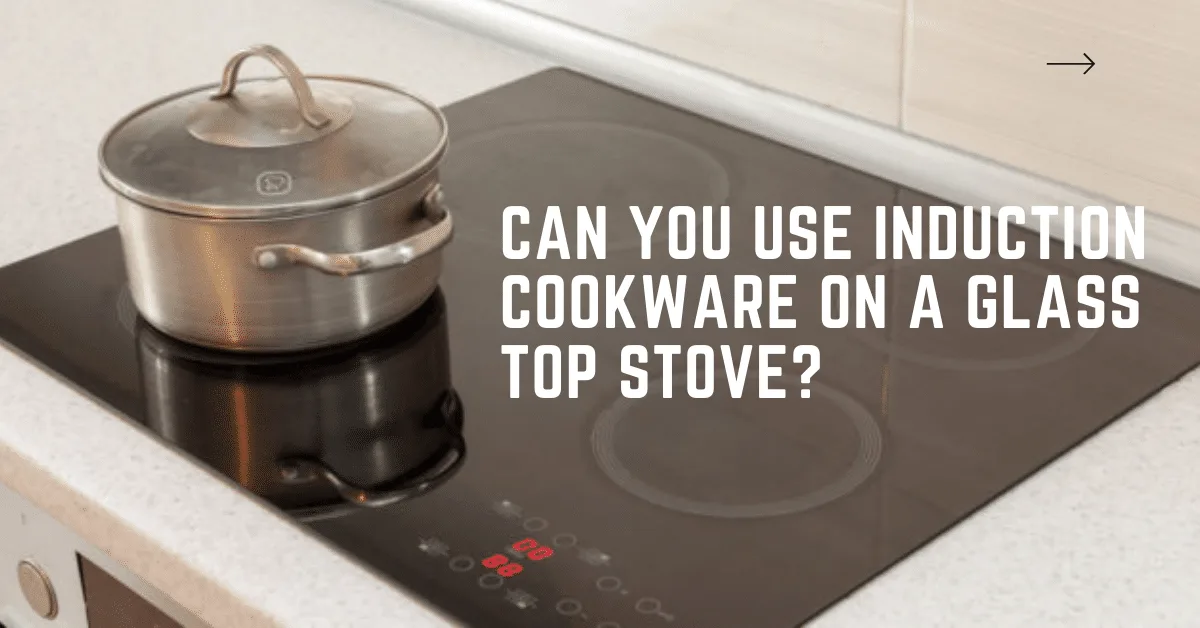
If you’re moving between stoves, induction cookware on glass is a common mix-up worth clearing up before you buy.
A wok fan with a flat cooktop should look at a flat-bottomed stainless steel wok.
Kitchen Knives
Every stove needs a good prep station next to it, and sharp kitchen knives make that prep faster and easier.
Hand washing and drying are the simple habits behind keeping knives from rusting.
Pressure Canning
Canning puts more demand on a stove than almost anything else you’ll cook, because a loaded canner is heavy and must hold its pressure steadily.
Before you start pressure canning, learn how a pressure canner works, because the safety steps make more sense once you do.
Glass cooktop owners should also choose canners for glass top stoves and check the range manual first.
Always follow your manual and tested recipes, because canning mistakes can make food unsafe.
Coffee Makers
Your morning machine lives right next to the range in many kitchens, and coffee makers run from simple drip models to espresso.
If you’re moving up from drip, learn what to look for in an espresso machine before comparing prices.
Blenders and Food Processors
Choosing between blenders and food processors depends on whether you mostly puree or mostly chop.
If you only want one, find out whether a blender can work as a food processor for the jobs you do.
Refrigerators and dishwashers live in Major Appliances, if the rest of your kitchen needs attention too.
Your Next Step
Price won’t tell you which stove and oven will cook best.
Your hookups, your measured opening and independent test scores will.
So this week, look behind your range, measure the opening and write down the fuel you already have.