
There are 4 ways a dish can say it’s microwave safe, and 3 ways it can say it isn’t.
That’s the count in a 2025 symbol guide from The Kitchn, written with input from an appliance expert at Abt.
So the microwave safe symbol isn’t one picture.
It’s a small family of marks, plus a few look-alikes that send people to the wrong answer.
Here’s what each one looks like, where makers put it and what to do when a container has none.
What Does the Microwave Safe Symbol Look Like?
The microwave safe symbol is a set of wavy lines, shown alone, inside a small microwave or above a dish. Some makers print the words “microwave safe” instead, and The Kitchn says that no matter how the lines appear, you can safely microwave the item.
Why so many versions?
Because the mark is the maker’s own claim about that dish, so each brand draws it its own way.
Every version shares the wavy lines, so those are what you hunt for first.
Wavy Lines on Their Own
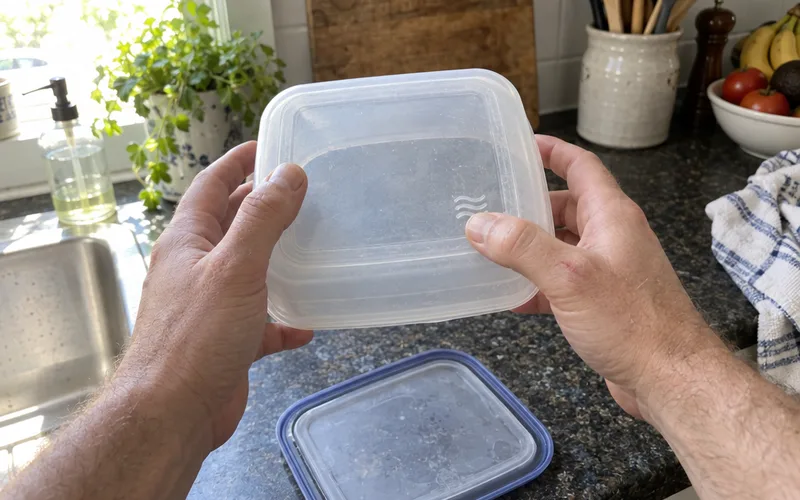
The simplest version is a few short wavy lines stacked on top of each other.
You’ll often find it pressed into the plastic of food storage tubs, next to other small marks.
A Microwave Icon With Wavy Lines
This version puts the same lines inside a little box drawn like a microwave oven.
It means the same thing: the maker rates that piece for microwave heating.
A Dish or Bowl Under Wavy Lines
Some makers draw a plate, bowl or pan with the wavy lines above it.
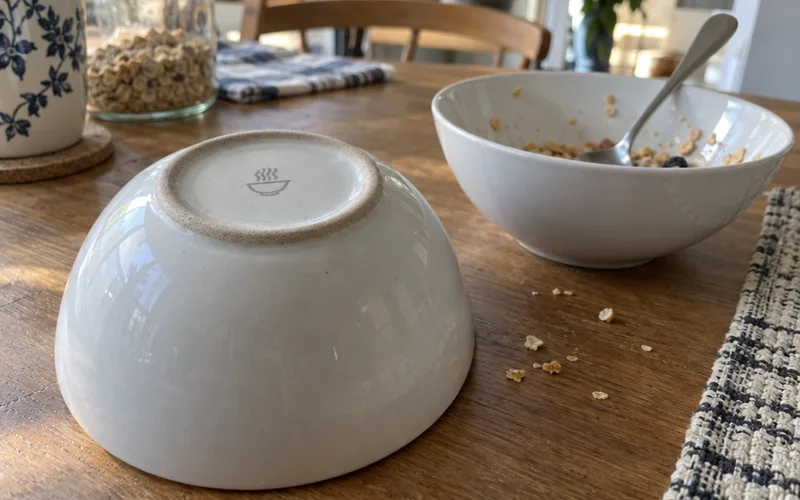
The Kitchn counts a pan with 3 squiggles as one more safe mark, so the picture under the lines doesn’t change the rule.
The Words “Microwave Safe”
Some dishes skip the drawing and print the words “microwave safe” on the bottom.
That’s the clearest label of all, and it counts just as much as the lines.
Key Takeaway: Find wavy lines or the words, and the maker says that piece can go in your microwave.
What Does the Not Microwave Safe Symbol Look Like?
The not microwave safe symbol is the same wavy lines or microwave icon with an X or a slash through it. The Kitchn says wavy lines with an X mean exactly what you’d guess: keep that container out of the microwave.
The crossed-out microwave works the same way.
A drawing of a microwave with a line through it is the maker telling you not to heat food in that piece.
Some containers spell it out in words instead.
“This clearly signals that the item should not be used in a microwave,” Shirley Hood, the appliance expert at Abt, told The Kitchn.
Any slash, X or “not” flips the meaning, so read the whole mark before you trust the lines.
Where to Find the Microwave Safe Symbol on a Container
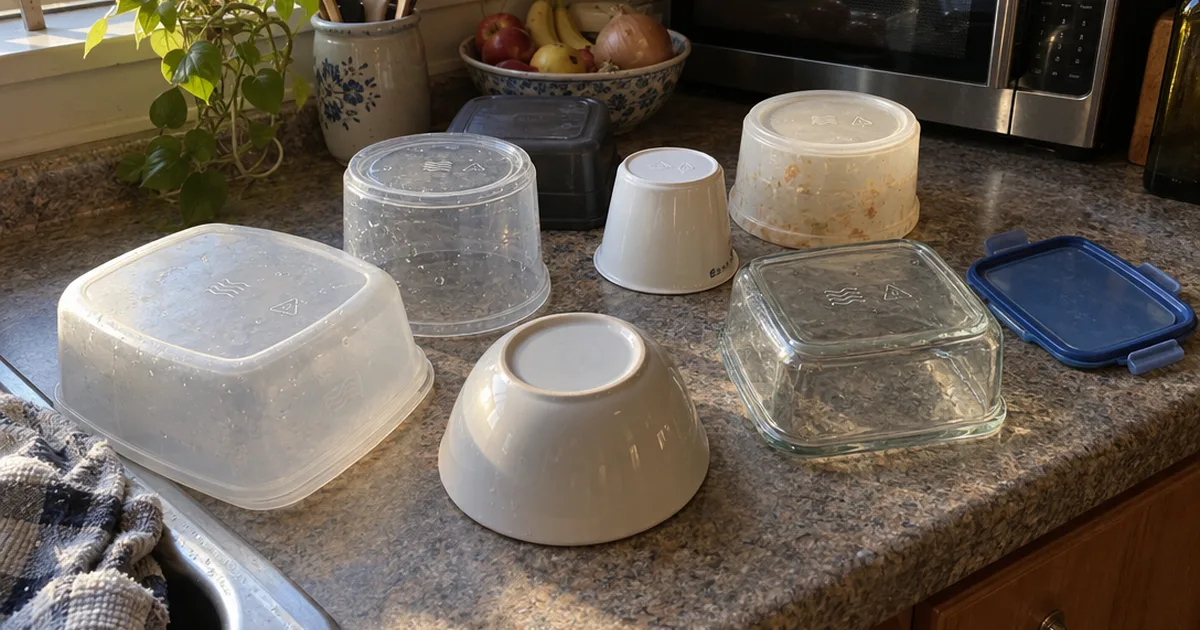
The microwave safe symbol is usually molded or printed on the bottom of the container, and the lid can carry its own mark. Hood told The Kitchn that an item will typically have an icon or label showing whether it’s microwave safe.
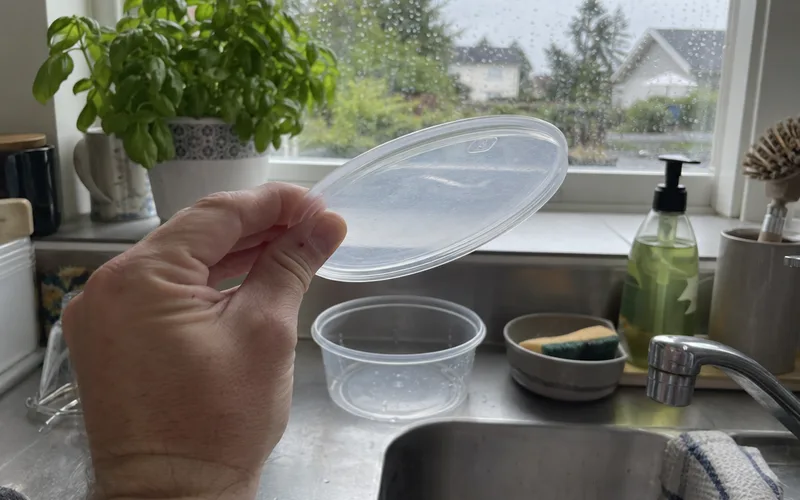
Here’s how to check a container in about a minute:
- Turn it over and look at the center of the base.
- Scan the outer rim of the bottom, where small marks often sit in a row.
- Tilt clear plastic toward a window or lamp, since pressed-in marks are hard to see head-on.
- Check the lid by itself, because a lid can be made from a different plastic than the base.
That last step catches a lot of people.
A base with wavy lines tells you nothing about its lid, so give each piece its own check.
Reading the Symbol on Tupperware and Other Storage Brands
Tupperware and other storage brands use the same kinds of marks. Wavy lines or the words mean yes, and a slash or X means no.
If a branded container shows only a recycling symbol with a number, keep reading, because that mark is about recycling, not heat.
Sorting a whole drawer of it? The details on putting Tupperware in the microwave cover what else to check.
Marks That Look Like a Microwave Safe Symbol (but Aren’t)
The recycling triangle, the glass and fork, the snowflake and the dishwasher icon are the marks most often mistaken for a microwave safe symbol. None of them rates a dish for the microwave.
Most containers carry 2 or more of these marks side by side.
So it helps to know what each one actually tells you:
| Mark | What it means | Rated for the microwave? |
|---|---|---|
| Wavy lines, alone or in a microwave or over a dish | Maker rates it for microwave use | Yes |
| Same lines or microwave with an X or slash | Maker says keep it out | No |
| Triangle of arrows with a number 1 to 7 | The plastic resin, for recycling | No |
| Wine glass and fork | Made for contact with food | No |
| Snowflake | Can go in the freezer | No |
| Plates or glasses under water drops | Can go in the dishwasher | No |
Read the table from the top down when you flip a container over.
If you reach the bottom without finding wavy lines or the words, that container isn’t rated for the microwave.
The dishwasher mark often sits right beside the microwave mark, and the dishwasher safe symbol has its own set of versions.
Is the Number 5 in a Triangle a Microwave Safe Symbol?
The number 5 in a triangle is not a microwave safe symbol, because it’s a resin code for polypropylene, also called PP. A polypropylene container marked 5 is microwave safe only when it carries the wavy lines or the words too.
This is the mark that fools the most people.
It looks official, but the resin number was made for sorting plastic for recycling, not for rating heat. The other numbers work the same way, naming plastics such as PET (1), HDPE (2) and PVC (3).
If you want the full story on that plastic, here’s whether PP 5 is microwave safe when the label is missing.
What About Number 7 Plastic?
Number 7 plastic is the catch-all “other” code, so it can be many different plastics, including polycarbonate. Microwave it only when it also shows the microwave safe symbol.
A “BPA-free” sticker doesn’t settle it either.
That label is about what the plastic is made of, while the wavy lines are the maker’s word that it can take the heat.
What Does a Microwave Symbol With a Circle Mean?
A microwave symbol with a circle isn’t one of the marks that rate a dish. On a container, look past the circle for the wavy lines or the words.
If the circle is on your microwave oven’s control panel, it’s one of the oven’s own icons, and the manual names each one.
In other words, the dish tells you whether it can go in, and the buttons control the cooking.
What If a Container Has No Microwave Safe Symbol?
A container with no microwave safe symbol should stay out of the microwave, says Shirley Hood, an appliance expert at Abt. “If no label is present, it’s best to err on the side of caution and avoid using the item in the microwave,” she told The Kitchn.
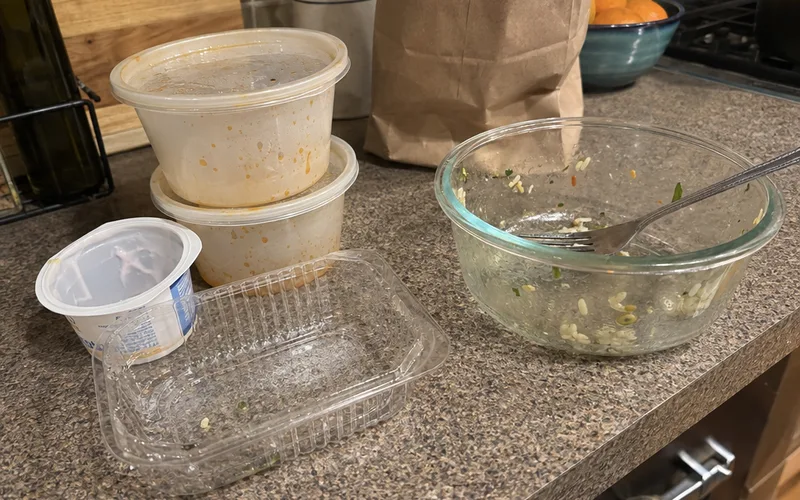
Take your disposable takeout tubs, yogurt cups and plastic trays.
If all you find is a recycling number, the rule applies, and the guide to plastic takeout containers covers the rest.
Here’s what I’d do instead:
- Move the food to a plate or bowl that carries the lines or the words.
- Check the original packaging or care card, since some makers put the rating there.
- Search the brand and model name on the maker’s website.
- If nothing turns up a rating, treat the piece as not microwave safe.
Note: A missing mark doesn’t prove a dish will fail. It means nobody has promised it won’t.
When in doubt, move the food, because a clean plate costs you nothing and a melted container can cost you the meal.
Which Materials Are Usually Microwave Safe?
The Kitchn lists glass, ceramic, food-grade silicone, microwave-safe BPA-free plastics and some paper products as generally safe to microwave. The paper items it names are plates, napkins, wax paper and parchment.
Notice the plastic on that list comes with 2 conditions.
It has to be marked microwave safe, and it has to be free of bisphenol A (BPA), a chemical used in some hard plastics.
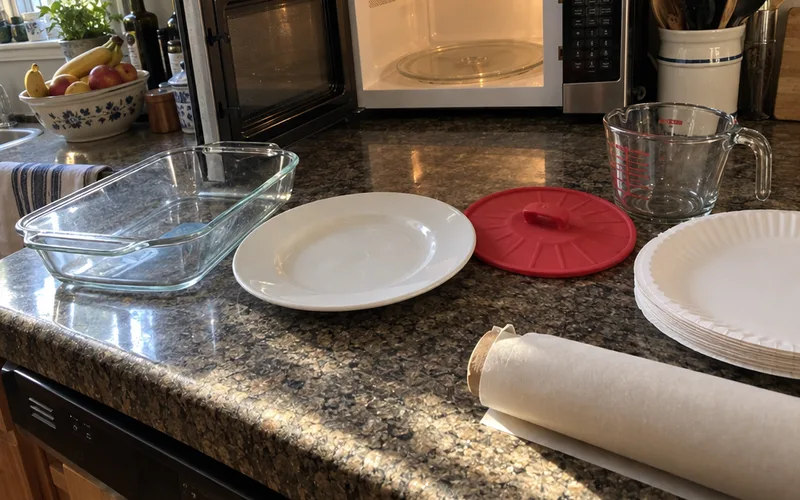
Still, “usually” isn’t “always.”
Gold or silver paint on a rim puts glass, ceramic or stoneware cookware on the avoid list, and the rules for glass in the microwave go through the other exceptions.
Paper splits too: plates and parchment are fine, but brown paper bags are not, as the rundown on paper in the microwave explains.
Pro Tip: Keep 1 or 2 marked glass containers just for reheating leftovers, so you never have to guess with a takeout tub.
What Isn’t Microwave Safe?
The Kitchn says to keep Styrofoam, brown paper bags, non-microwave-safe plastics, aluminum foil, metals and insulated mugs out of the microwave. Hood explains that these materials may not take the heat, can burn or spark, can release toxic fumes into food or can damage the oven.
What actually happens if you get it wrong?
“Placing non-microwave safe items in the microwave can cause contents to catch fire, and items to melt, warp, or release harmful toxins into your food,” Hood says.
So the risk isn’t only to the container.
A foam tray is just the kind of thing that can melt or warp, and the details on heating Styrofoam cover what to do with a foam takeout box.
Metal is the other big one.
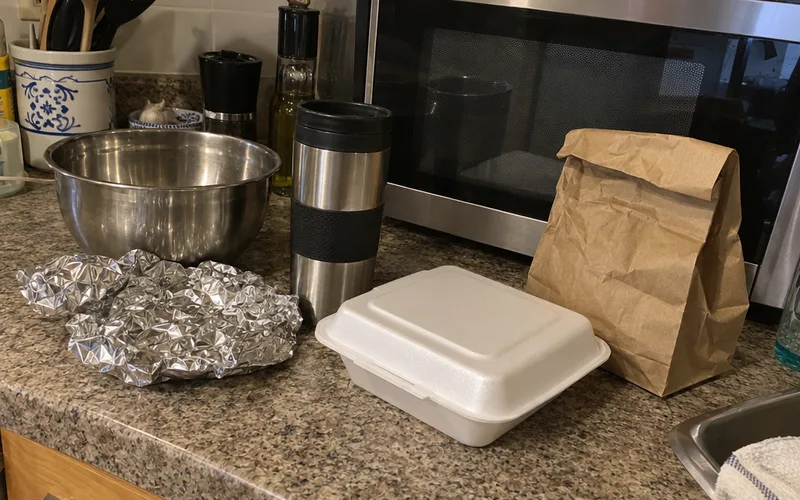
Foil, metal bowls and insulated travel mugs all fall on that list, and the breakdown on stainless steel in the microwave covers why.
Plastic cups sit in the middle: a plastic cup in the microwave is fine only when it’s marked for it.
The One Rule Worth Remembering
If you can’t find wavy lines or the words “microwave safe” on a dish and its lid, don’t microwave it.
Tonight, flip over the 3 containers you reheat in most and check each base and lid.
Anything without the mark moves to fridge or freezer duty, and a marked glass or ceramic dish takes its place.
Once your containers are sorted, the next microwave safety habits are easy to add.
Frequently Asked Questions
How do I know if a container is microwave safe?
A container is microwave safe when its maker marks it with wavy lines, a microwave icon with wavy lines, a dish under wavy lines or the words “microwave safe”, usually on the bottom. Turn the container over and check the base first, then the lid on its own.
Is a 5 plastic microwave safe?
A 5 in a triangle doesn’t make a plastic container microwave safe on its own, because the number only names the plastic, polypropylene. Heat a number 5 container only when it also shows the wavy-line symbol or the words “microwave safe”.
What plastic code is microwave safe?
No plastic code is a microwave rating, since the numbers 1 to 7 in the triangle identify the resin for recycling. The wavy-line symbol or the printed words are the only marks that rate a plastic container for the microwave.
Can number 7 plastic be microwaved?
Number 7 plastic can go in the microwave only when the container also carries the microwave safe symbol or the words, because 7 covers every “other” plastic. Without one of those marks, move the food to a dish that has one.
Can plastic plates go in a microwave?
Plastic plates can go in a microwave only when they’re marked microwave safe, a group The Kitchn lists as microwave-safe BPA-free plastics. An unmarked plastic plate belongs on the list of non-microwave-safe plastics to avoid.
How safe is glass in a microwave?
Glass is one of the materials The Kitchn lists as generally safe to microwave, along with ceramic and food-grade silicone. Unmarked glassware still falls under the no-label rule, so check the bottom for wavy lines or the words before you heat it.
What is not considered microwave safe?
Styrofoam, brown paper bags, non-microwave-safe plastics, aluminum foil, metals and insulated mugs are not considered microwave safe, according to The Kitchn. Anything marked with crossed-out wavy lines, a crossed-out microwave or the words “not microwave safe” joins that list.