
A microwave that bakes at 450°F sounds like a gimmick.
It isn’t. GE Appliances lists convection settings from 225 to 450°F on its convection microwaves, which is real oven territory.
So what is a convection microwave oven, and does one belong on your counter? The answer comes down to 3 cooking modes and 1 missing part.
It’s one of several types of microwaves, and the one closest to a second oven.
How a Convection Microwave Works
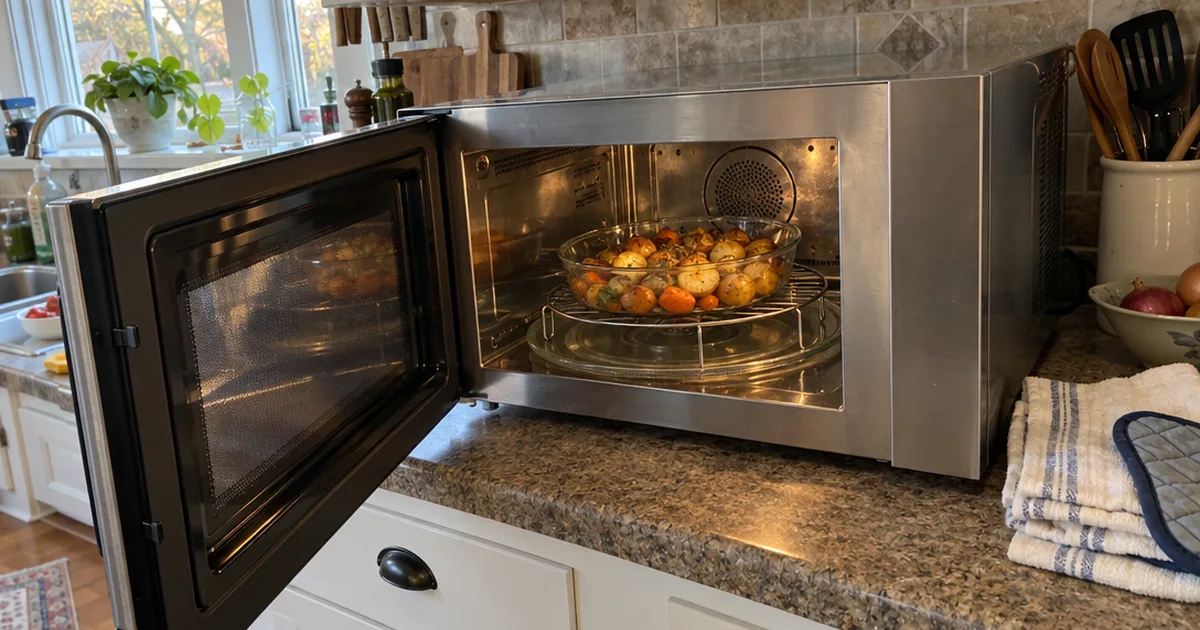
A convection microwave works by pairing a normal microwave with a fan and a heater at the back. According to GE Appliances support documentation, a rear fan blows air across a heater and into the oven.
The microwave side works like any microwave. A part called a magnetron makes energy that heats the food fast, but it can’t brown anything.
The convection side turns the box into a small convection oven. Its fan runs the whole time, so hot air keeps moving and browns the outside of your food.
Here’s how the 3 modes split the work:
- Microwave mode: reheats, defrosts and cooks vegetables.
- Convection mode: bakes and roasts with hot air, from 225 to 450°F on GE models.
- Combination mode: runs both at once, so food cooks faster and still browns.
Not every model has combination mode, so check your owner’s manual before you plan dinner around it.
For the full-size version of fan heat, see how a convection oven differs from a conventional one.
Convection Microwave vs Regular Microwave
A convection microwave does everything a regular microwave does, plus baking, roasting and crisping, because it adds a heating element and fan. The trade-off is more cost, more cleaning and a learning curve.
On everyday jobs, the 2 stack up like this:
| Job | Regular microwave | Convection microwave |
|---|---|---|
| Reheat and defrost | Yes | Yes |
| Bake, roast, crisp | No | Yes |
| Metal bakeware | No | Convection and combination modes |
| Brown a pizza base | No | Limited, no bottom element |
| Clean the cavity | As needed | After each convection use |
In other words, the regular one wins on simplicity, and the convection one wins on range.
This solo vs convection breakdown helps if you’re torn between them.
What a Convection Microwave Oven Is Used For
A convection microwave oven is used for reheating in microwave mode and for roasting, baking and browning in convection mode. CHOICE, an Australian consumer group that lab-tests these ovens, says they shine with roasts, pastries and pizza.
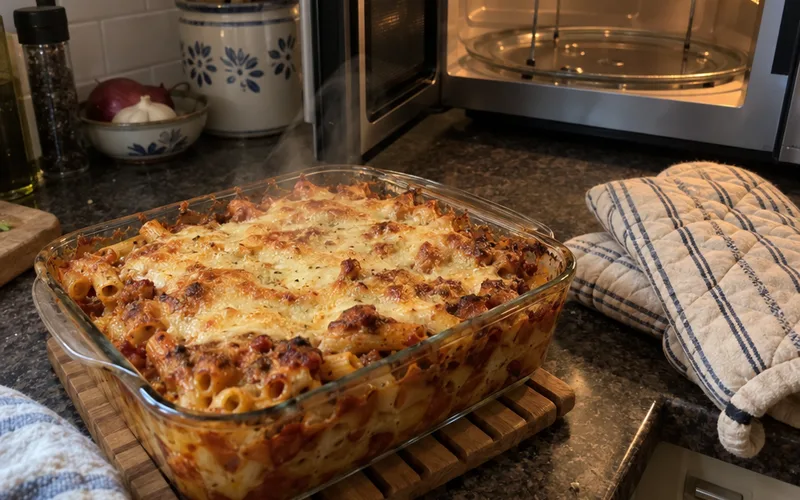
Combination mode is where a convection microwave earns its space. The same testers say it suits:
- roasting meats, poultry and vegetables
- baking fish, casseroles, and potato and pasta bakes
- cooking cakes, pastries and slices
Everyday jobs don’t change. You still reheat leftovers and thaw frozen food the usual way.
How to Bake in a Convection Microwave
To bake in a convection microwave, pick convection mode, preheat it and set the oven 25 to 50°F below the recipe. GE Appliances says preheating to 350°F takes about 10 to 15 minutes.
Here’s the process:
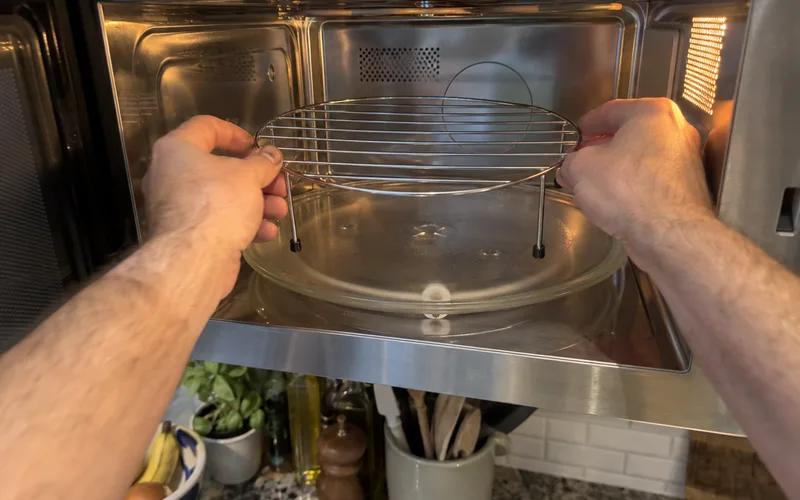
- Put the convection rack in, so air can flow around the dish.
- Pick Convection Bake and set the lower temperature.
- Preheat until the oven signals it’s ready.
- Load the dish and start checking a few minutes early.
Roasting is the exception. Convection Roast needs no lower temperature, the same support page says.
Pro Tip: Shiny aluminum pans give the best baking results, according to the manufacturer.
For other recipes, this convection temperature conversion guide helps you adjust times too.
Can You Put Metal in a Convection Microwave?
Yes, metal can go in a convection microwave in convection mode, and GE Appliances says your usual baking pans work there. In combination mode, CHOICE says metal cookware also works, but some metal utensils may cause arcing if they touch the walls or racks.
Arcing means sparks jumping between metal surfaces.
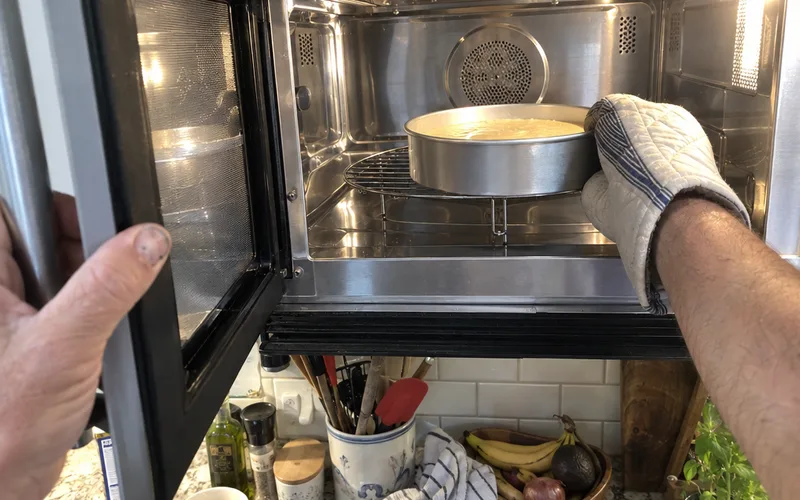
So keep pans centered and clear of the walls, and stop the oven if you see sparks. Rules differ by model, so your manual has the final word.
This guide to metal in a convection microwave covers pans, racks and foil mode by mode.
Convection Microwave Disadvantages
The biggest drawback of a convection microwave is weak bottom browning. CHOICE notes there’s no bottom element, so pies and pizza get limited browning and crisping underneath.
Its guide, last updated in March 2024, lists other downsides:
- Small cavity: you can cook only one type of food at a time.
- Cleaning after every convection use: leftover grease bakes on next time.
- A learning curve: they can be tricky if you’ve never used one.
- A hot door: the inside of the door gets very hot in convection mode.
One more catch: keep microwave-only plastic out while the cavity is still hot, because the heat can damage it.
Most of these are habits, not deal-breakers. But if a soggy pizza base would bug you, see these convection oven pros and cons for how a full oven compares.
Is a Convection Microwave the Same as an Air Fryer?
No, a convection microwave isn’t the same as an air fryer, even though both use a heater and fan. CHOICE testing found the air fryer function in a convection microwave doesn’t match a standalone air fryer.
The testers add that a plain microwave plus a separate air fryer may cost less.
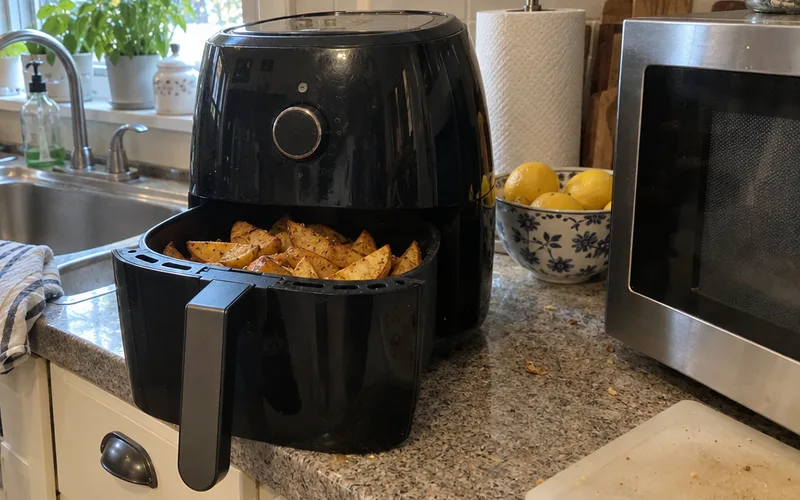
So if crispy fries are the goal, buy the air fryer. If you want baking too, the combo covers more, and this look at how an air fryer compares to a microwave shows why.
Weighing a full-size oven instead? See how a convection oven stacks up against an air fryer.
Can a Convection Microwave Replace a Regular Oven?
A convection microwave can replace a regular oven in a small kitchen, but not for big batches, since it cooks one type of food at a time. The same Australian testers say it suits a studio apartment, caravan or holiday home.
For a family, it works better as a second oven. That extra oven helps when you’re cooking a big meal.
The same logic applies to smaller appliances, like whether one can replace a toaster oven on your counter.
How Much a Convection Microwave Costs
In Australia, CHOICE reports convection microwaves typically cost AU$160 to AU$1200. The priciest model it tested was AU$2250, in its March 2024 guide.
Those are Australian dollars, not U.S. prices.
For a U.S. number, check it yourself in 5 minutes. Open a big appliance retailer’s microwave section, filter by the convection feature and sort by price.
Then compare styles. Countertop models just sit on the counter, while built-in models need a trim kit and professional installation, the same guide says.
Start with these countertop microwave picks or over-the-range models.
Is a Convection Microwave Worth It?
A convection microwave is worth it if you’re short on space or cook small meals. The Australian testers say it’s cheaper to run than an oven.
It’s not worth it if you only reheat leftovers or already own a good oven and air fryer.
The simple test? If you’d use the bake button once a week, buy one.
Frequently Asked Questions
Do you leave the glass tray in the convection microwave?
On turntable models, GE Appliances says the turntable keeps turning during convection cooking, so on those models the glass tray stays in. Check your owner’s manual for where the convection rack goes.
How do you clean a convection microwave?
Clean a convection microwave after each convection use, once it has cooled, by wiping the inside with warm soapy water. For baked-on residue, CHOICE suggests boiling a bowl of water inside and letting it sit about a minute before you wipe, and it advises against harsh oven cleaners.
Is the convection oven in a microwave safe?
The convection oven in a microwave is safe if you treat it like an oven, and CHOICE testing found its controls, door glass and handle get warmer than a basic microwave but not dangerously so. Use oven gloves, because the inside of the door gets very hot in convection mode.
What can a solo microwave oven be used for?
A solo microwave oven is used for reheating leftovers, defrosting frozen food and cooking vegetables, the same jobs a convection model handles in microwave mode. It can’t bake or brown, which is the gap a convection microwave fills.