
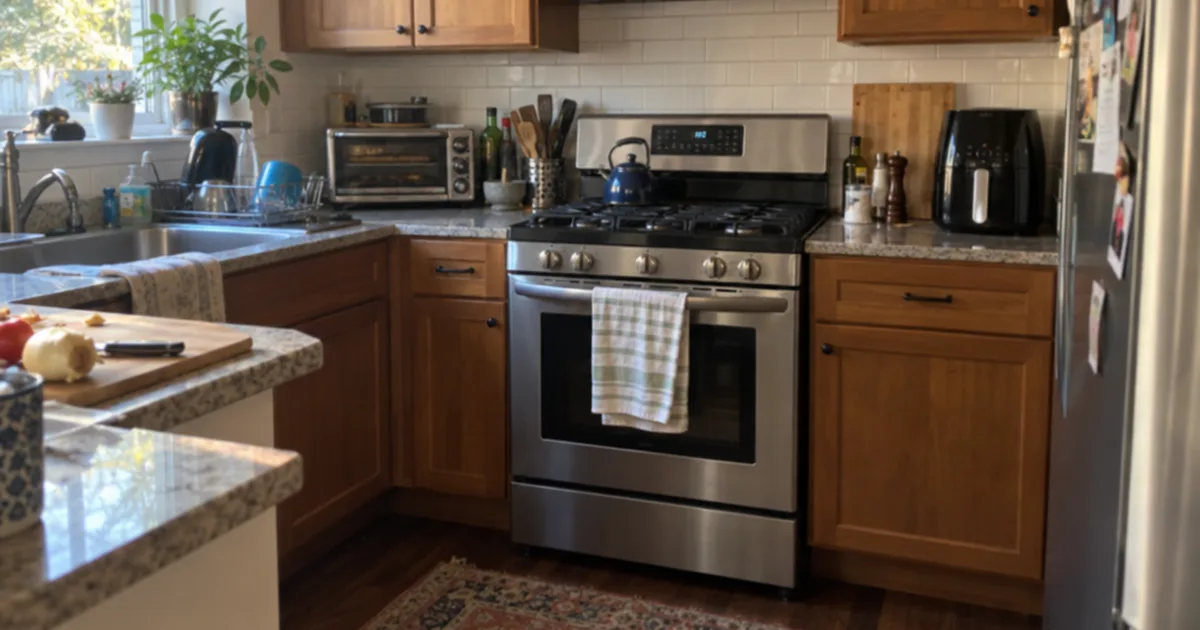
Every oven answers 3 questions: how it heats, what powers it and where it sits.
Most lists mix those questions together, which is why a “convection oven” and a “gas oven” can turn out to be the same machine.
So I’ve split the types of ovens into 15 numbered types, sorted by heating style, fuel, installation and specialty, each with who it suits and what to check first.
Here’s the quick way to use this list:
- Bakers get the most out of #1, #2 and #4.
- A gas line plus a love of baking points to #5.
- If bending to the oven door hurts your back, go to #8.
- Small kitchens feeding 1 or 2 people do fine with #14 or #15.
How These Oven Types Are Grouped
Ovens are classified by heating style (#1-#2), fuel (#3-#5), installation (#6-#9) and specialty (#10-#15), and one oven usually belongs to several of those groups at once.
A slide-in range, for example, might have an electric oven with a fan, which makes it types #2, #4 and #7 at the same time.
So when a salesperson says “convection,” ask which fuel and installation come with it.
The 15 Types of Ovens
The 15 types of ovens are conventional, convection, gas, electric, dual-fuel, freestanding, slide-in, wall, double, steam, combi, microwave, speed, toaster and air fryer ovens.
1. Conventional Oven
A conventional oven bakes with still air heated by elements at the top and bottom of the cavity.
That still air forms hotter and cooler zones, so rotating a tray halfway through helps.
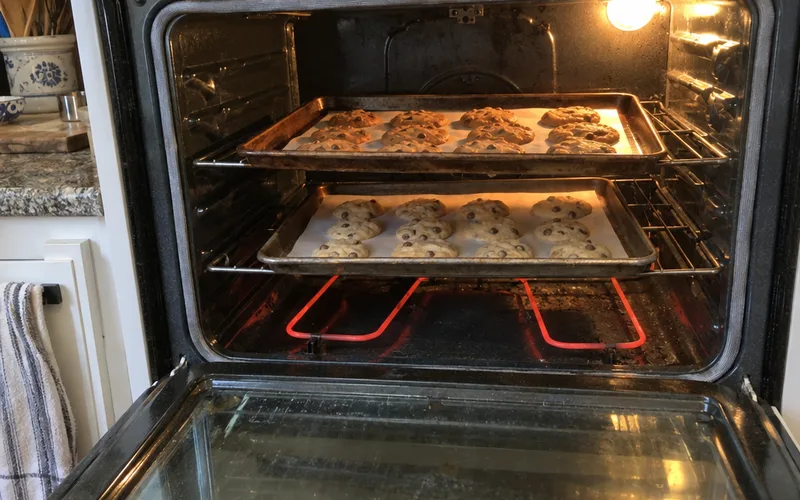
Best for: cakes, custards and anyone following older recipes as written. Skip it if you bake 3 trays of cookies at once.
First step: find the Bake setting on your oven and learn what the bake symbol looks like.
The catch: top and bottom racks don’t cook the same, so use the rack position your recipe gives.
2. Convection Oven
A convection oven adds a fan, and on some models an extra heating element, to push hot air around the food.
That moving air is the main difference between a convection oven and a conventional oven, and it usually means faster cooking and better browning across racks.
Best for: crisp vegetables, browned meat and batch baking. Skip it if most of what you bake is soufflés and custards.
First step: read the convection trade-offs before you pay extra for it.
The physics is simple. Convection means heat carried by moving air, so the fan keeps fresh hot air reaching every side of the food.
Most convection ovens can switch the fan off, so you get both modes in 1 box. Adjust old recipes with a conversion guide for convection, and see the full conventional vs. convection breakdown if you’re still choosing.
3. Gas Oven
Gas ovens burn natural gas or propane, so they only work in a home that has one of those piped to the kitchen.
A gas flame answers the knob quickly, and many owners like it for roasting meat.
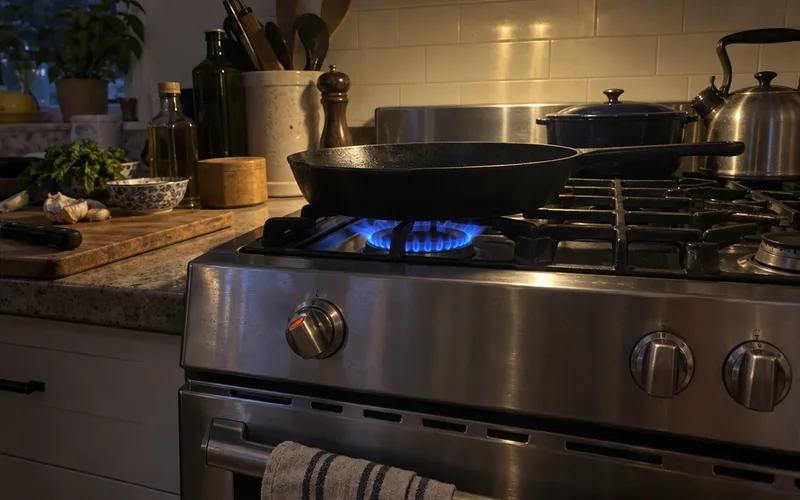
Best for: homes that already have a gas line. Skip it if you’d need a new line just for the oven.
First step: look behind your current range for a gas valve and a flexible gas connector.
Burning gas releases combustion gases, so run the range hood and crack a window whenever you cook with gas.
4. Electric Oven
Electric ovens heat with elements on your home’s electric supply, and they’re the common pick where gas isn’t available.
Their heat is drier and more even than gas, which is why bakers tend to favor them.
Best for: bread, cookies, pastries and homes without gas. Skip it if you have no heavy-duty outlet and don’t want an electrician.
First step: pull your current range out and check whether it plugs into a large heavy-duty outlet.
So if you bake more than you roast, an electric oven is the safer bet, and it’s worth knowing whether an electric oven can cause carbon monoxide if fumes worry you.
5. Dual-Fuel Range
A dual-fuel range pairs a gas cooktop with an electric oven, so you get gas burners on top and dry electric heat below.
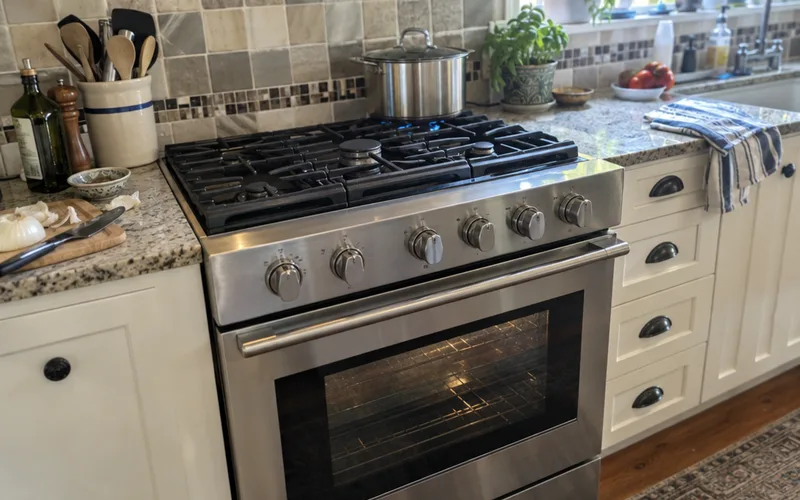
Best for: serious cooks who already have gas. Skip it if you only have 1 of the 2 hookups.
First step: confirm you have both a gas line and a heavy-duty electric outlet, because both systems run at once.
Pro-style ranges belong here too: heavy stainless steel, well-insulated ovens and cast-iron grates, sold as all-gas or dual-fuel.
The catch is price: you pay a lot for the look, and many regular ranges now offer high-power burners and fans too.
6. Freestanding Range
A freestanding range is a cooktop and oven in 1 box with finished sides and the controls on a raised back panel.
It’s the most widely sold type of range and the easiest to install or swap out.
Best for: renters, budget remodels and any spot at the end of a counter. Skip it if you want a built-in look.
First step: measure your opening’s width and depth, then shop ranges that match it.
Because the sides are finished, a freestanding range is the safest replacement when you’re not sure what fits.
7. Slide-In Range
A slide-in range fits between cabinets, puts the controls on the front and may have unfinished sides, while a freestanding range has a back panel and finished sides.
The front controls show off your backsplash.
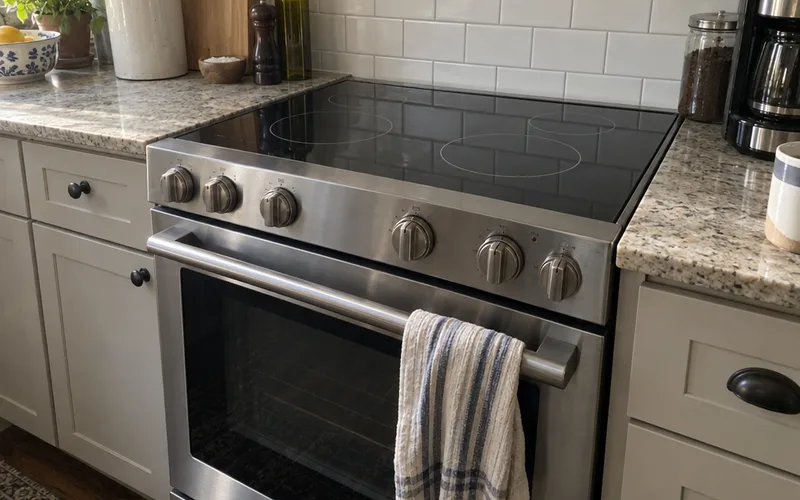
Best for: kitchens with cabinets on both sides of the range. Skip it if the range sits at the end of a counter run.
First step: check whether your countertop runs behind the current range or stops at a back panel.
Here’s a quick checklist before you buy one:
- Cabinets on both sides of the opening
- Countertop that can meet the range edge
- A control lockout, since front knobs are easy to bump with kids around
In other words, a slide-in is a style upgrade, not a direct swap for a freestanding range.
8. Wall Oven
A wall oven is built into cabinetry at the height you choose and pairs with a separate cooktop, while a range puts both in 1 unit.
That height means you lift a heavy dish out without bending.
Best for: remodels, cooks with bad backs and kitchens with an island cooktop. Skip it if you’re replacing a range in a standard opening.
First step: price the wall oven and the cooktop together, because you’re buying 2 kitchen appliances.
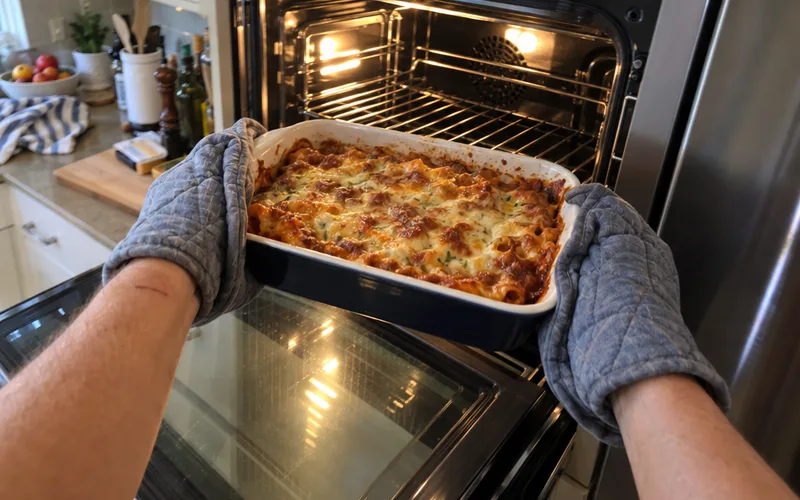
So is a wall oven better than a range? It’s better for comfort and layout, but a range puts both jobs in 1 appliance and drops into a standard opening.
9. Double Oven
A double oven gives you 2 oven cavities, either stacked in a wall or as a range with a smaller top oven and a larger bottom one.
You can bake a pie at one temperature while dinner cooks at another.
Best for: big families and holiday hosts. Skip it if you rarely use your oven.
First step: compare double wall ovens with double-oven ranges in your price range.
On a double-oven range, the lower door sits close to the floor, so you’ll bend farther. The small upper oven makes up for it by preheating a pizza without heating the big cavity, a small energy efficiency win too.
10. Steam Oven
A steam oven cooks food with hot water vapor, which keeps fish, vegetables and reheated leftovers moist.
Best for: people who steam a lot of vegetables, fish or rice. Skip it if you want crisp skin and golden crusts every night.
First step: decide whether you want steam only or a combined model (see #11).
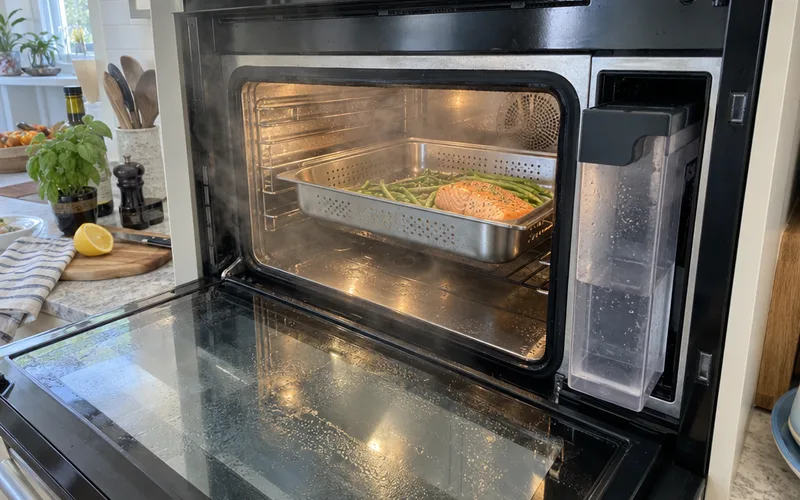
Think of a steam oven as a second oven, not a replacement for your main one.
11. Combi Oven
A combi oven combines convection heat and steam in one cavity, and you can run it in convection mode, steam mode or both together.
The combined mode cooks fast while keeping food moist, which is why restaurants rely on combi ovens.
Best for: home cooks who want steam and browning in 1 appliance. Skip it if you’d rarely use the steam.
First step: read the steam system’s descaling instructions in the manual before you buy.
Here’s how the 3 modes split the work:
- Convection: dry hot air for roasting and baking.
- Steam: moist heat for vegetables and fish.
- Combi: both together for juicy meat and crusty bread.
Combi ovens cost more up front, so buy one only for steam you’ll actually use.
12. Microwave Oven
A microwave oven heats food with microwave energy instead of hot air, so it’s fast for reheating and defrosting but won’t brown.
That’s why a lasagna comes out hot but pale.
Best for: reheating, defrosting and quick steaming. Skip it as your only oven if you bake.
First step: sort out the microwave types before you buy, since solo, grill and convection models differ a lot.
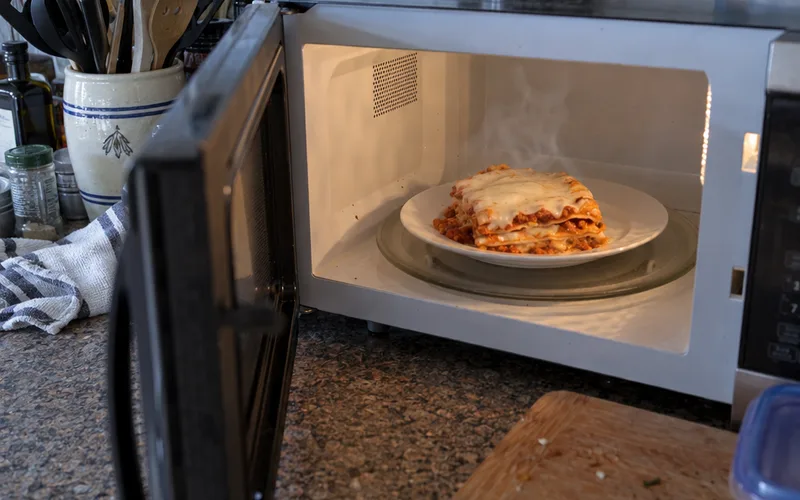
Some add a fan, and the solo microwave vs. convection oven split explains when that’s worth it.
13. Speed Oven
A speed oven combines microwave energy with convection or radiant heat, so it cooks small meals faster than a regular oven while still browning them.
Best for: busy households that want a second oven that also microwaves. Skip it if you need room for big dishes.
First step: compare its interior size with your largest baking dish.
The trade-off: a speed oven’s cavity is small, so it suits weeknight dinners for 2, not a holiday turkey.
14. Toaster Oven (OTG)
A toaster oven is a small countertop oven, and OTG stands for oven toaster grill, a toaster oven that bakes, toasts and grills with heating coils.
Its small cavity suits a few cookies, a personal pizza or toast.
Best for: small kitchens, dorms and cooks feeding 1 or 2. Skip it if you bake sheet cakes.
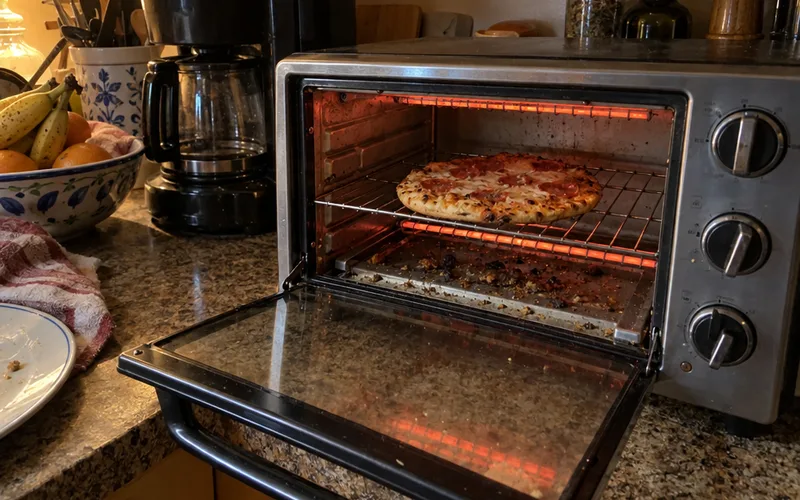
First step: browse the best toaster ovens by interior size, not outside size.
Whether a convection microwave can replace a toaster oven depends on how much you toast.
15. Air Fryer
An air fryer is a small countertop convection oven with a strong fan, and many full-size ranges now copy it with an air-fry setting.
The convection oven vs. air fryer question mostly comes down to batch size.
Best for: fries, wings and crisp leftovers in small batches. Skip it if your range already has air fry.
First step: pick a basket type, then shop by capacity.
If you’re comparing models, these reviews cover the common picks:
- Gourmia 8-quart model and the Gourmia lineup
- Instant Pot air fryer and the Instant Pot Vortex
- The Beautiful air fryer and non-toxic air fryer picks
An air fryer only stays crisp if it stays clean, so follow basic air fryer cleaning, learn cleaning the heating element, and use the Ninja cleaning steps if you own one.
Oven Types Compared
Here are all 15 oven types side by side, with what each needs and who it suits:
| Type | Needs | Best for |
|---|---|---|
| 1. Conventional | Any oven | Cakes, custards |
| 2. Convection | Fan model | Batches, browning |
| 3. Gas | Gas line | Gas kitchens |
| 4. Electric | Electric circuit | Baking |
| 5. Dual-fuel | Gas + electric | Serious cooks |
| 6. Freestanding | Range opening | Easy swaps |
| 7. Slide-in | Cabinets both sides | Built-in look |
| 8. Wall oven | Wall cabinet | No bending |
| 9. Double oven | Wall or range space | Big meals |
| 10. Steam | Water supply | Moist food |
| 11. Combi | Descaling | Steam + browning |
| 12. Microwave | Counter or mount | Reheating |
| 13. Speed | Wall cabinet | Fast small meals |
| 14. Toaster oven | Outlet | Small batches |
| 15. Air fryer | Counter space | Crisp food |
Read the table by hookup first, then installation, and you’ll usually narrow 15 types to 2 or 3.
Which Type of Oven Is Best for Baking?
An electric convection oven that can also turn its fan off is the best type of oven for baking, because electric heat is dry and even and the fan helps with multi-rack batches.
Use the fan for cookies and pastries, and switch it off for cakes and custards.
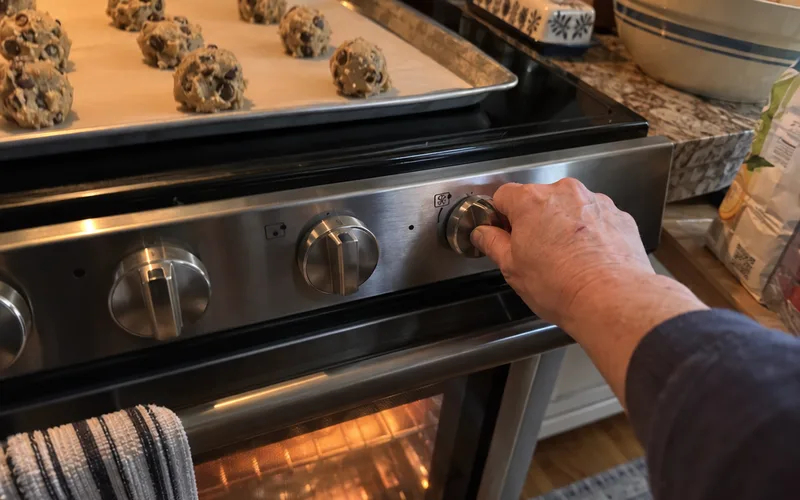
Gas ovens bake well too, but their heat is less dry and even, which shows most in delicate layers.
For most bakers, the setting matters as much as the oven, so learn bake, broil and roast before you blame the appliance.
Gas vs. Electric: Which Oven Is Better?
An electric oven is better for baking because its heat is drier and more even, while a gas oven responds faster and suits roasting, but the hookup you already have usually decides it.
Switching fuels means new wiring or a new gas line, so price that work before you pick a fuel for how it cooks.
Here’s the deal:
If you have gas and love to bake, a dual-fuel range (#5) gives you both. If you have only electric, an electric range with a fan mode covers almost every recipe, and an induction cooktop on top runs on that same line.
The cooktop is a separate choice, and the types of stoves split by the same gas and electric lines.
So start with the hookup behind your range, not with which fuel sounds better.
How to Tell If You Have a Convection Oven
You have a convection oven if you can see a fan on the back wall of the oven cavity or your controls show a convection setting or a fan symbol.
With the oven off and cool, open the door and look for a round fan cover in the middle of the back wall.
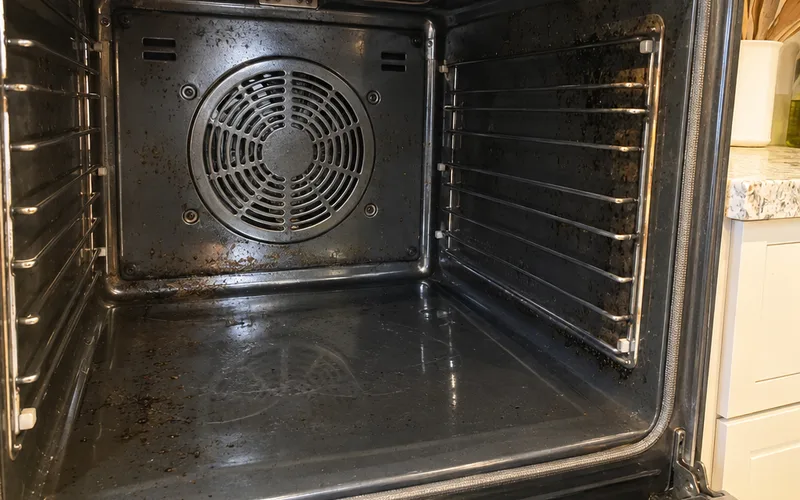
Then check the dial or keypad for words like Convection Bake, Convection Roast or True Convection.
Still not sure? Find the model number on the door frame or drawer label, and search it with the brand name to pull up the manual, since brands label their settings differently.
That manual settles it, and it also tells you how your model wants you to adjust recipes.
Commercial Ovens You Won’t Need at Home
Commercial kitchens use deck, conveyor, rotisserie and pizza ovens, which show up in many oven lists but rarely belong in a home.
Here’s what each one does:
- Deck oven: bakes on hot stone or steel for bakery bread and pizza.
- Conveyor oven: moves food through on a belt in pizza shops.
- Rotisserie oven: turns meat as it cooks for even browning.
- Pizza oven: runs very hot for fast pizza and artisan bread.
So if a list puts a conveyor oven next to your range, skip that entry.
What to Consider When Choosing an Oven
The factors to consider when choosing an oven are your hookup, your space, your installation style, the oven size you need and the cooking modes you’ll really use.
Work through them in this order:
- Hookup: gas, electric or both, since this rules out whole types.
- Space: measure width, depth and the door swing before you shop.
- Installation: freestanding, slide-in or wall oven.
- Capacity: check the usable space, not the outside size.
- Modes: convection, steam, air fry or self-cleaning, only if you’ll use them.
More features usually mean a higher price, so set a budget and drop any mode you can’t name a dish for.
If your current oven simply quit, check why an oven stops heating before replacing it, and browse the stoves and ovens guides next.
Frequently Asked Questions
What are the 3 main types of ovens?
The 3 main types of ovens by heating style are conventional ovens, convection ovens and microwave ovens. A conventional oven heats with still air from top and bottom elements, a convection oven adds a fan to move that hot air, and a microwave oven heats the food itself with microwave energy.
What are the 2 types of ovens?
The 2 types of ovens most people mean are gas ovens and electric ovens, split by what powers them. A gas oven runs on natural gas or propane, while an electric oven heats with elements on your home’s electric supply.
Which type of oven is best for home use?
An electric oven with a convection setting is the best fit for most home kitchens, because it gives dry, even heat for baking and a fan for faster cooking. If your kitchen only has a gas line, a gas range with convection is the practical match.
What are the types of stoves?
Stoves are usually sorted into gas, electric smoothtop and induction cooktops, sold on their own or as part of a range. An induction cooktop is a type of electric cooktop that heats magnetic pans directly, so it needs cookware a magnet sticks to.
Can you convert a gas stove to electric?
Converting a gas range to an electric one is usually possible, but it depends on whether your kitchen already has a heavy-duty electric line behind the range. Have an electrician check that circuit first, and have a licensed pro cap the gas line.
Final Thoughts
Most kitchens come down to 3 choices: the hookup you already have, a range or a wall oven, and whether you want convection. Check the label on your current oven tonight, and you’ll know which of these 15 types you’re replacing.