
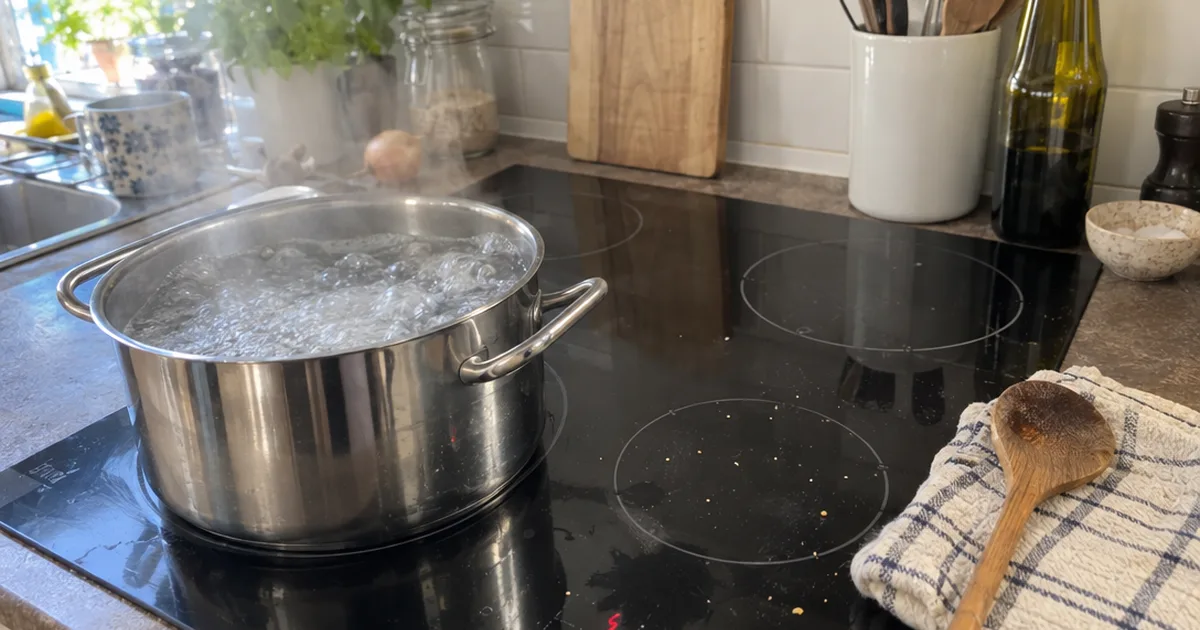
An induction cooktop typically puts about 90% of its heat into the pan.
A gas burner gets about 50% there, according to a Samsung induction buying guide.
That gap is the whole idea behind induction cooking: the pan becomes its own burner.
Here’s how it works, what it needs from your pans and your wiring, and how to tell if switching makes sense for you.
What Is Induction Cooking?
Induction cooking is an electric way to cook that heats the pan itself with a magnetic field, not with a flame or a glowing element.
You’ll find it in 3 forms: a built-in cooktop, a full range with an oven below, and a portable single burner for the counter. Some setups even hide the coil under the countertop, like the one in this Invisacook review.
All of them belong to the same stoves and ovens family as gas and radiant electric. If you’re still picking a stove, the types of stoves breakdown shows where induction fits next to the rest.
How Does Induction Cooking Work?
Induction cooking works by sending alternating current through a copper coil under the glass-ceramic top, which creates a magnetic field that keeps flipping direction.
That field sets up small electric currents, called eddy currents, inside the base of a magnetic pan. The metal resists those currents, and that resistance turns into heat.
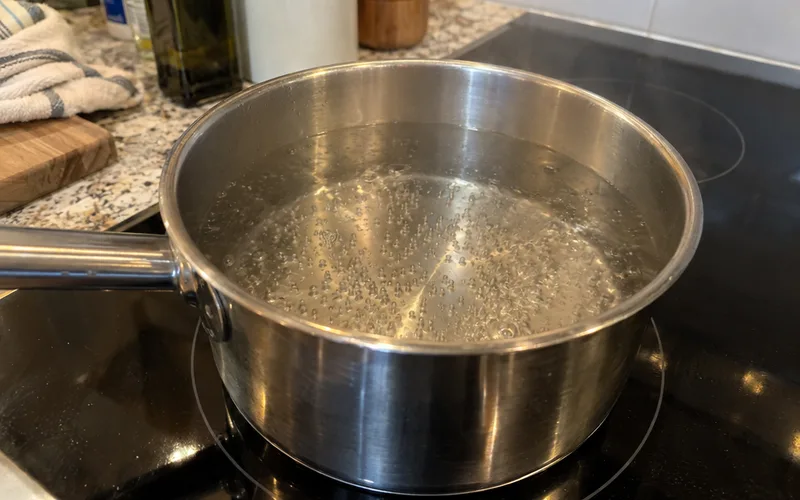
Here’s the sequence, start to finish:
- You set a pan on a cooking zone and turn it on.
- Current flows through the copper coil under the glass.
- The coil’s changing magnetic field reaches up into the pan base.
- Eddy currents heat the base, and the food cooks from there.
The glass makes no heat of its own. It only gets hot from the pan sitting on it, so it cools down quickly once the pan comes off.
And because the pan is part of the setup, most cooktops stop heating the moment you lift it away. In other words, no magnetic pan, no heat.
Do You Need Special Pans for Induction Cooking?
Yes, induction needs pans with a magnetic base, and a Samsung guide names the metals to look for: cast iron, carbon steel and stainless steel.
The technical term is ferromagnetic metal, which just means one a magnet grabs. The catch is that not every stainless pan qualifies, and magnetic stainless steel cookware explains which kinds do.
Bare aluminum, copper and glass won’t heat at all unless the maker bonded a magnetic plate to the bottom. So before you buy anything, test what you already own.
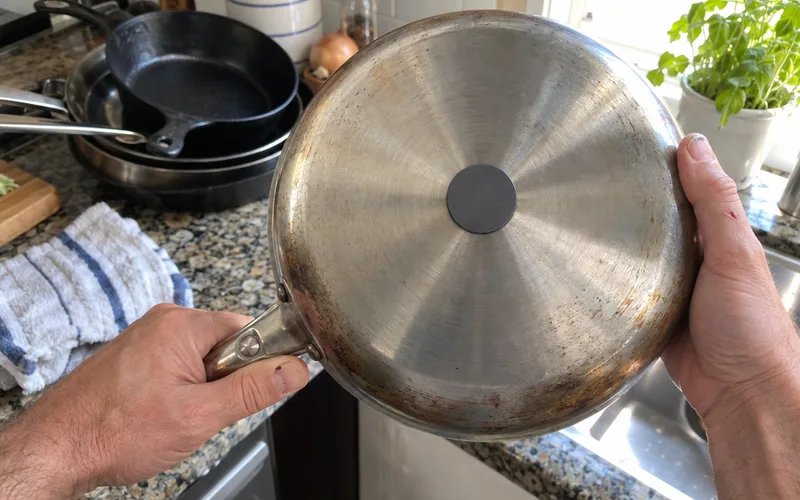
If you do need new pieces, every pick in the best induction cookware list is induction-ready. Those pans won’t lock you in either, since induction cookware on a gas stove works fine, and so does induction cookware on a glass top.
How to Tell if a Pan Works on Induction
The fastest way to tell if a pan works on induction is the magnet test: if a fridge magnet grabs the center of the pan bottom firmly, the pan will heat.
A weak pull usually means a thin magnetic layer, so expect slower or patchier heating from that pan.
You can also flip the pan and look for the induction symbol, a small coil of loops stamped on the base. If a pan sits on the zone and the display blinks or shows a no-pan error, the cooktop can’t find enough magnetic metal in it.
Woks, Moka Pots and Pressure Cookers
Woks, stovetop coffee makers and pressure cookers are the pieces that most often surprise people after a switch.
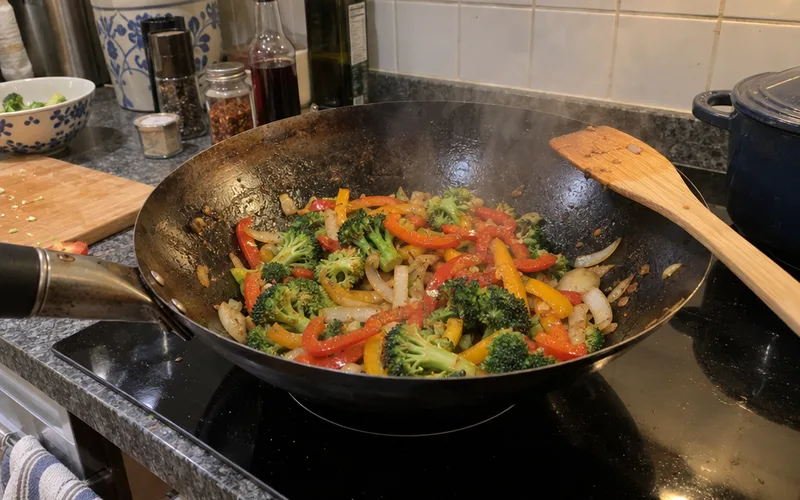
A round-bottom wok barely touches flat glass, so compare flat-bottom vs. round woks before you shop. A flat carbon steel wok is the usual fix, and it passes the magnet test.
Classic moka pots are aluminum, which won’t heat on induction. The stainless steel vs. aluminum moka pots comparison covers the version that does.
A stovetop pressure cooker follows the same magnet rule. Once a magnetic-base cooker comes up to pressure, the usual pressure cooker chicken times still guide the cook.
Is Induction Faster and More Efficient Than Gas?
Induction is faster and more efficient than gas, because the heat starts inside the pan instead of in a flame. A Samsung buying guide says its induction cooktops typically send 90% of their heat into the cookware, against about 50% for gas burners.
That’s a manufacturer’s figure for its own products, so treat it as a rough guide. The reason behind it holds for any brand, though.
A gas flame heats the air around the pot as well as the pot. Induction skips that step, so water comes up to a boil sooner and your kitchen stays cooler.
Speed has a flip side. A pan of oil gets hot faster than you expect, so stay at the stove the first few times you sear or fry.
Is Induction Cooking Safe for Your Health?
Induction cooking is safe for most people and cleaner for your indoor air, because it burns no fuel. Vox, reporting EPA data in 2020, found homes with gas stoves have around 50% higher NO2 levels than homes with electric stoves, ranging up to over 400% higher.
NO2, or nitrogen dioxide, is a gas that irritates your lungs. And the same reporting found gas cooking makes about twice as much PM2.5, the fine particles that travel deep into your lungs, as electric cooking.
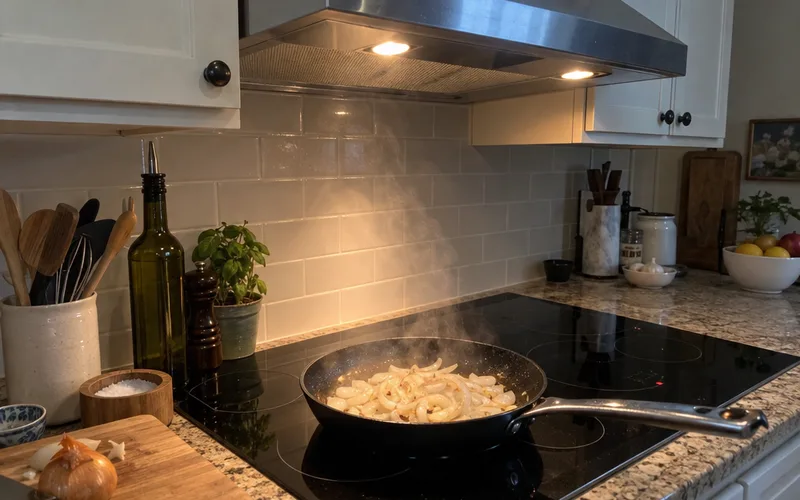
Food itself still throws off smoke and grease on any stove. So keep running your range hood when you sear, roast or fry, induction or not.
One group should check first. If you wear a pacemaker or another implant, ask your doctor or the device maker about induction before you buy.
For everyone else, the big health change is simple: no flame means no combustion gases in your kitchen.
Do Induction Stoves Need Special Wiring?
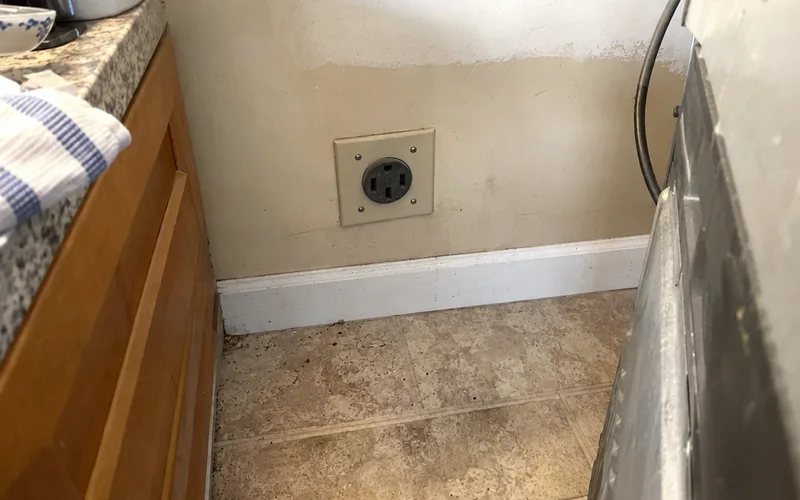
A full-size induction range needs a dedicated 240-volt circuit, and Samsung, for example, lists 240V/208V and 40 amps for its induction ranges.
If you’re replacing an electric range, your existing circuit may already match. Check the breaker size against the installation guide for the exact model you want.
Coming from gas is the bigger job. A gas range usually plugs into a regular 120-volt outlet, so you’ll likely need an electrician to run a new circuit from your panel.
Here’s what to say when you call:
“I’m putting in an induction range, and its installation guide calls for a 240-volt, 40-amp circuit. Can my panel handle that, and what would the new circuit involve?”
A portable induction burner skips all of this. It plugs into a standard kitchen outlet, which makes it the no-wiring way to try induction.
What Does It Cost to Switch to Induction?
The cost of switching to induction comes down to 3 things: the cooktop or range, any new 240-volt wiring if you’re replacing gas, and new pans for any that fail the magnet test.
Rebates can cut that bill. A Samsung induction page lists up to $840 for qualifying appliances under the Home Electrification and Appliance Rebate Program, with eligibility set state by state.
So before you buy, search your state energy office’s website for “HEAR rebate.” Then check whether your income and the model you want both qualify.
Not ready to commit?
A portable burner lets you test induction with your own pans for far less than a new range. The best portable induction cooktops are a good place to start.
How Induction Compares With Gas and Regular Electric
Induction and a regular electric cooktop both run on electricity and can look identical. The difference is that a radiant top heats an element under the glass first, while induction heats only the pan.
That’s why a radiant top works with any flat pan, while induction takes only magnetic ones. The induction vs. electric cooktops comparison walks through the rest of the trade-offs.
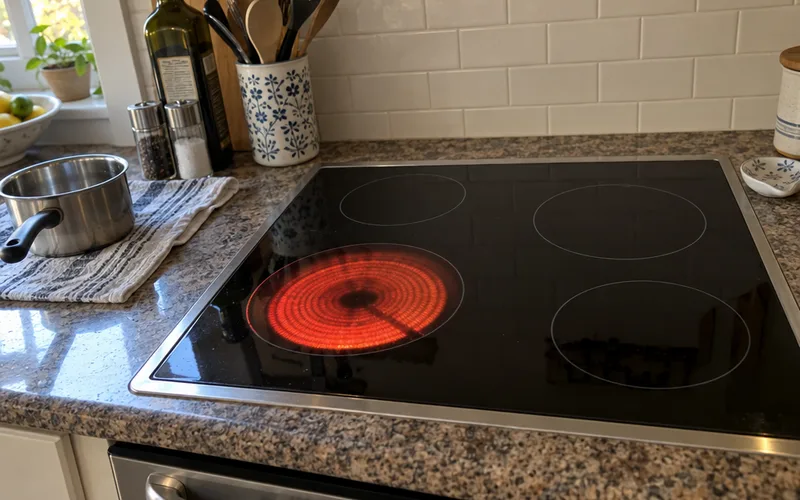
Gas is the odd one out. You get a visible flame that heats any pot, but you also get combustion gases in the room and more heat lost around the pot.
Wok cooks and flame lovers have the most to weigh, and the induction vs. gas stove matchup is built for that decision. To see all 3 fuels side by side, induction vs. electric vs. gas lines them up.
What Are the Downsides of Induction Cooking?
The main downsides of induction cooking are picky pans, a higher price than basic electric, a faint hum at high settings and a glass top that scratches.
The hum comes from the pan vibrating in the magnetic field. Heavy, flat-bottomed pans tend to run quieter than thin ones.
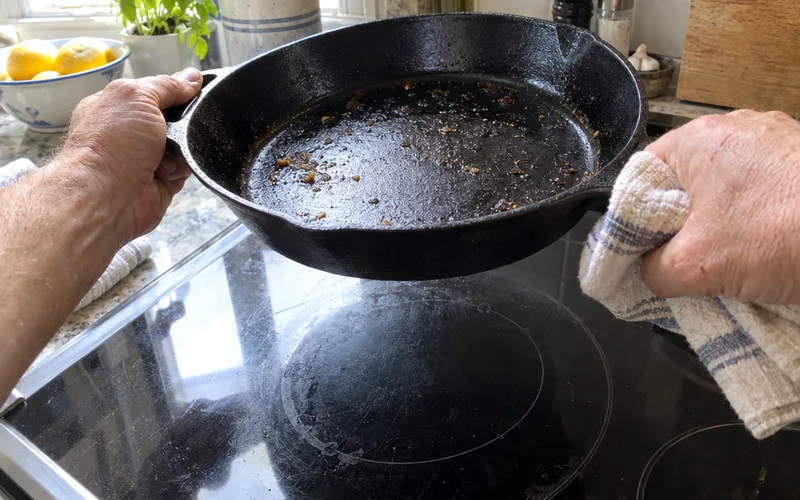
The glass is the other weak spot. Dragging cast iron leaves marks, and a cracked top means a new one, so check the glass stove top replacement cost before you choose.
Touch controls can also lock up, which confuses plenty of new owners. The fix is in these steps for unlocking an induction stove.
Some cooks simply miss the flame for charring peppers or tossing a wok. That complaint, and the rest, get a full hearing in the case against induction.
Is Induction Cooking Hard to Learn?
Induction cooking isn’t hard to learn, but it rewards a few new habits, because the heat comes faster and follows the controls almost instantly.
Here’s what to do your first week:
- Start a setting or two lower than you’d use on gas or electric, then turn it up.
- Center a flat pan on the ring marked on the glass.
- Lift pans instead of sliding them, so the glass stays scratch-free.
- Chop everything before the pan goes on, since the heat arrives fast.
- Learn the control lock and the timer on day 1.
Then cook something you know by heart, like scrambled eggs, so you can feel the difference. Settings by food and the first-day setup come next in using an induction cooktop.
Is Induction Cooking Worth It?
Induction cooking is worth it if your pans pass the magnet test, or you’re ready to replace the ones that don’t, and your kitchen can take the wiring.
Your first step this week: hold a fridge magnet to every pan you own.
If most of them pass, price an induction model and call an electrician about the circuit.
Frequently Asked Questions
What is an induction stove?
An induction stove is a range or cooktop that heats magnetic pans directly with a magnetic field from copper coils under its glass top. The glass itself only warms up from the hot pan sitting on it.
Is induction cooking difficult?
Induction cooking is not difficult, but it heats faster than gas or radiant electric, so start a setting or two lower than you’re used to. Most of the change is learning the touch controls and keeping pans centered.
How do I know if I have an induction cooktop?
You have an induction cooktop if only magnetic pans heat on it and a glass or plain aluminum pan makes the zone blink or show a no-pan error. The model label or the manual will also say induction.
Is a portable induction burner worth it?
A portable induction burner is worth it if you want to try induction before rewiring a kitchen or need an extra burner, because it plugs into a standard outlet. It needs the same magnetic pans as a full cooktop.
Can you use cast iron on an induction cooktop?
Cast iron works on an induction cooktop because it is magnetic, and it heats well there. Lift it instead of sliding it, since a rough cast iron bottom can scratch the glass.