
A $59.99 Ninja combo comes with a food processor bowl that holds 40 ounces.
That’s about 5 cups, per the Walmart listing on November 6, 2026, while a full-size Cuisinart DFP-14BCNY holds 14 cups, per its Amazon listing.
So with blenders and food processors, the real question isn’t only which machine. It’s which jobs, and how much food, you’ll put through it.
Here’s how to match each one to the way you actually cook.
Both are part of our wider guide to small appliances, which covers the rest of the countertop lineup.
What’s the Difference Between a Blender and a Food Processor?
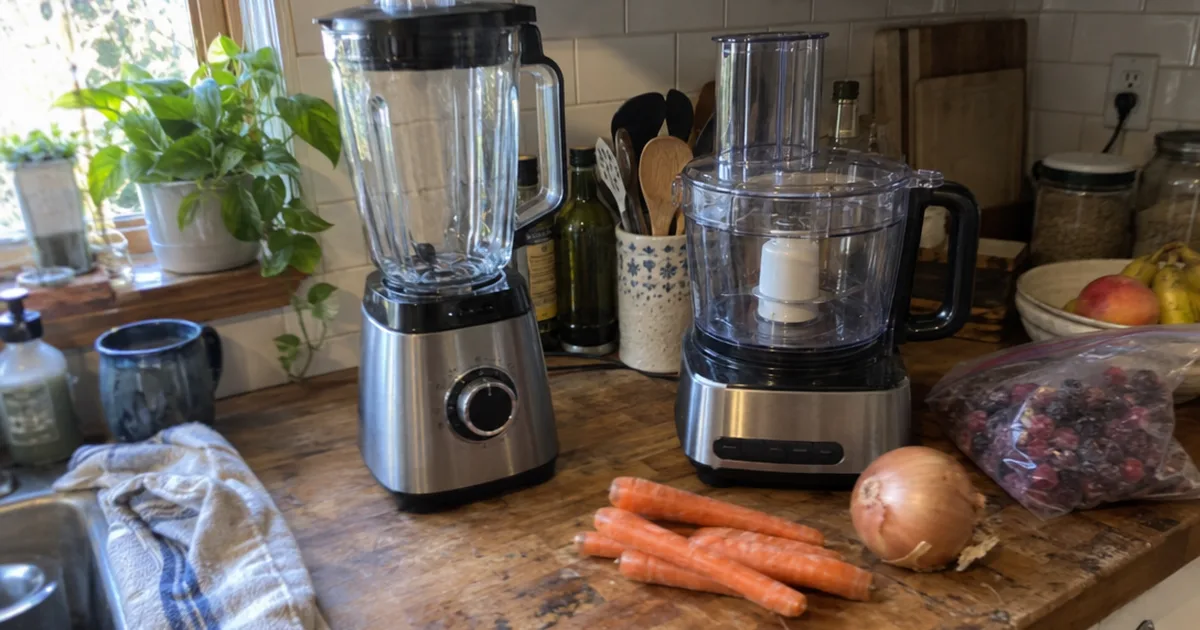
A blender turns food into a smooth liquid in a tall, narrow jar, while a food processor chops, slices, shreds and mixes drier food in a wide bowl. Breville, which makes both machines, says blenders typically need a liquid such as water or juice to work best, while food processors mix, shred and emulsify dry ingredients on their own.
That one split, liquid or not, decides almost everything else about the two machines.
It also explains why neither one fully replaces the other, as the two designs show.
How a Blender Works
A blender keeps its blades at the bottom of a narrow jar, so the food keeps falling back into them.
That constant contact is why a blender gives you silky smoothies, sauces and pureed soup. A blender is the right machine whenever the finished food should pour.
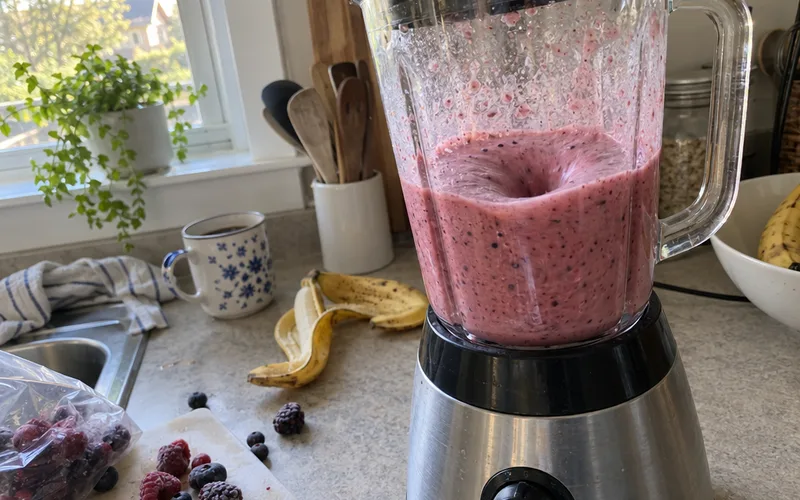
But take away the liquid and the jar works against you. Thick or dry food packs around the blades, and the motor spins without moving much.
How a Food Processor Works
A food processor spins an S-shaped blade low in a wide, round work bowl, which lets it chop and puree without much liquid.
The company says that setup can slice, puree and chop everything from salsas to chunky soups.
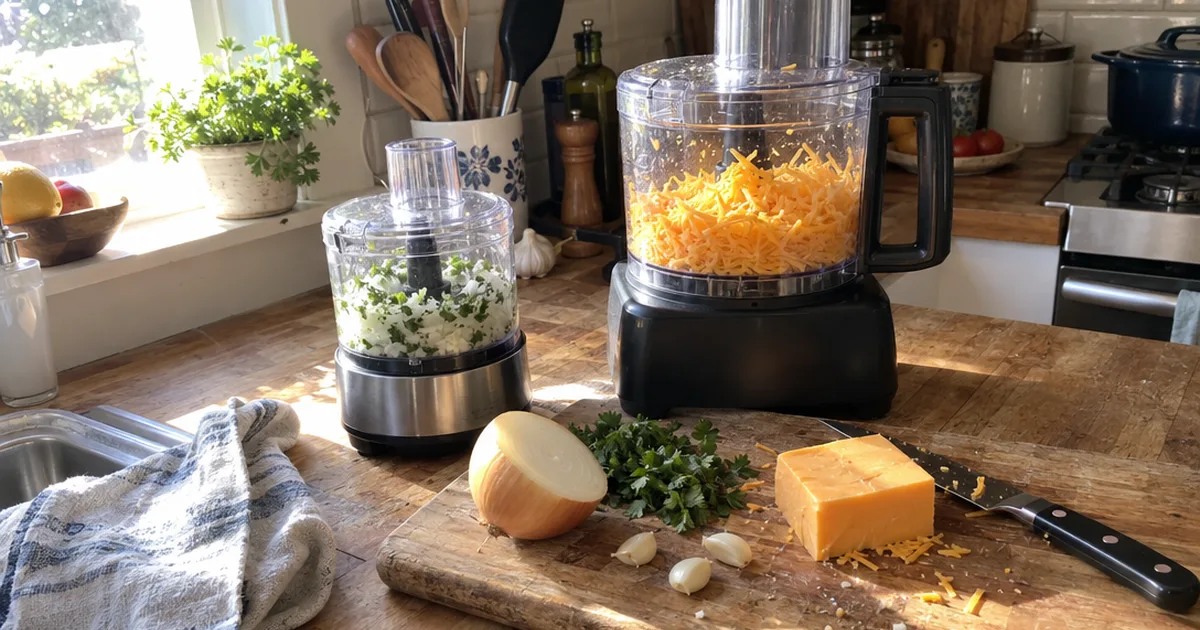
The bigger difference is the discs. Swap the blade for a slicing or shredding disc, and the machine cuts potatoes, carrots or cheese into even pieces as you feed them in.
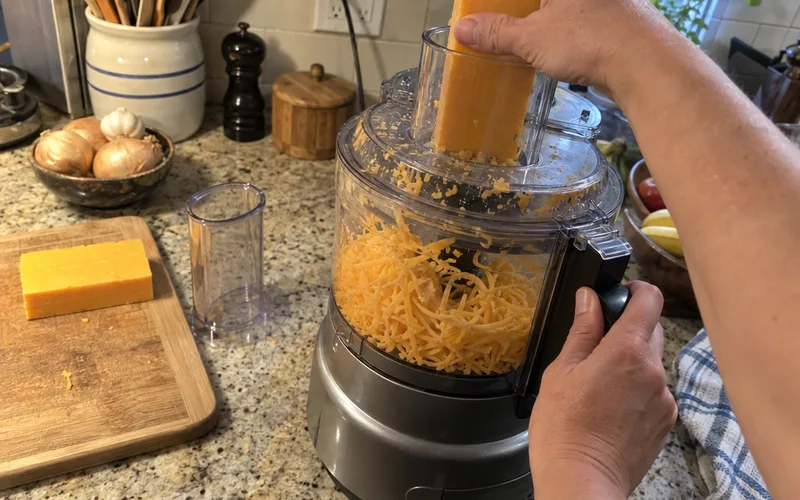
That’s work a blender can’t do at all. For a longer list of jobs a food processor handles, from bread crumbs to pie dough, the disc set is what to check first.
Key Takeaway: Smooth and pourable means blender. Chopped, sliced, shredded or doughy means food processor.
Which Machine to Use for Common Kitchen Jobs
A blender wins for smoothies, pureed soup and frozen drinks, and a food processor wins for chopping vegetables, shredding cheese, dough, hummus and nut butter.
The table below sorts the jobs home cooks ask about most:
| Job | Better machine | Why |
|---|---|---|
| Smoothies and shakes | Blender | Needs liquid to blend smooth |
| Crushing ice for drinks | Blender | Built for frozen blending |
| Pureed soup | Blender or immersion blender | Silky, even texture |
| Chunky salsa | Food processor | Pulses into pieces |
| Shredded cheese, sliced potatoes | Food processor | Uses discs |
| Pie and pizza dough | Food processor | Mixes dry ingredients |
| Fresh herbs | Food processor | Pulses without turning to paste |
Notice the pattern: the more liquid a recipe has, the more a blender earns its spot on the counter.
And the drier or chunkier the food, the more you’ll want a food processor. Two jobs sit right on that line, so they get a closer look.
Blender or Food Processor for Soup
A blender is the better tool for smooth, pureed soup, and a food processor is better when you want a chunky texture.
Breville says a blender is usually your best bet for a liquefied soup or smoothie, while a food processor suits heartier dishes like vegetable soup or potato pancakes.
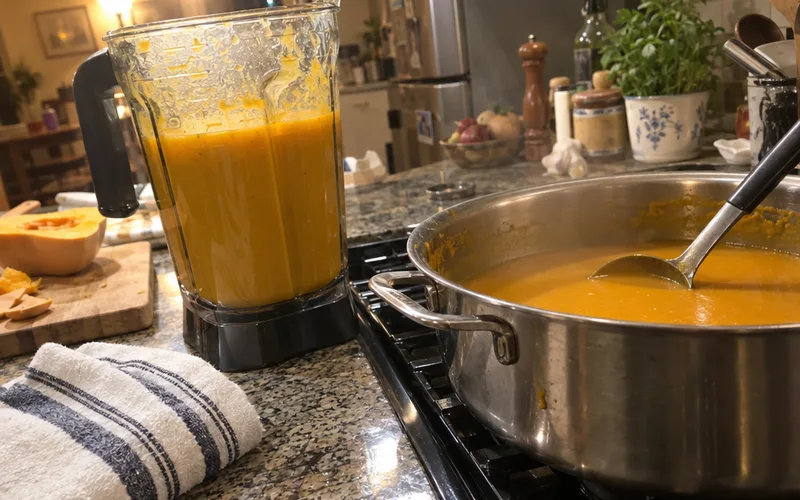
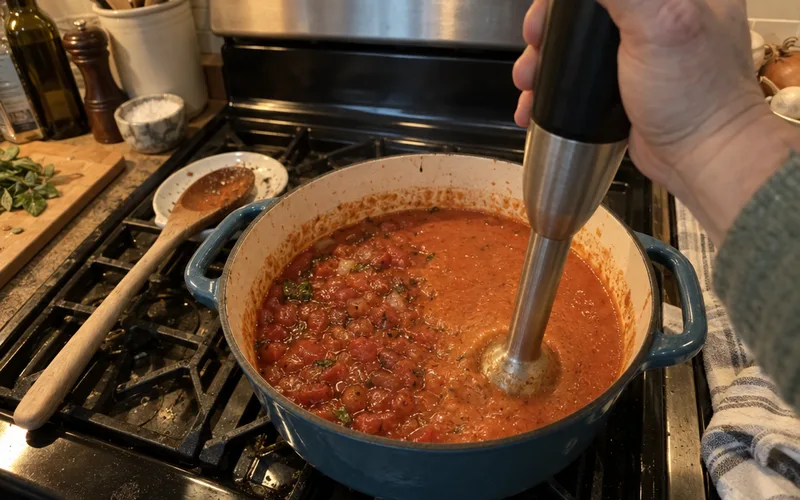
There’s a third option, too. An immersion blender is a handheld stick blender you put right in the pot, so there’s no jar to fill in batches.
In other words, the texture you want picks the machine.
Blender or Food Processor for Hummus and Nut Butter
A food processor is the safer choice for hummus and nut butter, because both are thick pastes with very little liquid.
The same maker points to the food processor for creamy nut butter, oat flour and chunky dips.
Can a blender still make hummus? Yes, but you’ll usually add more liquid, stop to scrape down the jar and work in smaller batches.
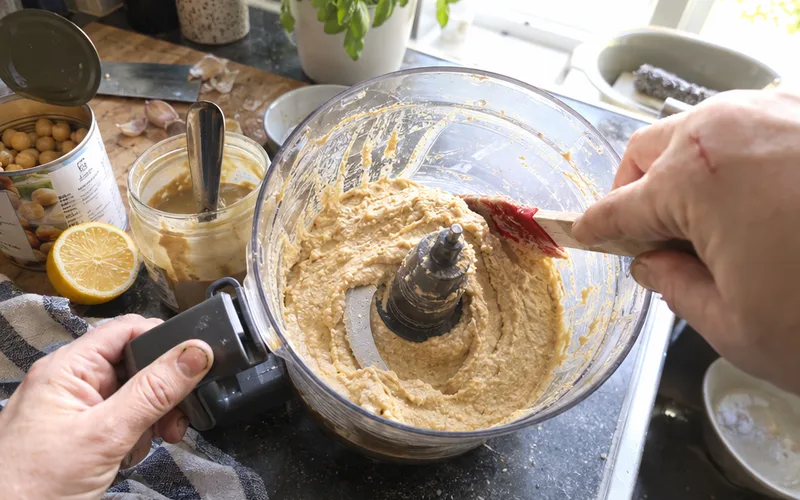
So if you make nut butter or hummus every week, a food processor saves you that fight.
Blender or Food Processor for Dough
A food processor is the better machine for pie and pizza dough, because it cuts fat into flour and pulls a dry mix together without liquid.
The Amazon listing for the Cuisinart DFP-14BCNY even puts kneading dough in the machine’s own title, right next to mincing, dicing and shredding.
A blender jar is the wrong shape for this job. Thick dough packs around the blades the same way dry food does, so you end up scraping more than mixing.
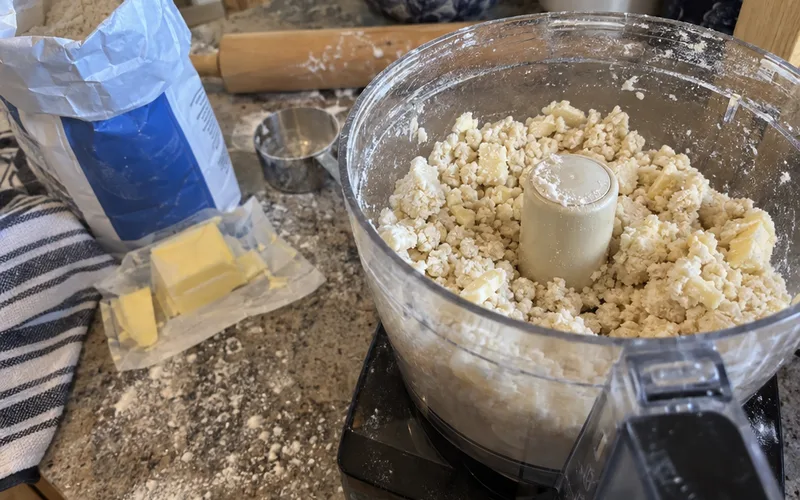
So if you bake, a food processor earns its cabinet space even next to a good blender.
Blender or Food Processor for Sauces
A blender makes the smoothest sauces and dressings, and a food processor makes better chunky sauces like salsa or a rough pesto.
It’s the same liquid rule again. A thin, pourable sauce suits the narrow jar, while a thick sauce with texture suits the wide bowl and a few short pulses.
So decide how the sauce should look on the plate, then grab the machine that gets you there.
Do You Need Both a Blender and a Food Processor?
You need both a blender and a food processor only if you often make smooth drinks or soups and also do a lot of chopping or dough.
If your cooking leans one way, one machine covers most of what you make.
Here’s a simple way to decide:
- Smoothies most mornings and little meal prep: buy a blender first.
- Lots of chopped onions, shredded cheese or homemade dough: buy a food processor first.
- Both, every week, with room to store them: own both.
- Both, but your counter is small: look at a 2-in-1 combo.
Here’s an example:
Say you blend a smoothie 5 mornings a week and shred cheese twice a month. That’s about 20 blender jobs a month against 2 processor jobs, so the blender comes first and a box grater covers the cheese.
The real cost of owning two is storage. A food processor brings a bowl, lid, pusher and a stack of discs, so it needs a cabinet close to where you prep.
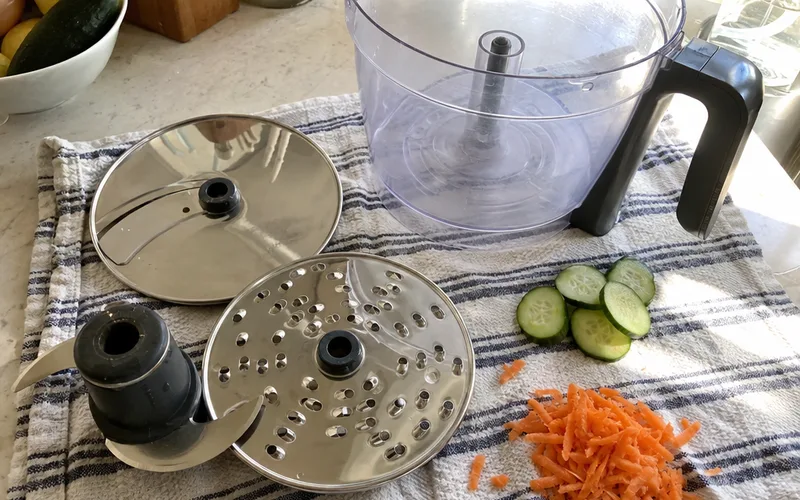
That’s why I’d buy for the job you do most, not the one you might try someday.
Can a Blender Be Used as a Food Processor?
A blender can stand in for a food processor on wet jobs like sauces, dressings and hummus, but it can’t slice or shred without discs.
It can chop a little, too. Cut the food into small pieces first and use short pulses, or you’ll end up with puree. Before you swap one for the other in a recipe, check when you can use a blender instead of a food processor.
Herbs are the classic miss. Breville warns that delicate herbs can end up closer to pesto after a spin in a blender.
If you already own a blender, using it as a food processor works best for those wet jobs. For a full side-by-side on texture, capacity and cleanup, the food processor vs blender breakdown goes deeper.
Are Blender and Food Processor Combos Worth It?
A blender and food processor combo is worth it when counter space matters more than batch size. One motor runs every container, but the containers are usually smaller.
Take the Ninja Master Prep Professional. The Walmart listing shows one 450-watt power pod that runs a 48 oz. pitcher, a 40 oz. processing bowl and a 16 oz. chopper bowl.
That’s 3 jobs from one small base. Not bad.
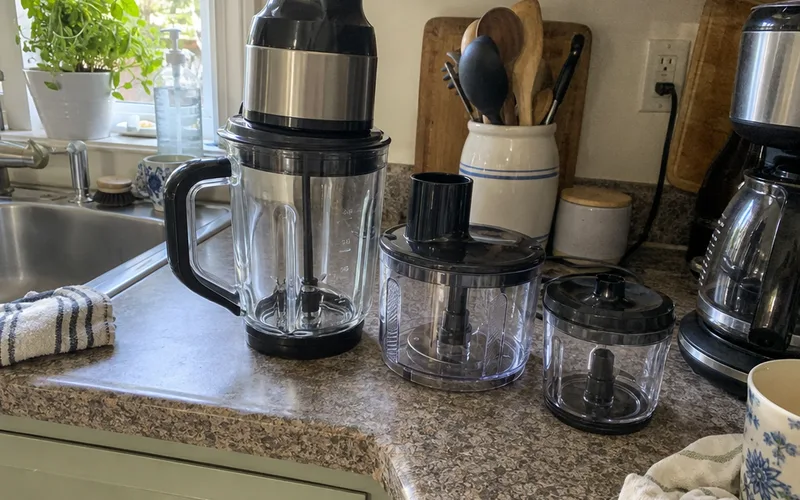
The catch? A 40 oz. bowl holds about 5 cups, which is closer to a mini processor than to a 14-cup machine.
So are 2-in-1 machines useless? No.
A combo works well for small batches and tight kitchens, and it struggles when you cook for a crowd.
If that sounds like your kitchen, compare blender and food processor combos by the size of the processing bowl before you look at anything else.
What Size Food Processor Do You Need?
Full-size food processors hold 7 to 16 cups, according to Breville, and a 14-cup model like the Cuisinart DFP-14BCNY covers big batches of dough and shredded vegetables.
Smaller bowls still have a place, especially in combos. Here’s how the machines in this guide compare:
| Machine and container | Capacity | Motor |
|---|---|---|
| Cuisinart DFP-14BCNY bowl | 14 cups | 720 watts |
| Ninja Master Prep blender pitcher | 48 oz. (6 cups) | 450 watts |
| Ninja Master Prep processing bowl | 40 oz. (5 cups) | 450 watts |
| Ninja Master Prep chopper bowl | 16 oz. (2 cups) | 450 watts |
If you cook for 1 or 2 and mostly chop onions, garlic and herbs, a small bowl is plenty.
A 16 oz. bowl like that Ninja chopper is really a mini food chopper, not a full processor. If you shred cheese for a family or make pizza dough, aim for the top half of that 7-16 cup range.
Want a full-size bowl on a small budget? Start with food processors under $50 and check each bowl size against this table. With a little more room in the budget, the best budget food processors are worth a look too.
What to Check Before You Buy
Before you buy a food processor, check 2 specs on its listing: which discs come in the box and how long the motor warranty runs.
For example, the Amazon listing for the Cuisinart DFP-14BCNY shows a 4mm stainless steel slicing disc, a medium shredding disc and a chopping/mixing blade.
The same listing notes the slicing and shredding blades are not adjustable. So if you want both thick and thin slices, look for an adjustable disc or extra discs before you buy.
Warranty is the other tell. That Cuisinart listing shows a limited 3-year warranty on the entire unit and a full 5-year warranty on the motor.
Use those numbers as a yardstick when you compare other machines. Already own a Cuisinart? These Cuisinart food processor instructions help you get started.
For a blender, the main spec is the pitcher. Whether you’re looking at a Vitamix or a budget Ninja, match the pitcher size to how much you blend at once, since a 48 oz. pitcher holds about 6 cups.
When you’re ready to compare models, blenders under $200 is a sensible place to start for smoothies and soup.
Other Blending Machines Worth Knowing
Personal blenders, immersion blenders and juicers often get lumped in with blenders and food processors, but each one does a narrower job.
A personal blender blends a single serving in the cup you drink from. If ice is your main job, look at personal blenders that crush ice.
An immersion blender purees soup in the pot and sauces in the bowl. It also has plenty of other uses once it’s in your drawer. To pick one, start with the best immersion blenders or our Vitamix immersion blender review.
A juicer works differently: it separates juice from pulp instead of blending everything together. That’s why some foods don’t belong in a juicer at all. If juice is what you want, start with the best juicers, then narrow it down with the best cold press juicers, our Ninja cold press juicer review or the best juicers for carrots.
At the far end, smoothie chains such as Jamba Juice run commercial blenders, a different class of machine from what most home kitchens need.
Which One Should You Buy First?
Buy a blender first if you drink smoothies or puree soup every week, and buy a food processor first if you chop, shred or make dough more often.
This week, write down the last 5 things you made that needed chopping or blending.
The machine that shows up most is your first buy.
That same rule works for the rest of your cooking appliances: pay for the job you do most.
Frequently Asked Questions
What is a food processor?
A food processor is a countertop appliance that chops, slices, shreds, purees and mixes food with an S-shaped blade and swap-in discs inside a wide work bowl. Full-size models hold 7 to 16 cups, according to Breville, so they handle family-size batches of salsa, dough or shredded cheese.
What is the best appliance for making smoothies?
A blender is the best appliance for making smoothies, because its narrow jar turns fruit, liquid and ice into a smooth drink. If you only make one serving at a time, a personal blender that blends right in the cup is the smaller choice.
What is the best blender and food processor combo?
The best blender and food processor combo is the one whose processing bowl fits your usual batch, since most combos run every container off one motor. For example, the Ninja Master Prep Professional pairs a 450-watt pod with a 48 oz. pitcher and a 40 oz. bowl, and Walmart listed it at $59.99 on November 6, 2026.
What is the difference between a food chopper and a blender?
A food chopper is a small bowl with one blade for quick chopping jobs, while a blender is a tall jar built for liquids and smooth blends. The Ninja Master Prep Professional shows the gap: its chopper bowl holds 16 oz., and its blender pitcher holds 48 oz.
What is the difference between a food chopper and a food processor?
A food chopper is a small machine with one blade for quick jobs like onions, garlic and herbs, while a food processor holds 7 to 16 cups and adds slicing and shredding discs. The chopper bowl on the Ninja Master Prep Professional holds 16 oz., against 14 cups for the Cuisinart DFP-14BCNY.
Is a blender or food processor better for baby food?
A blender is better for very smooth baby food purees made with some added liquid, and a food processor is better for thicker mashes that need little or no liquid. Pick the one that matches the texture you’re making this month, since both follow the same liquid rule.