
Cookware sets run from 5 to 15 pieces, and the lids count as pieces.
That’s from Consumer Reports, which rates cookware sets in its own lab, and its cookware analyst says utensils and even a cookbook can count too.
So a big box of pots and pans can hold fewer real pans than you’d think.
Below are the 6 pieces that cover most home cooking, in the order I’d buy them, each with the size and material to look for.
The 6 Pots and Pans Most Kitchens Need
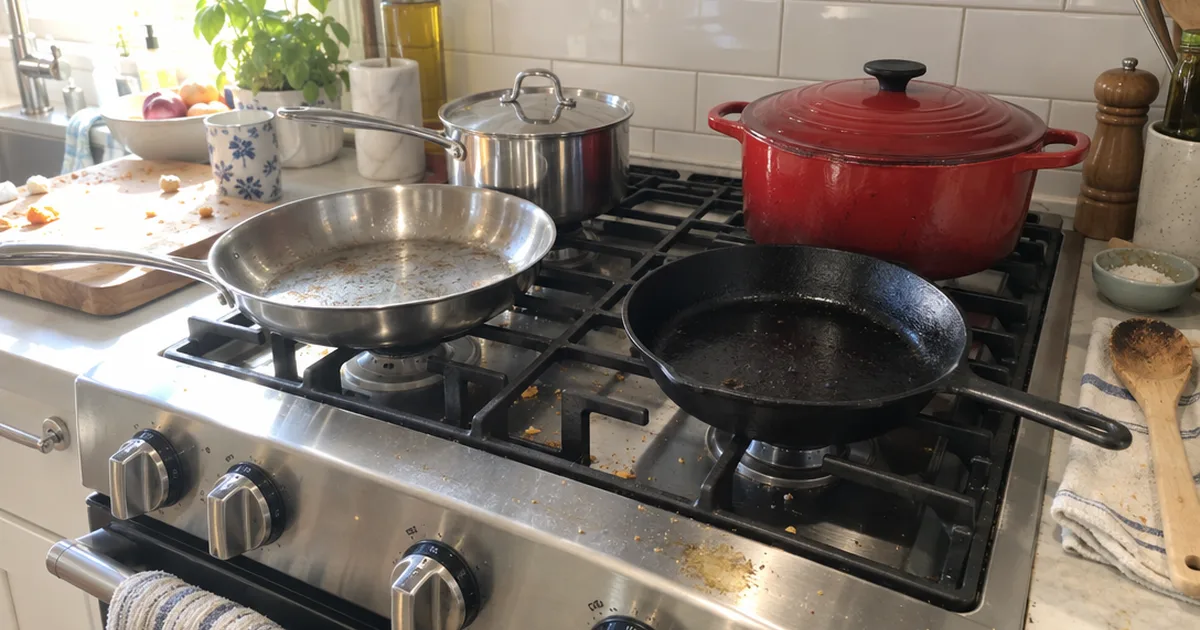
A home kitchen needs 6 pots and pans for most everyday cooking: a 12-inch frying pan, a 10-inch nonstick skillet, a cast iron skillet, a 3-quart saucepan, a 5- to 6-quart Dutch oven and an 8-quart stockpot. Everything else is an add-on you buy once a recipe asks for it.
That short list matters because each piece does a job the others do badly.
A wide pan browns, a tall pot boils, and a heavy pot holds a slow simmer for hours, while sheet pans and other bakeware live in the oven. Bakeware has its own place in our cookware and bakeware guide.
This is the order I’d buy them in:
1. A 12-Inch Frying Pan
A 12-inch stainless steel frying pan is the size most home cooks should buy first, because it fits a family meal in one layer. Crowded food steams instead of browning, so the extra room lets the Maillard reaction build a crust.
At a glance
- Best for
- Searing chicken and other meat, browning ground beef, sautéing vegetables and making a quick sauce. Skip it if you mostly cook for one, where a 10-inch pan is easier to lift.
- Size
- 12 inches across the top rim.
- Material
- Stainless steel with an aluminum core, often sold as “tri-ply” or “clad.”
- First step
- Search a store site for “12-inch stainless steel frying pan” and check the listing for an oven-safe rating.
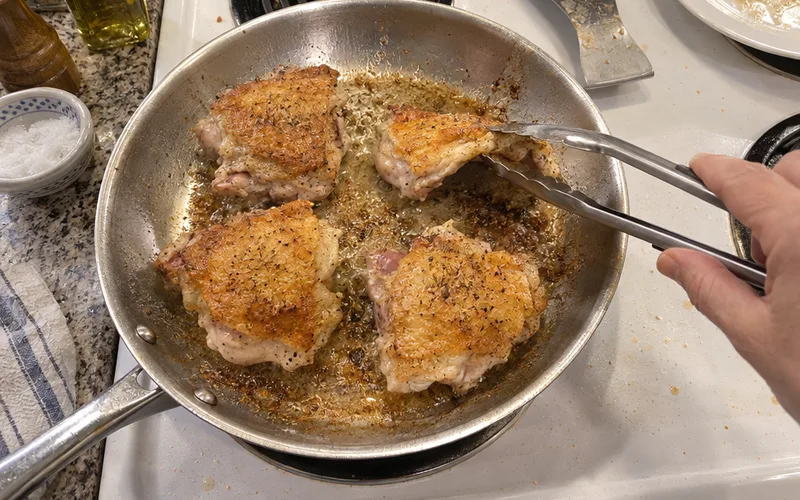
For example, the PotsandPans.com cookware catalog listed a KitchenAid stainless steel 12-inch frying pan at $39.99 in November 2026. That’s a real number to measure others against.
That 12-inch piece is the one you’ll reach for most nights. Stainless doesn’t react with tomato sauce or wine, so you can deglaze it without a metallic taste.
Frying pan sizes run smaller and larger than 12 inches, and each one suits a different job. The metal matters as much as the size, and what a frying pan is made of explains each option.
2. A 10-Inch Nonstick Skillet
A 10-inch nonstick skillet is the pan for eggs, pancakes and delicate fish, foods that tear when they stick to stainless steel or cast iron. One of these is enough for most kitchens, because the coating wears out and you’ll replace it.
At a glance
- Best for
- Omelettes, scrambled eggs, crepes and fish fillets. Skip it if you’d rather not cook on a coated surface at all.
- Size
- 10 inches.
- Material
- Aluminum with a PTFE or ceramic nonstick coating.
- First step
- Pick wooden or silicone tools to go with it, since steel spatulas scratch the coating.
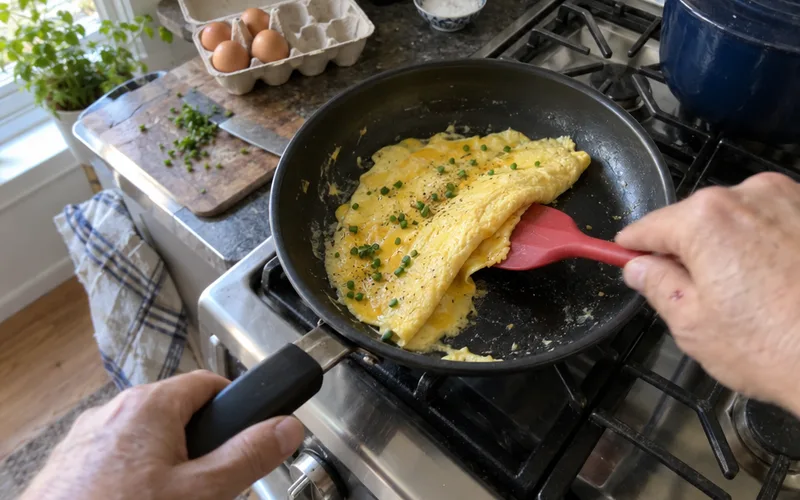
Nonstick pans are cheap to start with and quick to clean.
They also wear out faster than anything else on this list, which is why I’d never buy a whole set of them. For other jobs a skillet handles, see what a skillet is used for.
3. A Cast Iron Skillet
A cast iron skillet holds heat better than a thin pan, so it sears steak, fries chicken and bakes cornbread with a crisp crust. Plain cast iron also goes from stovetop to oven, so you can sear first and finish with dry heat.
At a glance
- Best for
- Steak, pan pizza, cornbread, frittatas, potato pancakes and deep-frying. Skip it if lifting a heavy pan with one hand is hard for you.
- Size
- 10 to 12 inches.
- Material
- Pre-seasoned cast iron.
- First step
- Read the care line on the listing before you buy, since cast iron cookware needs drying and oil after washing.
The catch? It’s heavy.
The Amazon listing for the Lodge 12-inch skillet gives it a weight of 7.5 pounds and a maximum temperature of 260 °C, about 500 °F. Its care line reads “Hand Wash Only, Oven Safe.”
So if 7.5 pounds is too much to tip with one hand, buy the 10-inch size.
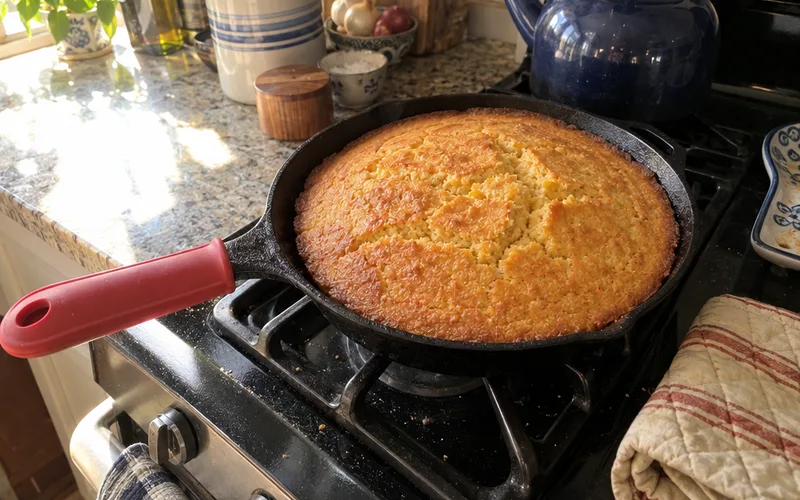
Seasoning is the thin layer of baked-on oil that makes cast iron release food. How often to season cast iron depends on how you cook and clean it.
Carbon steel is the lighter cousin, seasoned the same way. If you’re torn between them, carbon steel vs cast iron is mostly about heft and how fast each one heats.
4. A 3-Quart Saucepan
A 3-quart saucepan with a lid boils eggs, cooks rice and oatmeal, and heats soup or a jar of pasta sauce. Its tall, straight sides keep liquid from boiling off too fast.
At a glance
- Best for
- Grains, sauces, reheating and boiling a few potatoes. Skip it only if you already own a small pot you like.
- Size
- 2 to 3 quarts, with a tight lid.
- Material
- Stainless steel, ideally with a thick or clad base.
- First step
- Check that the lid fits snugly and the handle stays cool, two things listings usually mention.
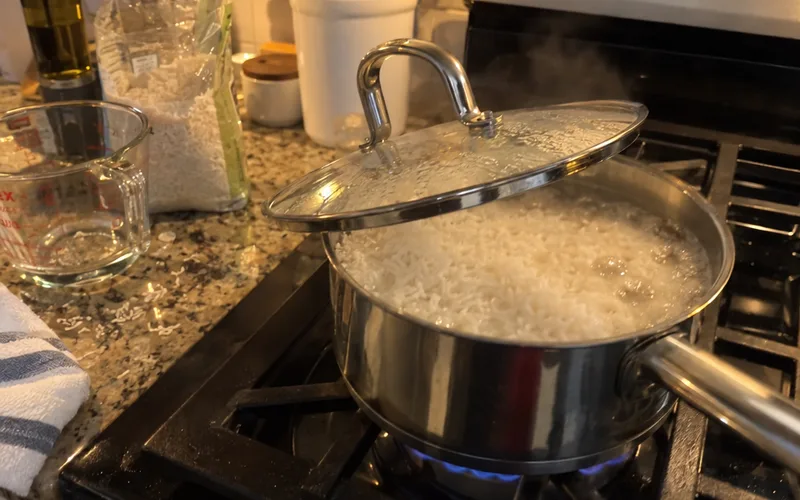
The same PotsandPans.com catalog listed a KitchenAid 5-ply clad 3-quart saucepan with lid at $119.99. “5-ply” means 5 bonded layers of metal, which spread heat more evenly across the base.
If you want a list of everyday jobs for this pot, what a saucepan is used for covers them one by one.
5. A 5- to 6-Quart Dutch Oven
A 5- to 6-quart Dutch oven is the size most home kitchens need, a heavy lidded pot for braising, soups, stews, chili and pot roast that moves from stovetop to oven. Most are enameled cast iron, which holds a steady low heat for hours.
At a glance
- Best for
- Braising beef, simmering stew or a pot of beans, baking bread and roasting a whole chicken. Skip it if you rarely cook anything that takes over an hour.
- Size
- 5.5 quarts, the size of the Le Creuset model below, is a common family size.
- Material
- Enameled cast iron.
- First step
- Check the weight and the lid knob’s oven limit on a store listing, such as Sur La Table.
For example, the Sur La Table listing for the Le Creuset Signature 5.5-quart Dutch oven gives it a weight of 11.5 pounds and a limited lifetime warranty. That’s a lot of iron before you add a pot of stew.
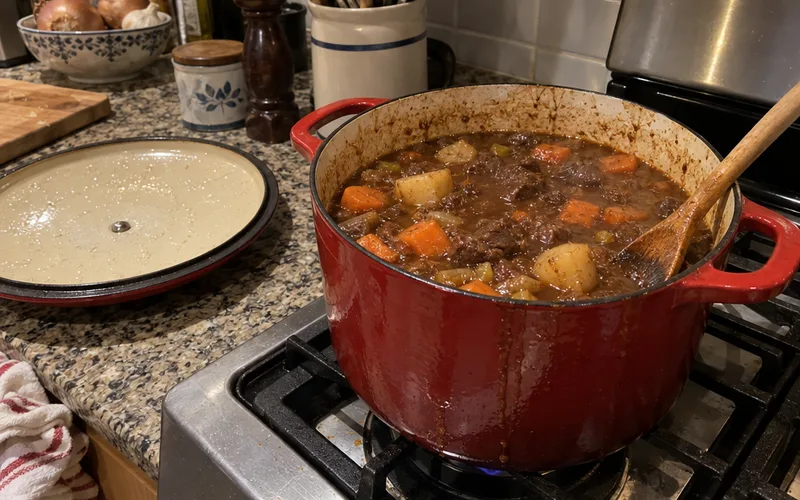
A plain cast iron Dutch oven costs less but needs seasoning like a skillet, while the enamel coating needs none.
A Dutch oven is the one pot that turns cheap, tough cuts of meat into dinner. Dutch oven cooking starts with a sear on the stovetop and ends with a slow finish under the lid.
6. An 8-Quart Stockpot
An 8-quart stockpot is the tall pot for boiling pasta, making stock and cooking a big batch of soup or corn on the cob. It’s light for its size, because it holds water rather than searing anything.
At a glance
- Best for
- Pasta for a crowd, stock, steaming broccoli in a basket and big batches of soup. Skip it if your Dutch oven already handles your biggest pot of soup.
- Size
- 8 quarts.
- Material
- Stainless steel or aluminum.
- First step
- Measure the cabinet or shelf where it will live, since tall pots are hard to store.
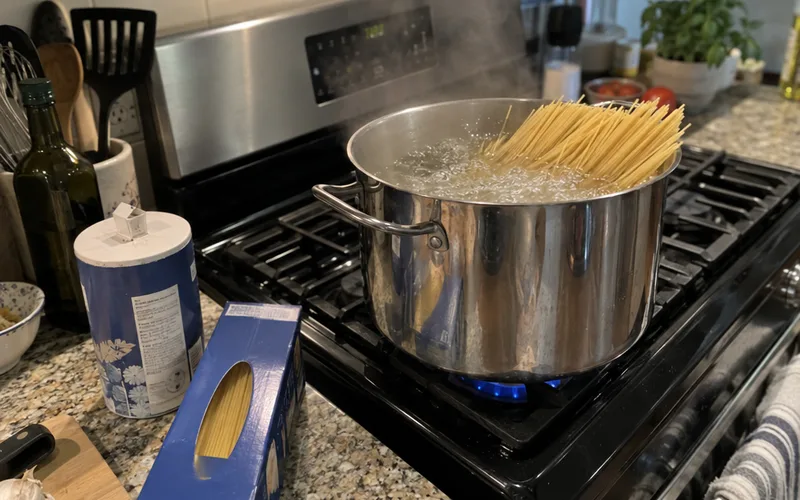
The PotsandPans.com catalog listed a KitchenAid stainless steel 8-quart stockpot at $64.99. You don’t need to spend more, because a stockpot mostly boils water. To compare models, start with the best stock pots.
A tall pot earns its shelf space in more ways than pasta, as what a stock pot is used for shows.
Nice-to-Have Pans You Can Add Later
A sauté pan, a saucier, a wok and copper cookware are the most useful add-ons once you own the 6 core pieces. Buy one only when a dish you cook often keeps calling for it.
Each one earns its spot for a different job:
- Sauté pan: a wide pan with straight sides and a lid, for shallow frying, braising chicken thighs and reducing sauces. A rondeau is its wider, two-handled cousin that doubles as a stovetop casserole.
- Saucier: a saucepan with rounded sides, so a whisk reaches the corners when you make sauce or risotto.
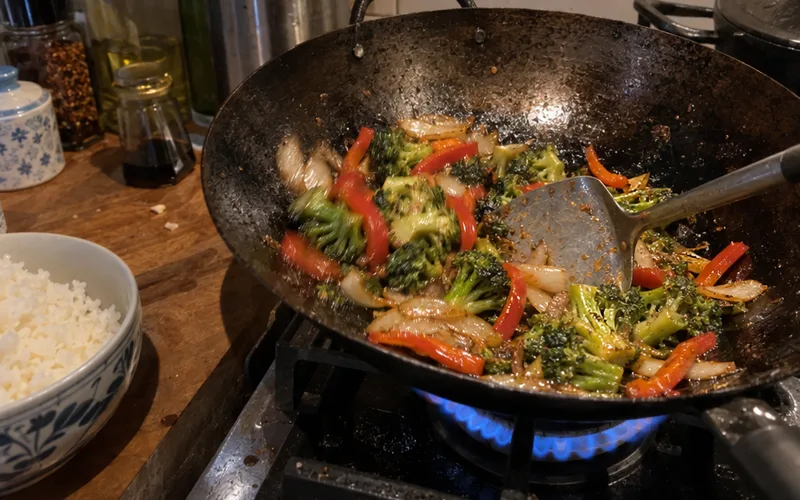
- Wok: a deep, sloped pan for stir-frying over high heat, and the best tool in a home kitchen for fried rice. A stainless steel wok skips the seasoning a carbon steel wok needs.
- Copper: a fast-heating metal that responds to every change in the burner.
Copper deserves a short warning before you spend on it.
It looks great and heats quickly, but it needs more care than any other metal here. Start with the best copper frying pans if you want one piece, or a copper pan set if you want the whole look.
Check whether copper pans are oven safe before you plan a recipe that ends under the broiler, since the lining and handles set the limit. In other words, buy copper for the way it cooks, not for a shelf display.
And if you cook outside in summer, a grill pan for an outdoor grill keeps vegetables and shrimp from slipping through the grates.
Saucepan vs Saute Pan: What’s the Difference?
A saucepan is tall and narrow for liquids, while a sauté pan is wide and shallow with straight sides for browning and reducing. The saucepan keeps water from boiling off, and the sauté pan gives food room to sear.
That shape difference changes how food cooks.
More surface area means faster evaporation and better browning. That’s why you sear pork chops in the wide one and cook rice in the tall one.
A frying pan sits between them, with sloped sides that let you flip and slide food out. For the head-to-heads, see saucepan vs frying pan, sauté pan vs frying pan and skillet vs frying pan.
The straight walls of a sauté pan hold more liquid without spilling, so it’s the better pick for braising or a pan of sauce. The full sauté pan vs saucepan comparison goes deeper into sizes and lids.
Which Material Is Best for Pots and Pans?
Stainless steel is the best all-around material for pots and pans, and nonstick is the best for eggs and delicate foods. A nationally representative Consumer Reports survey of 2,158 U.S. adults in April 2025 found those two are the most commonly used types of cookware.
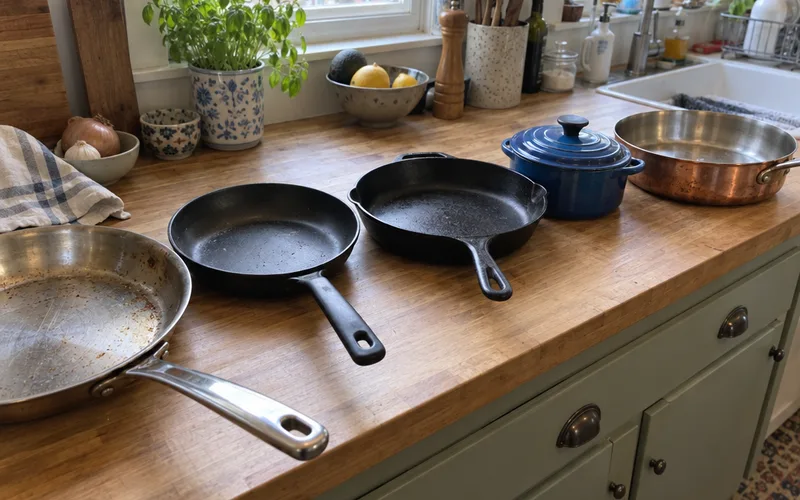
So most kitchens end up with both, plus one heavy iron piece.
Each material handles heat differently:
- Stainless steel: durable and nonreactive, so it’s safe for acidic foods like tomatoes. Food sticks unless you preheat the pan and add oil.
- Nonstick: easy release and quick cleanup, but the coating wears out and doesn’t like high heat.
- Cast iron: holds heat for searing, but it’s heavy and has to stay dry to avoid rust.
- Enameled cast iron: the same heat retention with a glass coating, so it needs no seasoning.
- Carbon steel: lighter than cast iron and seasoned the same way, popular for woks and restaurant frying pans.
- Copper and aluminum: the fastest to heat, usually lined with a harder, nonreactive layer.
“Clad” means layers of stainless steel wrapped around an aluminum or copper core. The outer layers give you a tough, nonreactive cooking surface, and the core spreads heat so the edges of the pan cook like the center.
Here’s the deal: no single metal does every job well.
That’s why I’d mix materials instead of buying one matching set. The best pots and pans material for you depends on what you cook most and how much care you’re willing to give it.
Cookware Set or Individual Pieces?
Buying individual pots and pans is better for most home cooks, because sets pad their piece counts and include pans you may never use. Consumer Reports says sets usually have 5 to 15 pieces, and its market analyst for cookware, Kelly Moomey, says boxed sets count each lid as a piece.
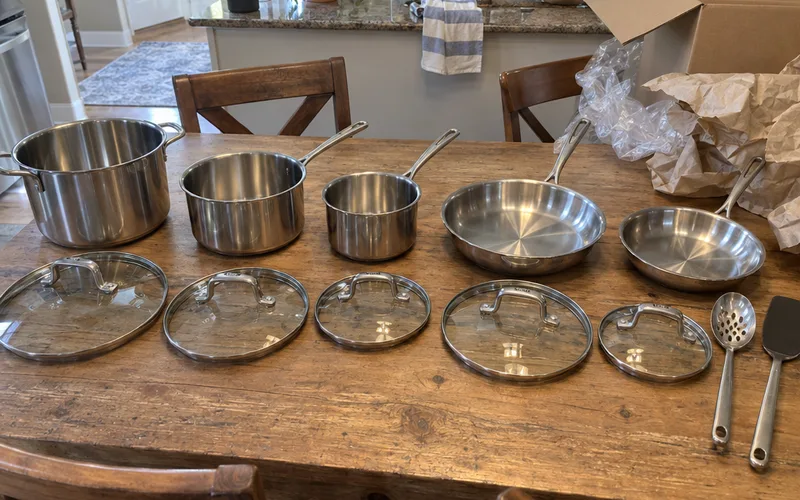
In fact, Moomey says even utensils and a cookbook may be counted as pieces.
So a “10-piece set” might be 5 pans and 5 lids.
Here’s an example using real store prices from the PotsandPans.com catalog in November 2026:
- KitchenAid stainless steel 12-inch frying pan: $39.99
- KitchenAid 5-ply clad 3-quart saucepan with lid: $119.99
- KitchenAid stainless steel 8-quart stockpot: $64.99
Those 3 pieces add up to $224.97 bought one at a time.
The same store listed a KitchenAid stainless steel 10-piece cookware set at $189.99, but its listing name doesn’t say which pots, pans and lids make up the 10. Before you buy any set, count the actual cooking pieces and match their sizes to the 6 pieces above. That goes for warehouse-club boxes too, including the best Costco cookware sets.
A set wins when you’re starting from zero and it includes a 12-inch frying pan, a 3-quart saucepan and a large pot. Pieces win when you already own a few or want to mix materials.
Is Nonstick Cookware Safe?
Nonstick cookware safety depends on the coating, and Consumer Reports testing lead Breann Chai says to stop using a nonstick pan once its surface chips or cracks. Many nonstick coatings use PTFE, the chemical behind Teflon, one of the PFAS “forever chemicals.”
Plenty of cooks still worry about it.
In that same survey, 65 percent of home cooks said they were at least somewhat concerned about PFAS in nonstick cookware.
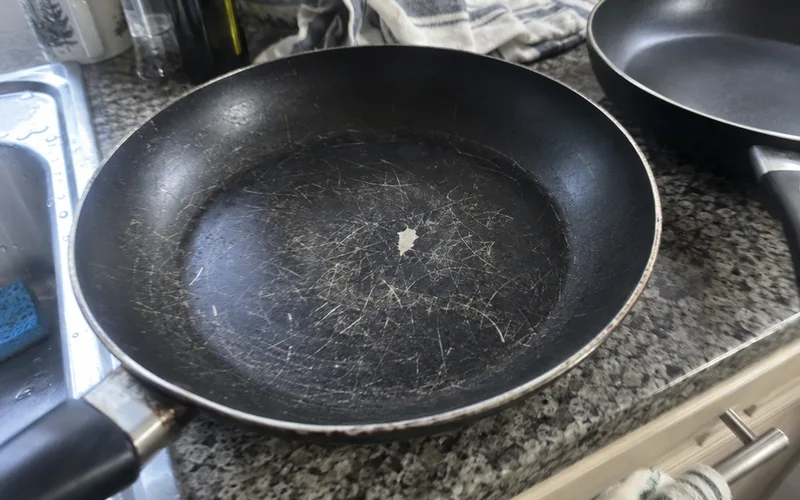
Consumer Reports doesn’t test nonstick pans for PFAS, so the chip-and-crack rule is a precaution rather than a lab finding. Replace it rather than cooking around the damage.
Chai also suggests heating a new one without food a few times before you cook in it.
You can also make a coating last longer:
- Cook on low to medium heat instead of high, and stop before the oil starts smoking.
- Use wood or silicone kitchen tools.
- Hand wash and skip abrasive scrubbers.
If you’re choosing tools, check whether silicone cooking utensils are safe at the temperatures you cook. And if you’d rather skip coatings, non-toxic cookware options include cast iron, carbon steel and stainless steel.
Which Pots and Pans Work on Induction?
Pots and pans work on an induction cooktop when their base is magnetic, as with cast iron, enameled cast iron, carbon steel and most stainless steel. Plain aluminum, copper and glass don’t heat on induction unless the base has a magnetic layer.
The quick test is a fridge magnet held to the bottom of the pan.
If the magnet sticks firmly, that piece will heat on induction.
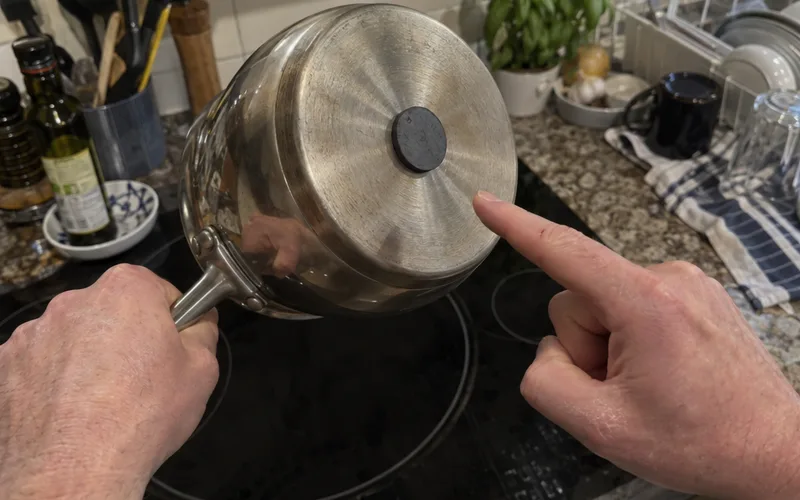
The listings back this up. The Lodge 12-inch skillet listing names smooth-surface induction as compatible, and the Le Creuset 5.5-quart Dutch oven listing says it suits electric, gas, halogen and induction heat.
Flat bottoms matter too, because induction cooking heats the pan through direct contact with the glass. If you’re shopping fresh, the best induction cookware is built with a magnetic steel base from the start.
How Long Pots and Pans Last (and When to Replace Them)
Uncoated pots and pans, such as stainless steel, cast iron and enameled cast iron, have no nonstick layer to wear out, so they stay in use far longer than nonstick pans. Nonstick pans need replacing once the coating chips or cracks, while the Le Creuset 5.5-quart Dutch oven listing carries a limited lifetime warranty.
That warranty is a clue to how long the maker expects enameled cast iron to stay in service.
Replace a pan when you see one of these signs:
- Chips, cracks or flaking in a nonstick coating.
- A warped base that rocks on the burner or won’t sit flat on induction.
- Enamel chipped through to the iron on the cooking surface.
- A loose handle that won’t tighten.
Rust on cast iron isn’t one of them, since you can usually scrub it off and season it again. For coated pans, when to throw away nonstick pans lists the signs in more detail.
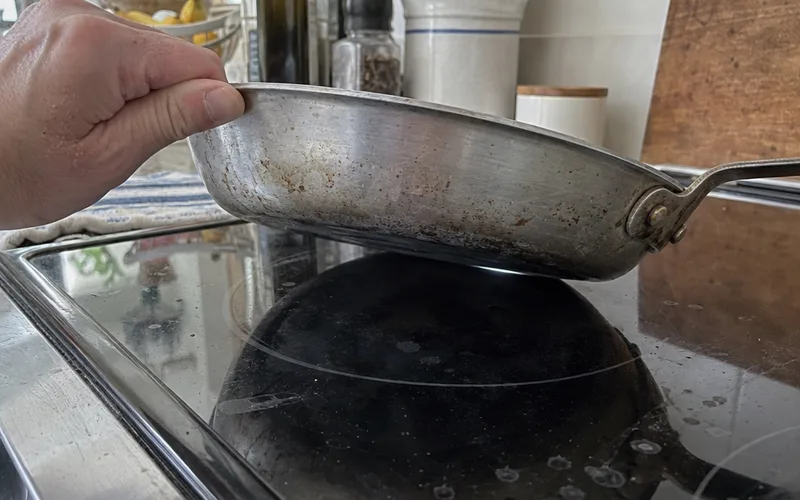
Good care adds years. If dinner scorches, cleaning a burnt pan the right way can save it. For copper, cleaning copper pan bottoms keeps the metal heating evenly, and the answer to whether copper pans are dishwasher safe is usually no.
If you’re tempted anyway, read whether copper pots can go in the dishwasher first, because the detergent tarnishes the metal.
How Much to Spend on Pots and Pans
A solid core of stainless pots and pans costs about $225, based on November 2026 store prices for a 12-inch frying pan, a 3-quart saucepan and an 8-quart stockpot. A cast iron skillet, a nonstick pan and a Dutch oven come on top of that.
So where should the money go?
Spend more on the pieces that touch heat hardest and last longest: the frying pan, the saucepan and the Dutch oven.
Save on the stockpot, which mostly boils water, and on nonstick, which you’ll replace anyway.
Pro Tip: Buy the frying pan first and cook with it for a week before buying anything else. You’ll learn which size and weight suits your hands and your stove.
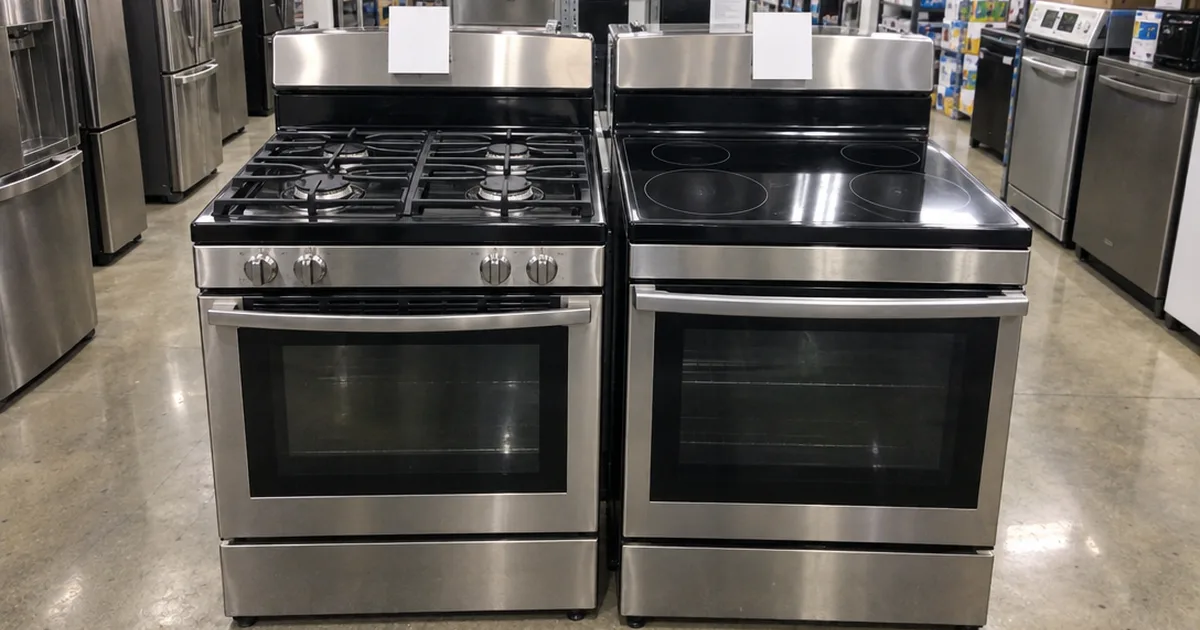
For the bigger picture on the ranges these pieces sit on, the cooking appliances guide covers gas, electric and induction stoves.
Where to Start This Week
Six pieces cover most home cooking, and you don’t need all of them on day one.
Buy a 12-inch stainless frying pan this week, then add the saucepan and the Dutch oven as your recipes call for them.
Frequently Asked Questions
Can you put pots and pans in the dishwasher?
Some pots and pans can go in the dishwasher, but the maker’s care line decides it: the Lodge cast iron skillet listing says hand wash only, while the Le Creuset Dutch oven listing says dishwasher safe but recommends hand washing. Read the care section of the listing or the box before the first wash, and hand wash when it says nothing.
Can a cast iron skillet go in the oven?
Yes, a plain cast iron skillet can go in the oven, and the Lodge 12-inch skillet listing on Amazon gives it a maximum temperature of 260 °C, about 500 °F. Check the handle first, because a silicone handle holder or a wooden handle may have a lower limit than the iron.
What is a saucier?
A saucier is a saucepan with rounded sides instead of a sharp corner where the wall meets the base. A whisk or spoon reaches every part of it, so sauces, custards and risotto are less likely to catch and scorch in the corners.