
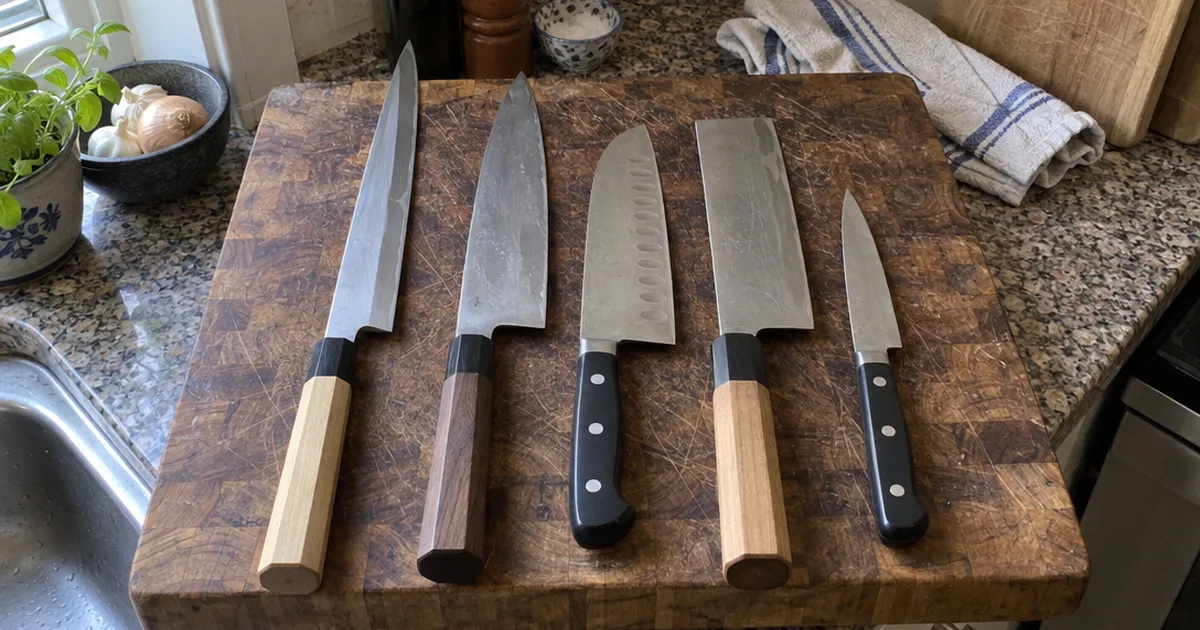
The Japanese chef’s knife is the gyuto, literally “beef sword.” That name, per knife maker Yoshihiro Cutlery, sums up Japanese knife types: each shape is made for one food or cut.
With so many shapes, it’s easy to buy a fine knife for a job you rarely do. Single-bevel blades like the yanagiba and deba also take more skill and usually come right-handed.
Here are the 13 shapes grouped by job, with each blade’s length, its bevel and who should own it. The last section narrows them to the 2 shapes most home cooks should buy first.
Single Bevel vs Double Bevel: The First Split
Japanese knife types split first by their edge: a double-bevel knife is sharpened on both sides, and a single-bevel knife on one side only.
Double bevel knives work in either hand and are easier to sharpen, while single bevel knives cut very finely but take more skill and are usually made right-handed.
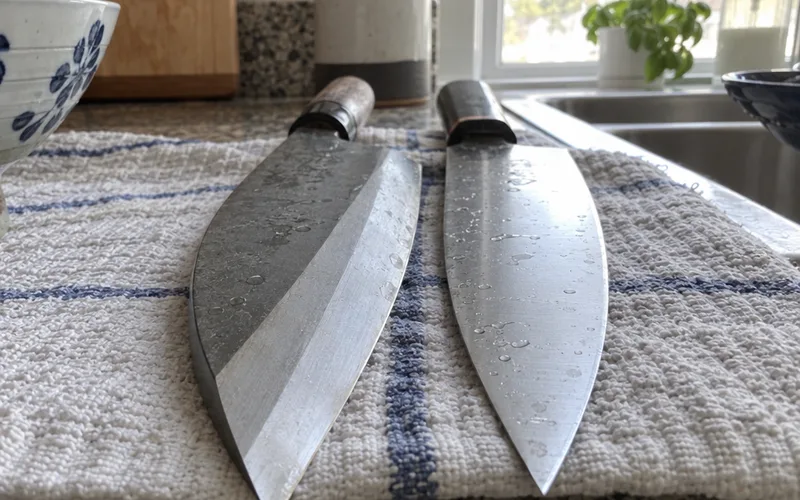
A single-bevel blade has a flat back and one angled face, which helps thin slices fall away. That’s why traditional fish and vegetable knives use it.
If you’re new to Japanese knives or left-handed, start with a double-bevel shape. Here’s how the 13 split:
- Double bevel: gyuto, santoku, bunka, nakiri, sujihiki, petty, paring, honesuki and the kiritsuke chef knife
- Single bevel: usuba, yanagiba, takobiki, deba and the traditional kiritsuke
A single-bevel edge also takes practice to keep true, so learn sharpening on a whetstone before you buy one.
All-Purpose Japanese Knives
The gyuto, santoku and bunka are the 3 all-purpose Japanese knife types, each double-beveled and built for meat, fish and vegetables.
They differ in length and tip shape, which changes how they move on a cutting board.
Gyuto (Chef’s Knife)
The gyuto is the Japanese chef’s knife, and Chubo Knives, a Japanese knife retailer, lists its blades at usually 210-270mm (about 8 to 10.6 inches).
It emerged in the Meiji era, when Japan began adopting Western cooking.
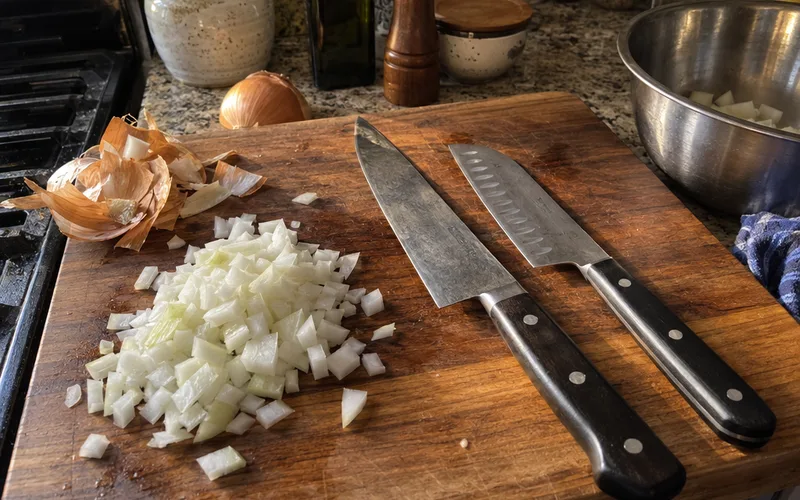
Next to a Western chef’s knife, a gyuto is lighter, thinner and harder, with a curved belly that rocks through herbs. That range makes it the default first Japanese knife.
If it’s your pick, these Japanese chef knife options are a good next stop.
Santoku
The Santoku is a shorter all-purpose knife whose name means “three virtues”: meat, fish and vegetables.
It was popularized in Japanese households after WWII and runs 165-180mm, with a flatter edge than the gyuto for up-and-down chopping.
Its rounded tip and tall blade are easy to control on a small board. This gyuto vs santoku breakdown shows how each one cuts.
Bunka
The bunka is a santoku-sized all-purpose knife with an angular “reverse tanto” tip, also called a k-tip.
That point makes it better than a santoku for fine slicing and detailed prep.
Pick it if you like the santoku’s size but want a tip.
Japanese Vegetable Knives: Nakiri and Usuba
A Japanese vegetable knife is either a nakiri, the double-bevel version home cooks use, or an usuba, the single-bevel version professionals use.
Both have a straight edge that meets the board along its full length, so they push-cut instead of rocking.
Nakiri
The Nakiri is a double-bevel vegetable knife with a flat edge and a tall, rectangular blade.
That height gives your knuckles room and scoops chopped carrots and onions off the board.
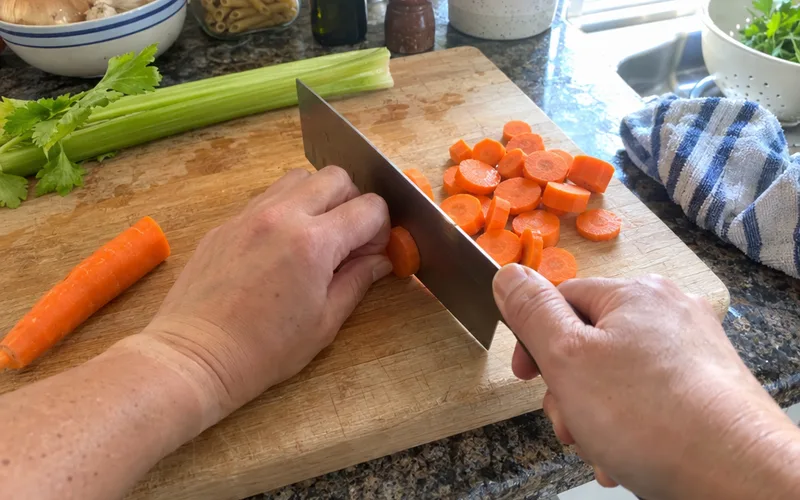
It’s the knife to buy if your meals lean on vegetables. Just know it has no tip for detail work.
Because it’s double-bevel, it works fine in the left hand too. It runs 165-180mm, the same length as a santoku.
Usuba
The usuba is the single-bevel vegetable knife pros use for katsuramuki, peeling a daikon into one paper-thin sheet.
Osaka’s kamagata has a curved tip, and Tokyo’s Kanto style has a square one.
It’s a skill tool for a trained chef, not a first knife.
What a Kiritsuke Knife Is Used For
A kiritsuke knife is used for slicing fish and boneless meat and for fine vegetable cuts. The kiritsuke blends a yanagiba’s slicing with an usuba’s vegetable work.
The traditional single-bevel kiritsuke was reserved for head chefs, and it runs 240-300mm.
Here’s the catch: you’ll also see double-bevel “kiritsuke chef knives,” which behave like a long, flat gyuto with a sword-like tip. So check the bevel before you buy.
Slicing Knives for Sushi, Sashimi and Roasts
Japanese slicing knives are long, narrow blades that cut fish or meat in one pulling stroke instead of sawing.
The yanagiba is the classic sushi and sashimi knife, and the sujihiki is the easier double-bevel slicer.
Yanagiba
The Yanagiba is the traditional single-bevel sashimi knife, with blades of 270-330mm.
Its slim blade, often compared to a katana or other Japanese sword, draws through fish in one stroke and keeps the flesh smooth.
Sujihiki and Takobiki
The sujihiki is the double-bevel answer to the yanagiba, for carving roasts and other boneless proteins and for portioning fish.
It’s easier to sharpen than a single-bevel slicer, so it’s the one to own for both roasts and sashimi.
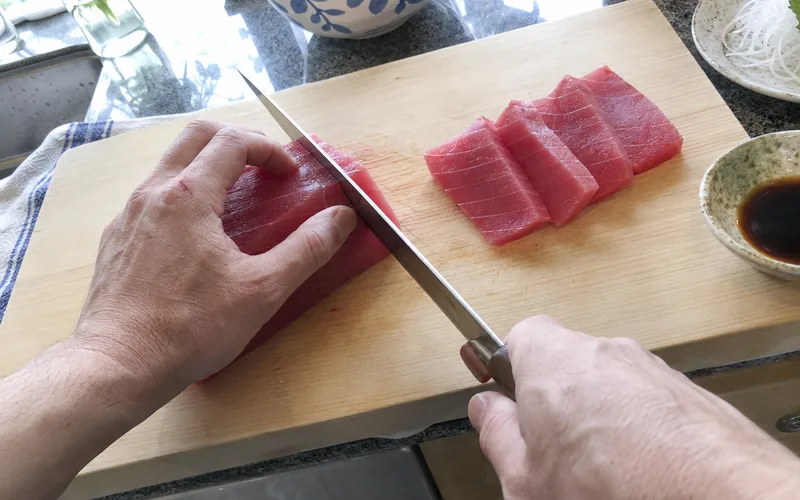
The takobiki is the Tokyo-region yanagiba with a squared-off tip. Sushi chefs in tight spaces favored it, and that blunt end helps with octopus.
Like the yanagiba, it has a single-bevel edge, which takes more skill to use and to keep sharp.
Butchery Knives: Deba and Honesuki
The deba and honesuki are the Japanese butchery knives: the deba breaks down whole fish, and the honesuki bones poultry. Neither one is built for large bones.
Deba
The deba is a heavy, thick, single-bevel knife for filleting whole fish, with enough weight for fish heads and small bones.
According to the knife maker Hasu-Seizo, deba knives originated in Sakai, Osaka during the Edo period.
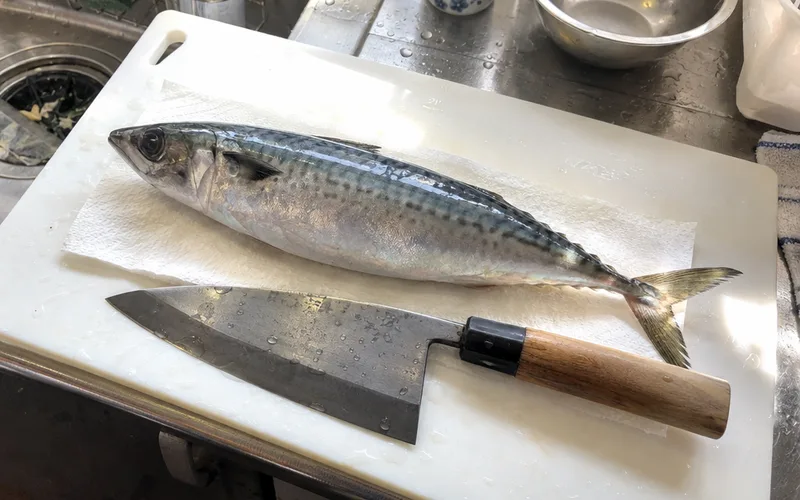
Debas run from 150mm to 330mm, so size one to the fish you buy. A double-bevel yo-deba is the Western-style version for fish and poultry.
The traditional deba is usually made right-handed, so order a left-handed version if that’s the hand you cut with.
Honesuki
The honesuki is a stiff, triangular poultry boning knife, about 145-150mm long.
Unlike a flexible Western boning knife, it stays rigid, so its pointed tip works around chicken joints with control.
Small Japanese Knives: Petty and Paring
The petty is the small Japanese utility knife, a “mini gyuto” of 120-150mm, for peeling fruit, trimming and mincing herbs.
A Japanese paring knife is shorter still and does the same job as a Western paring knife with a thinner edge.
Japanese Knife Sizes
Japanese knives are measured by blade length in millimeters, and the common types run from 120mm for a petty to 330mm for the longest yanagiba. Chubo lists these ranges:
- Petty: 120-150mm
- Santoku and nakiri: 165-180mm
- Gyuto: 210-270mm
- Sujihiki: 240-300mm
- Yanagiba: 270-330mm
- Pro Tip: For a first gyuto, the short end of its range, around 210mm, is the easiest to control.
How Japanese Knives Differ From German Knives
Japanese knives differ from German knives in 3 ways: harder steel, thinner blades and, on traditional shapes, a single-bevel edge.
A German knife has a symmetrical V-shaped edge on a thicker, softer blade.
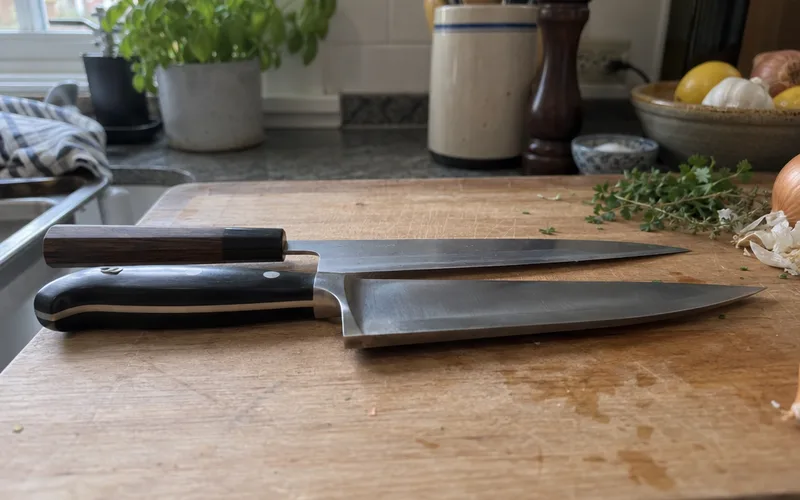
That hardness is a trade-off. Yoshihiro warns that Japanese blades are hard and thin and should not be used on large bones, frozen food, or to pry and twist.
In other words, a Japanese kitchen knife rewards a slicing motion and chips if you abuse it. For rough jobs, a thicker blade from a German knife brand is the better tool.
Which Japanese Knife Type to Buy First
The best first Japanese knife type is a double-bevel gyuto or santoku in stainless steel.
Either one handles most kitchen tasks and works in either hand, so choose the gyuto for reach and the santoku for control.
Skip single-bevel knives until you know you need one. A yanagiba or deba does one job beautifully, and only that job.
Stainless or Carbon Steel
Hasu-Seizo says stainless steel blades are easier to maintain and resist rust, while carbon steel blades are harder and hold a sharper edge longer.
Carbon steel needs drying right after every wash, or it starts to rust.
Patterns like Damascus steel or a tsuchime hammered finish change how a kitchen knife looks, but the steel underneath decides how it cuts.
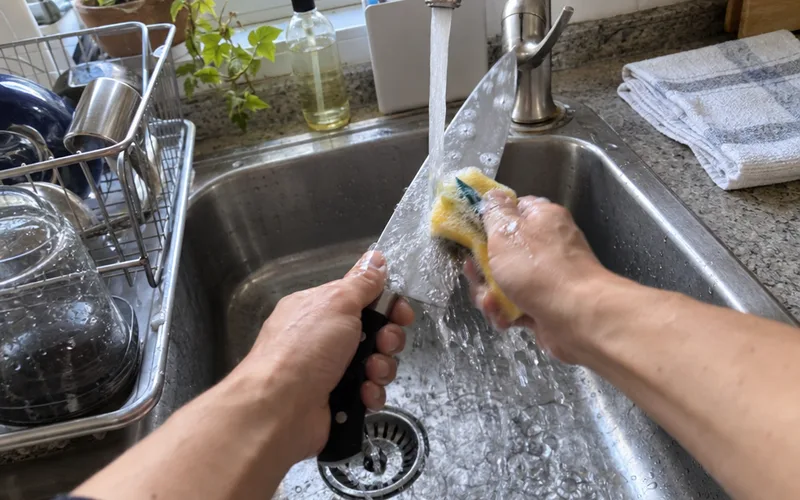
Wash any Japanese knife by hand, since dishwashers and long soaks can chip or discolor the blade.
Pick your first shape this week, then compare real knives on a list of Japanese knives. The other types of kitchen knives can wait.
You can also see where it fits beside the 3 knives most cooks need and the rest of your cooking appliances.
Frequently Asked Questions
What is a Santoku knife good for?
A santoku is good for everyday slicing, dicing and chopping of meat, fish and vegetables with a straight up-and-down motion.
Its 165-180mm blade suits a small cutting board and a cook who wants control more than reach.
Can Japanese knives cut through bone or frozen food?
No, Japanese kitchen knives should not cut large bones or frozen food, because their hard, thin edges can chip.
A deba handles fish heads and small bones, but large bones call for a meat cleaver.
Are Japanese knives OK for left-handed cooks?
Double-bevel Japanese knives, such as the gyuto, santoku, nakiri and petty, work fine in the left hand.
Single-bevel knives like the yanagiba and deba are usually made right-handed, so order a left-handed version if you want one.