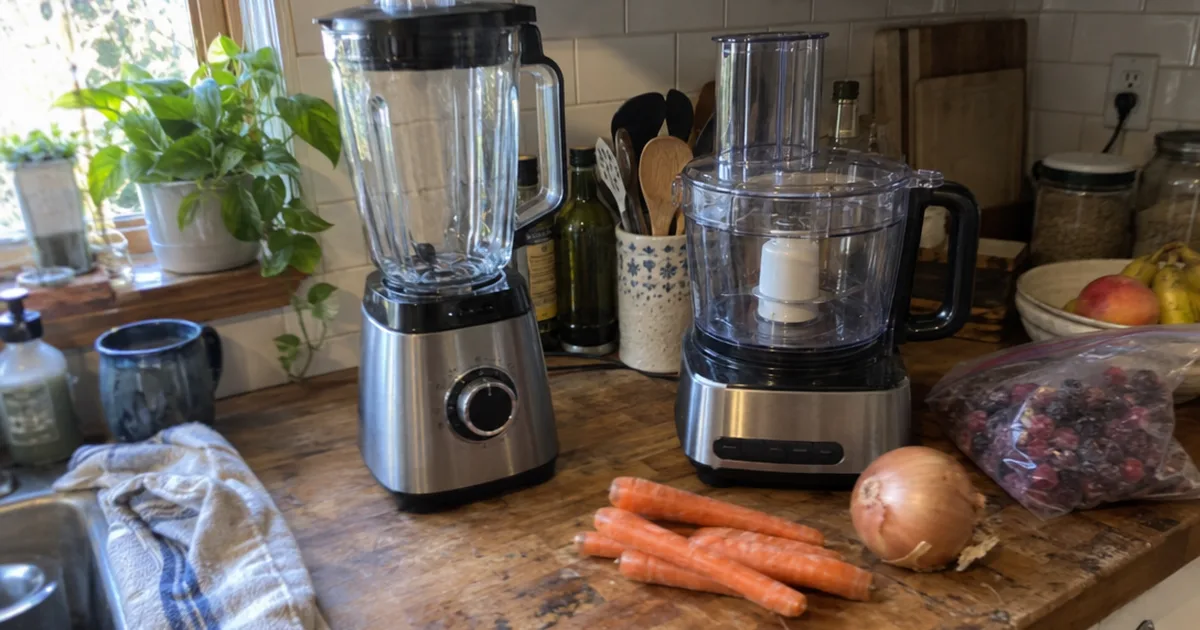

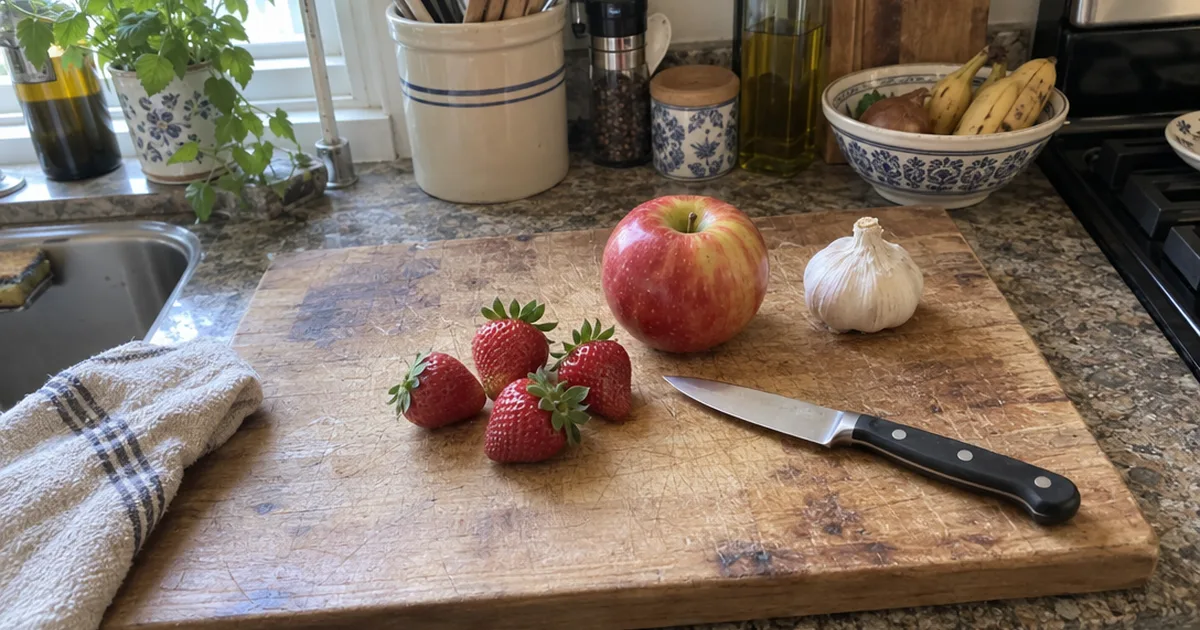
The second most important knife in your kitchen has a blade under 4 inches. That’s the paring knife, which ranks right behind the chef’s knife.
Yet plenty of cooks leave theirs in the drawer and hack at strawberries with a chef’s knife. So what is a paring knife used for?
Below are the 8 jobs it does best, the 3 edge types and which foods each suits. You’ll also see how to hold it, the 4 things it should never cut and how to keep it sharp.
What Is a Paring Knife?
A paring knife is a small kitchen knife with a slim, pointed blade usually under 4 inches long, built for detailed cutting you often do in your hand.
Knife maker Made In describes it as a shrunk-down chef’s knife, typically under 8 inches in total length.
The blade is usually non-serrated and slightly curved.
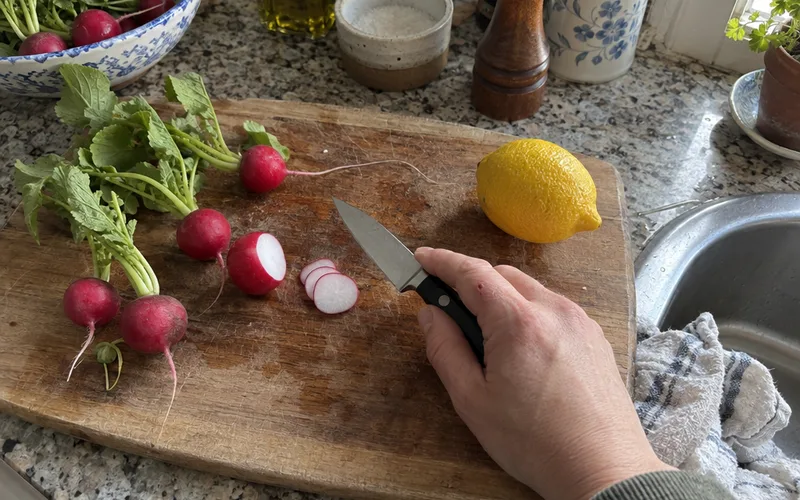
That short blade is the whole point.
It puts your fingers close to the tip, so you steer the edge with small wrist movements instead of your whole arm.
That control is why a paring knife beats a bigger knife on small, round or delicate ingredients.
A paring knife has 3 parts worth knowing:
- The tip: a sharp point for piercing skins, digging out cores and lifting veins.
- The edge: usually straight, sometimes serrated or curved, as you’ll see below.
- The handle: short and slim, so it sits inside your grip for in-hand work.
How Long Is a Paring Knife Blade?
A paring knife blade typically measures 2.75 to 4 inches long, according to a paring knife guide from Wüsthof.
That range gives the best balance of control and maneuverability.
Shorter blades, around 3 inches, feel nimble for peeling in your palm. A 4-inch blade reaches a little further when you slice small food on a cutting board.
What Is a Paring Knife Used For? The 8 Main Jobs
A paring knife has 8 main jobs: peeling, coring, hulling, deveining shrimp, segmenting citrus, trimming meat and vegetables, mincing small aromatics, and scoring or garnishing.
Each one needs a sharp tip and fine control more than blade length.
Here’s how to handle each job.
Peeling Fruits and Vegetables
Peeling is the classic paring knife use. You hold an apple, pear, potato or kiwi in one hand and draw the blade toward your braced thumb in short strokes.
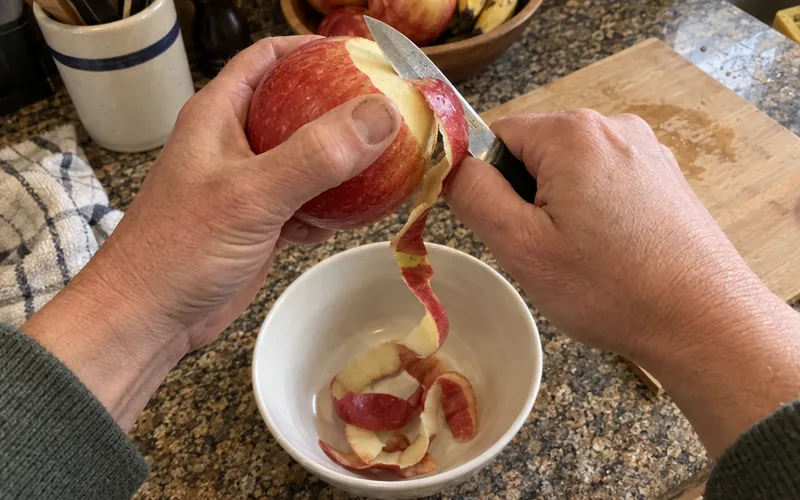
The short blade follows curves a swivel peeler skips, such as the knobs on fresh ginger. It also takes off a thin layer, so less of the fruit ends up in the trash.
A straight edge does this job best, since a serrated blade saws roughly at a peel.
Once peeling turns into a daily job, a curved bird’s beak blade wraps around round fruit even more closely.
Coring Apples, Pears and Tomatoes
Coring means cutting out the seeds or tough center of a fruit or vegetable. Push the tip in beside the stem of a tomato, then turn the fruit and cut a small cone around it.
The same move cores apples and pears, and it pops the seeds and white ribs out of a bell pepper once the top is off. A chef’s knife would take far more flesh with it.
Hulling Strawberries
Hulling removes the green top and the hard white core of a strawberry. Angle the tip in just below the leaves, rotate the berry against the blade and lift out a small cone.
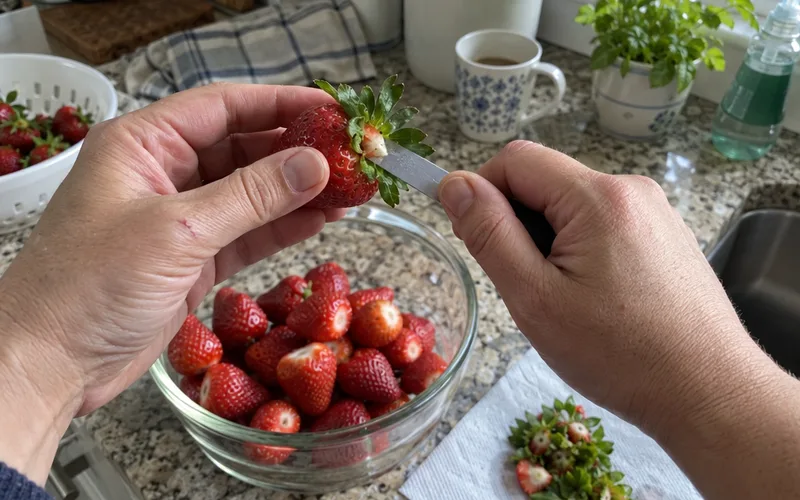
You don’t even need a board. Hold the berry in one hand and the knife in the other, and each berry loses only its top.
A straight edge with a pointed tip suits this job best, as the edge table below shows.
Deveining Shrimp
To devein shrimp, cut a shallow slit along the back with the tip, then lift out the dark vein.
A paring knife suits this because you need a fine point and a blade you can hold near its tip.
Made In says deveining shrimp isn’t strictly necessary before cooking, and many chefs remove the digestive tract mainly for presentation.
So if you’re making a quick weeknight stir-fry, you can skip it.
Segmenting Citrus
Segmenting, also called supreming, cuts clean wedges from an orange or grapefruit with no peel or membrane.
The process removes not only the peel but also the white pith from each segment.
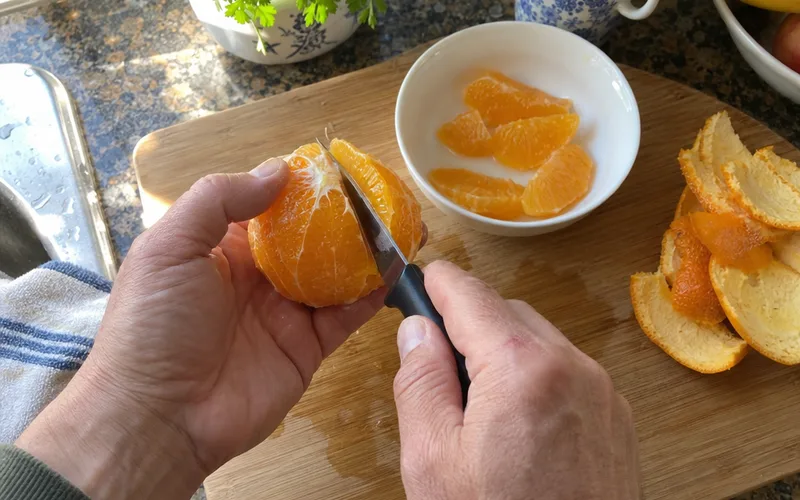
Cut the ends off so the fruit stands flat, then slice the peel and pith away from top to bottom. Next, cut along both sides of each membrane and the segment drops out.
If a rough peel keeps slipping under a straight edge, try a serrated paring knife, since that edge suits rough citrus skins.
Trimming Meat and Vegetables
A paring knife trims fat, sinew and silver skin from small cuts of meat such as chicken breasts and pork chops.
You can see exactly where the tip is, so you cut away the fat and keep the meat.
It also trims vegetables: the ends of green beans, the leafy tops of carrots and the bruised spots on potatoes.
For a whole roast or anything near bone, switch to a boning knife, which has a longer, thinner blade for working around joints.
Mincing Garlic, Shallots and Ginger
A paring knife is a handy blade for mincing small ingredients like a garlic clove, half a shallot or a knob of ginger. A chef’s knife works better for an onion or a pile of herbs.
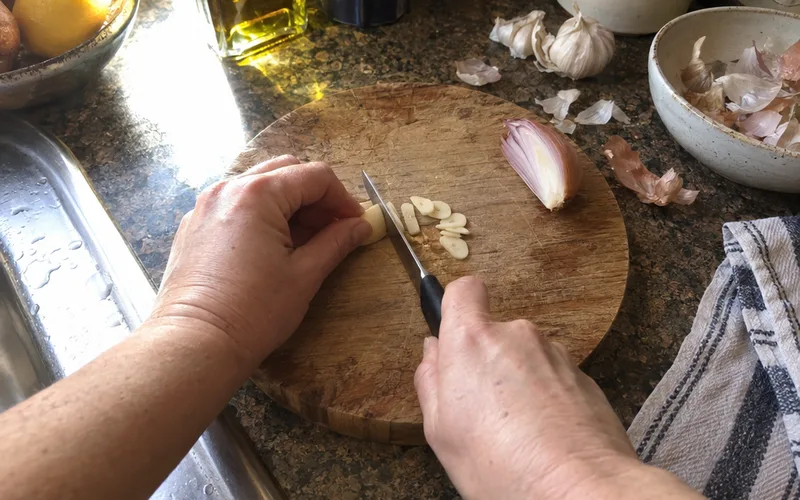
The same goes for slicing a few rounds of sausage or a wedge of cheese for a snack plate. For this kind of board work, a 4-inch blade reaches a little further than a shorter one.
Use a pinch grip here, with your thumb and index finger on the blade near the handle and the fingertips of your free hand curled away from the edge.
Scoring Dough, Meat and Garnishes
Scoring means cutting shallow slits in the surface of food.
With a paring knife, you can score a loaf of bread before baking, vent the lid of a pie or cut a crosshatch into the fat on a duck breast.
The same fine tip carves garnishes, such as radish roses, citrus twists and chili pepper flowers.
Whenever a cut needs to be shallow and exact, the paring knife is the knife to reach for.
When to Use a Paring Knife Instead of a Chef’s Knife
Use a paring knife instead of a chef’s knife when the food is small enough to hold in your hand or the cut needs fine control.
Use the chef’s knife for anything you chop, slice or dice in bulk on a cutting board.
The paring knife complements the chef’s knife instead of replacing it. In other words, the 2 knives split the work between them.
Here’s a simple way to decide:
- Grab the paring knife if the food fits in your palm or you’re cutting around something, like a core or a vein.
- Grab the chef’s knife if you’re cutting through something, like an onion, a melon or a chicken.
- Grab the chef’s knife any time you’re cutting a lot of the same food.
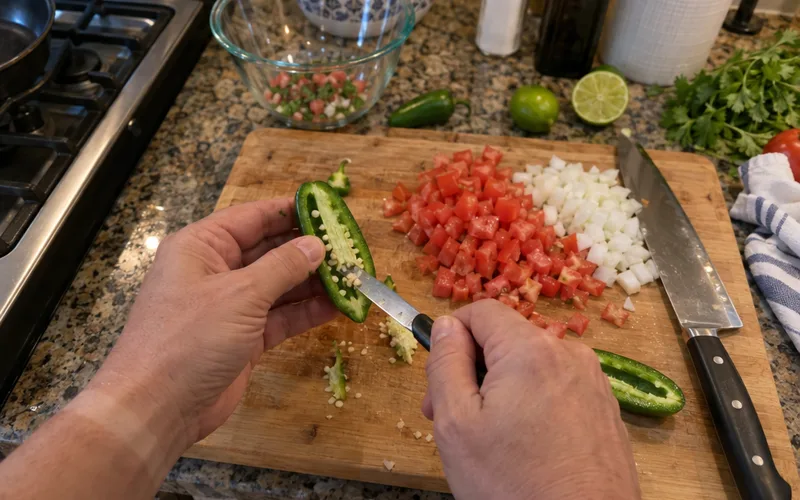
Say you’re making salsa. The paring knife cores the tomatoes and seeds the jalapeño, then the chef’s knife dices everything.
If the bigger blade still feels awkward, it helps to learn how to use a chef’s knife properly. Most cooks use the 2 knives together on the same recipe.
Straight, Serrated or Bird’s Beak: Which Paring Knife Edge to Choose
A straight-edge paring knife with a pointed tip is the best first choice for most cooks, because it handles detail work like hulling strawberries and shaping fruit.
A serrated or curved bird’s beak paring knife is a second knife for specific foods.
Here’s how each edge matches the foods it suits:
| Paring knife edge | Shape | Best for |
|---|---|---|
| Straight edge | Flat edge, pointed tip | Hulling strawberries, shaping fruit, detail work |
| Serrated edge | Small teeth along the edge | Rough citrus skins, grape tomatoes |
| Bird’s beak (Tournier) | Curved inward like a claw | Peeling fruits |
So start with a straight edge and add a second shape only when a food keeps fighting it.
What Is a Serrated Paring Knife Used For?
A serrated paring knife is used for foods with a tough or slippery skin and a soft inside, such as citrus fruits and grape tomatoes.
The teeth of a serrated edge grip the skin and saw through it instead of squashing the fruit.
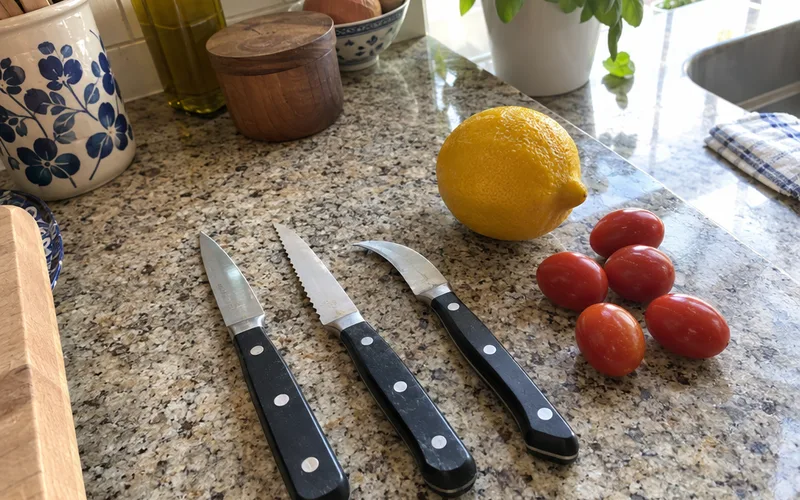
That sawing action is great on a lemon but rough on a peel, so keep a straight edge for peeling.
For long loaves of bread, step up to a full bread knife. That’s one of the jobs where a serrated knife wins over every straight blade.
What Is a Bird’s Beak Paring Knife Used For?
A bird’s beak paring knife is used for peeling fruits and other round produce, and it’s also called the Tournier knife.
Its short blade curves inward, so the edge wraps around the curve of an apple or a potato.
It’s a specialist tool, so most home cooks can skip it until peeling becomes a daily job.
Paring Knife vs Utility Knife: What’s the Difference?
The difference between a paring knife and a utility knife is size and job.
The paring knife is the smallest blade, for in-hand detail work, and the utility knife is a mid-size blade for slicing on a board.
A utility knife fills the gap between your paring and chef’s knife.
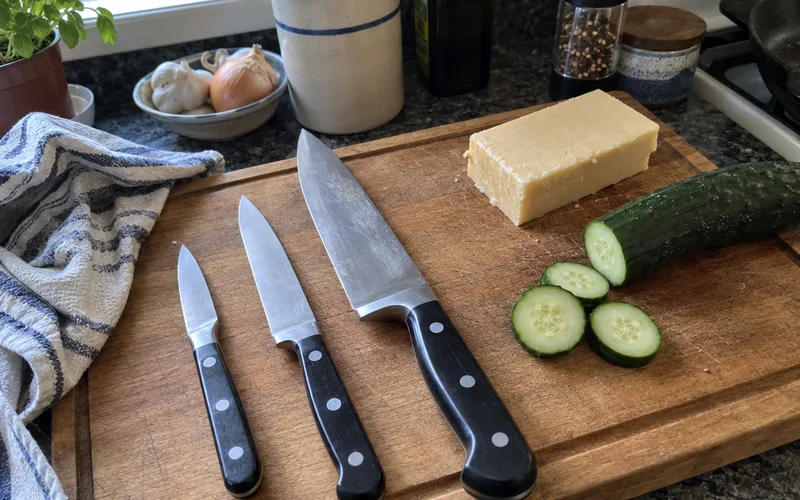
That makes a utility knife handy for sandwiches, cheese, small fruit and cucumbers.
But its blade runs past the 4-inch top end of a paring knife, which makes peeling in your palm awkward.
If you’re deciding between them, start with the paring knife. A utility knife’s best uses overlap with what your chef’s knife and paring knife already cover.
The Japanese answer to this middle size is the petty knife. It sits between the two, and it’s covered with the other Japanese knife types.
How to Hold a Paring Knife
Hold a paring knife with a relaxed but firm grip and your thumb high on the flat side of the blade.
That keeps the knife from slipping while your fingertips steer the tip.
How you hold it depends on where the ingredient sits:
- On a cutting board: Pinch the blade near the handle with your thumb and index finger, wrap your other fingers around the handle and curl the fingertips of your free hand away from the edge.
- In your hand: Hold the food in your other hand and brace that thumb on the food a little ahead of the blade.
- While peeling: Draw the blade toward your braced thumb in short, slow strokes, stopping before the edge reaches it.
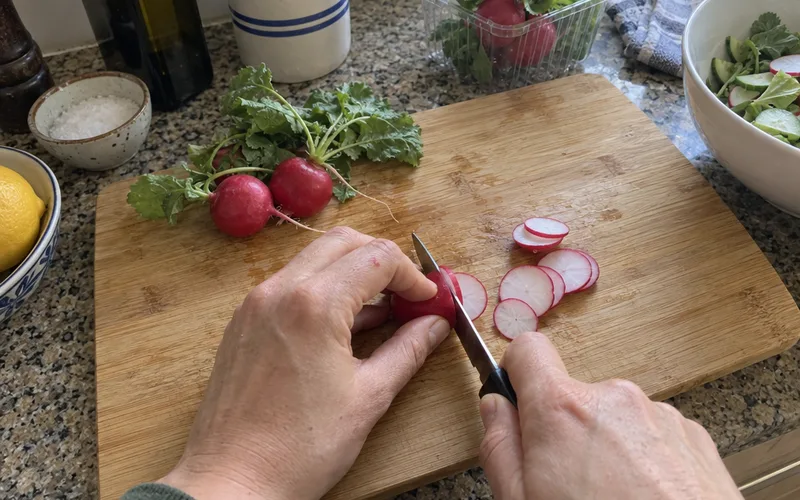
Move slowly, because in-hand cuts put your fingers closer to the edge than any other knife job.
These grips build on the basic knife skills every cook uses. They also follow the core rules of knife safety, starting with slow, controlled cuts.
What Not to Use a Paring Knife For
Don’t use a paring knife for tough meat, bones, thick-skinned vegetables or frozen foods.
French knife maker de Buyer warns that forcing it through those jobs can make the blade slip and cause an injury.
Here’s what that looks like in a real kitchen:
- A butternut squash or celery root: halve it with a chef’s knife on a board.
- A chicken thigh joint: cut through it with a boning knife or kitchen shears.
- A frozen block of ground beef: let it thaw first, since the thin blade isn’t built for it.
- A thick beef roast: slice it with a chef’s knife.
The rule is simple. If a cut takes real force, the paring knife is the wrong tool.
How to Sharpen and Care for a Paring Knife
To keep a paring knife sharp, hone it often and sharpen it at the edge angle its maker uses.
Most kitchen knives have a 17-22 degree edge angle, while the de Buyer Idéal Provençao paring knife has a 25 degree angle.
A honing steel straightens the edge between sharpenings. When honing stops helping, sharpen the blade on a whetstone or a sharpener set to your knife’s angle.
These steps on how to sharpen a knife work for a short blade too.
Washing matters just as much.
De Buyer says a paring knife with a wooden handle should be hand washed and dried right away, and even synthetic-handled German knives are better kept out of the dishwasher.
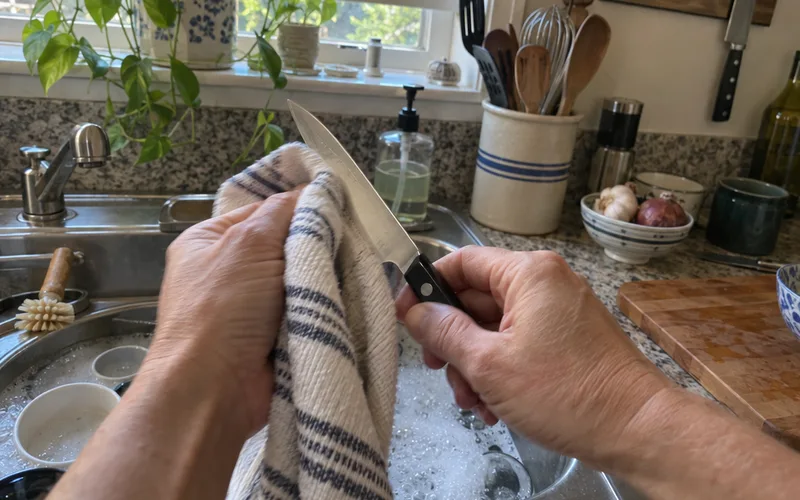
Dry the blade fully after washing, which also helps keep knives from rusting. Then store it where the edge won’t bang into other cutlery.
A magnetic strip or a sheath protects the tip. If you use a block, read up on whether knife blocks are unsanitary before you slide a damp blade into one.
How Much Does a Good Paring Knife Cost?
A good paring knife from a premium maker costs $40.00 to $95.00 or more, depending on the line and the edge.
In November 2026, the Wüsthof store listed its Gourmet 3-inch serrated paring knife at $40.00 and its Classic 3 1/2-inch paring knife at $95.00.
So if your budget is tight, spend more on the chef’s knife and less on the paring knife, which does the smaller jobs.
When you compare paring knives, check 3 things:
- Blade length: 3 to 4 inches covers most home cooking.
- Edge type: straight for a first knife, serrated or bird’s beak as a second.
- Handle fit: you’ll hold it in your fingers, so a slim handle that feels secure matters most.
For the full picture of which kitchen knives to buy first, price the chef’s knife before you price the paring knife.
Put Your Paring Knife to Work This Week
A paring knife earns its place on the small jobs: peeling, coring, hulling, deveining and trimming.
Pick one this week, such as hulling a pint of strawberries in your hand, and do it with the paring knife instead of your chef’s knife.
Once that feels natural, it joins the rest of your kitchen tools and appliances as a knife you reach for daily.
Frequently Asked Questions
When would you use a paring knife?
You’d use a paring knife whenever the food is small or the cut needs close control, such as peeling an apple, hulling a strawberry or deveining a shrimp.
Grab a chef’s knife instead once the job turns into chopping a pile of food on a cutting board.
What foods do you cut with a paring knife?
A paring knife cuts small fruits and vegetables best, including apples, pears, strawberries, tomatoes, citrus, garlic, shallots and ginger, plus shrimp and small trims of meat.
Keep it away from bones, frozen food and hard winter squash, which it isn’t designed for.
What are the three knives every chef needs?
The two knives every cook needs first are a chef’s knife and a paring knife, which ranks as the second most important knife in the kitchen.
The third depends on what you cook most, such as a serrated knife if you slice a lot of crusty bread.
Can a paring knife replace a chef's knife?
A paring knife can’t replace a chef’s knife, because its short blade is built for small, detailed cuts rather than slicing and chopping on a board.
It complements the larger chef’s knife, so plan on owning both.
Can you put a paring knife in the dishwasher?
A paring knife is better kept out of the dishwasher, and a wooden-handled one should be hand washed and dried right away.
Even synthetic-handled German knives are better preserved by hand washing.